THE VIRTUAL MUSEUM: AN INTRODUCTION
F. Djindjian (Paris)
Концепція віртуального музею протягом останніх років зайняла важливе місце в культурному обміні, пропонуючи важливе доповнення класичних музеїв. В статті стисло розглядається концепція створення віртуальніх музеїв, способи переходу від музея реального до музея віртуального.
Пропонуються нові концепції «музей музеїв» та «уявний музей», визначаються функції порталу та віртуальні властивості реального музею, а також функції «музею музеїв» та «уявного музею». Подається стисло технічний контекст реалізації віртуального музея в інтернеті та принципи його використання.1. Introduction
The word «museum» first appeared in 1732; its etymology means «the temple of the Muses», from the Greek Mouseion, which indicated the centre of scientific studies of the Ptolemys in Alexandria. In the 19th century, the museum materialized the need to show objects coming from great private collections (paintings, sculptures, art objects and archaeological artefacts) in order to create an encyclopaedic knowledge covering progressively all the cultural fields (fine arts, ancient civilizations, ethnography, natural history, etc.) and to spread this knowledge gradually to the largest number of people within the XIX century context of the political evolution of the European states.
The virtual museum is the result of the conjunction of the traditional concept of a museum with the multimedia computer and communication technology of the Internet. The virtual museum is dematerializing the object for the benefit of providing much more information on the object: the image in all its manifestations (2D, 3D, details, physico-chemical analyses, facsimiles, etc.) and the knowledge of the image (intrinsic information on the object, extrinsic information on the context of the object, historiographical information, reference information, etc.).
It dematerializes the museum itself by making possible a «remote visit».2. From the museum to the virtual museum
Museums were virtualized gradually starting in the 1970s when museums have developed projects of museographic databanks to computerize their inventories, then, in the 1980s by using Videotex, which was the precursor of the multimedia Internet of the 1990s, together with microfilm viewers, and then with the first videodisks (precursors of the CD-Rom). The use of the image appears gradually and completes the museum tour with audio commentary, interactive screens, and multimedia consultation rooms.
At first, virtual information was used to complete the presentation of the objects. It replaced the obsolete and inadequate labels identifying the objects and the outdated explanatory panels. It supplied information which could be more detailed if desired, or modified, on a support which was reusable and replaceable without losing the information (projections, flat screens).
Archaeological sites are reconstructed starting with the visible remains using the technology of Virtual Reality (the main archaeological sites and, in particular, the Greek and Roman cities around the Mediterranean sea).
Then the virtual information goes beyond the real object in order to respect all the requirements for a correct conservation ( «Cabinet des Dessins» of the Louvre Museum) or for a presentation which does not saturate the public (from the accumulation of objects to the presentation of exceptional pieces).
In extreme cases, where the object can no longer be visited, it is replaced by a facsimile, as it was the case for the prehistoric caves (Lascaux II, musee de la grotte Chauvet, musee de Tarascon sur Ariege, etc.).
The virtual museum, consequently, can be visited at a distance, thanks to Internet technology, and offer the possibility of seeing a part of the collections presented to the public and different kinds of services; in this way it becomes a true commercial tool for the promotion and sale of the site-related products.
On a computer level, the virtual museum is a portal which offers a particularly wide variety of functions and services. (see below §5 & 6).3. From the virtual museum to the museum of museums
Internet technology supplies an additional dimension, that of virtually clustering museums that may be distant thousands of kilometres from each other, connected by a common factor: the city (virtual museum of Napoli, virtual museum of the city of San Francisco), the region (virtual museum of the towns of Savoy), the country (virtual museum of Canada) or a particular theme (virtual museum of school museums), etc.
4. From the virtual museum to the imaginary museum
The next stage leads to the total abstraction of the object. The museum exists only through the intermediary of an Internet site and the products derived from it (CD-Rom, books, etc.).
It may deal with a universal theme which is independent of collections and countries (Virtual Museum of the Olympic Games, Virtual Museum of Dictionaries, Virtual Museum of French Protestantism, Virtual Museum of Japanese Arts, Virtual Museum of IEEE (history of Electricity), Virtual Museum of Typography);it may deal with a scientific subject (Virtual Museum of Maritime Archaeology, Virtual Museum of Bacteria, The Palaeontology Portal); it may concern the life and influence of an individual (Virtual Museum of Antoine Poidebard, Virtual Museum of Don Quixote). It may deal with a scientific research program («Les carnets de l'Archeologie» the site for French archaeological operations financed by the French Ministry of Foreign Affairs).
5. The portal functions of a virtual museum
The creation of an Internet portal allows the implementation of the services, most of them standard services, which can be easily adopted for the site of a virtual museum:
- Entrance, a multi-language service describing the ramifications of the services offered by the portal
- On-line catalogue
- Search for a collection of objects using a retrieval request
- Layout of the museum
Layout of the galleries, location of accesses, facilities and services
- Opening schedule of the museum
- Entrance fees, discounts, passes
- Reservations
- Access for the handicapped people
- Personalized visits
Special purpose visits (particular time or subject)
Thematic visits
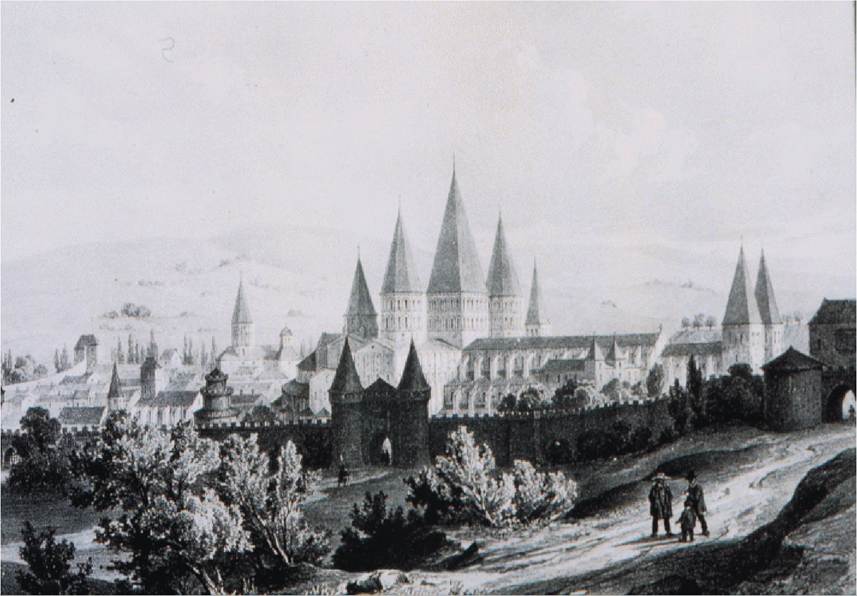
Fig.1. Old drawing of the XIII° century monastery of Cluny III (Burgundy, France) Старий малюнок монастиря ХІІІ ст.
Клюні ІІІ (Бургундія, Франція)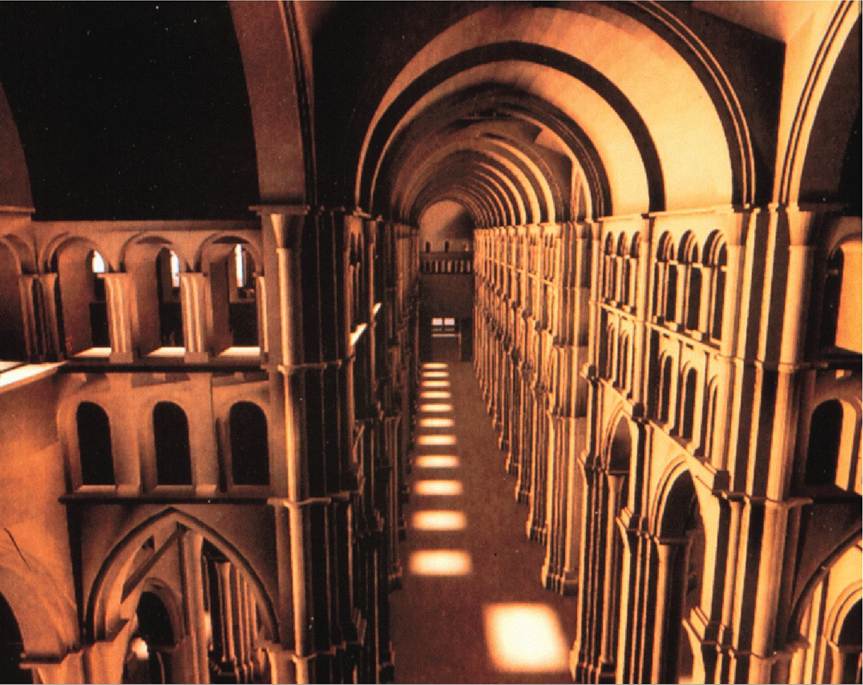
Fig.2. Virtual Reality of the interior of the church of the monastery of Cluny III (Burgundy, France) Віртуальна реалізація інтер 'єру церкви монастиря Клюні ІІІ (Бургундія, Франція)
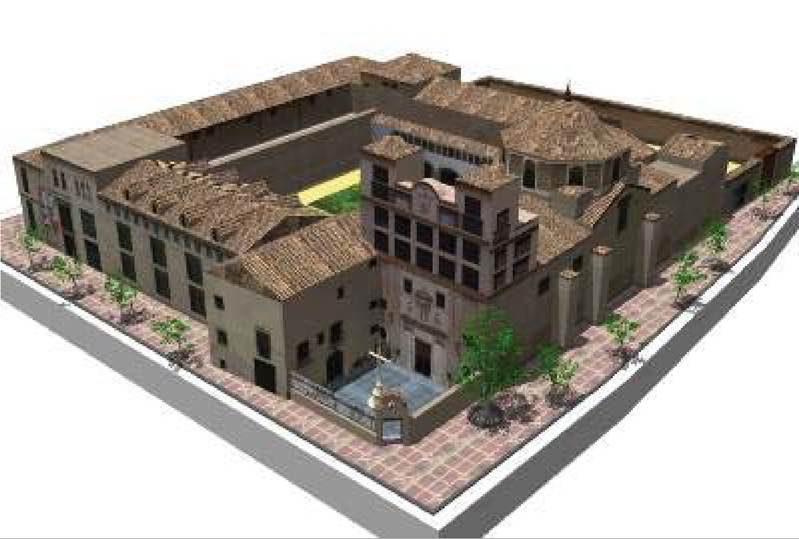
Fig.3. XIII century monastery of Santa Clara (Murcia, Spain). Монастир Св. Клари ХІІІ століття (Мурсія, Іспанія)
- Optimization of visits (time and spatial distribution of groups)
- Conferences (themes, schedules, rates etc.)
- Management of the conference schedules
- On-line museum shop (catalogues, books, exhibition, related products, etc.)
- Mediatheque
- Messages of visitors to the portal
- Announcements (events)
- Announcements (exhibitions)
- Communication
Discussion forum
E-learning
Interactive games
- Sponsorship
- Connections with other virtual museums
- Membership
6. Virtualfunctions of the virtual museum.
The virtual functions of the virtual museum refer to the virtualisation of the objects and the visits.
- Gallery of images
Selection of the most representative objects in the museum
- Virtual visit
A virtual visit is a unguided tour (by Virtual Reality) through the rooms of the museum to discover the objects on display.
- Guided tours
Choice of guided tours by theme
- Visualization of objects in 3D
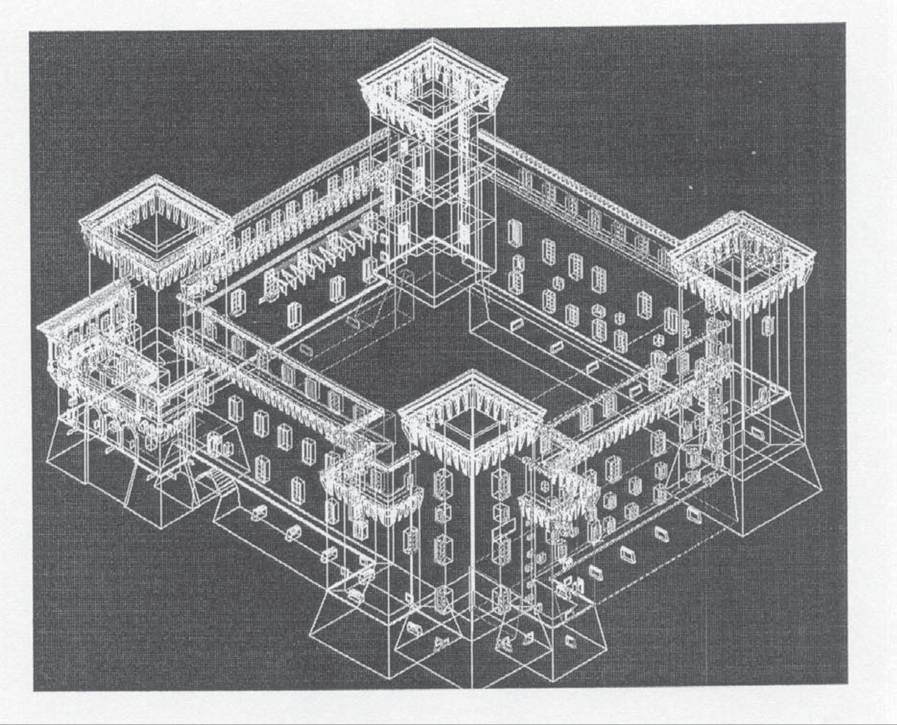
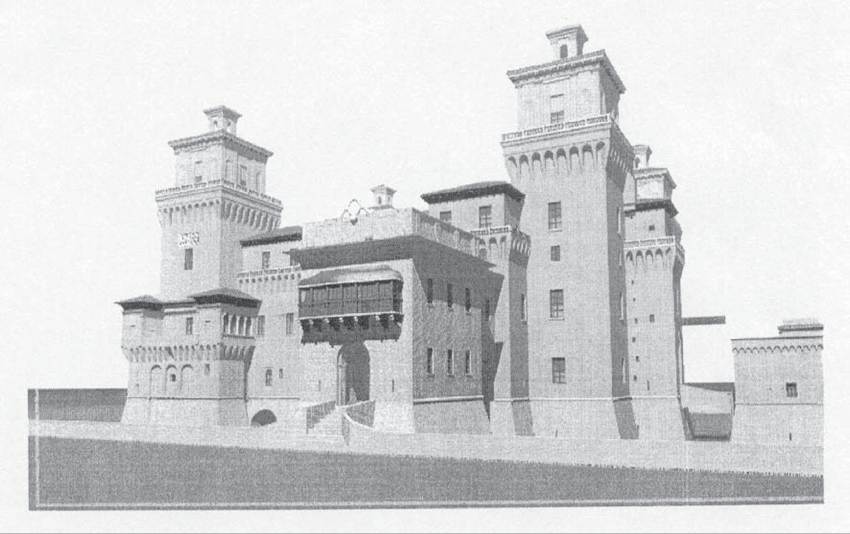
Fig.4-5. Virtual Reality of a medieval castle (Italy) Віртуальная реалізація середньовічного замку (Італія)
360° view of the objects with details
- The information which accompanies the objects or the exhibition galleries Detailed information files
7. Thefunctions of the imaginary museum
Virtual museums which are not associated with real museums represent the most creative part of the concept of the virtual museum:
- Thematic (single subject) Museum
- Personal Museum, Children’s Museum, Museum for the Handicapped, etc.
- Virtual exhibitions
- Events connected to cultural or scientific exhibitions. Projects and programs for conservation of the cultural heritage.
They translate into a source of information the reality of a cultural project, the success of which is directly connected to the consultation of the site by internet users. Financial profitability of this type of project is dependant on grants, sponsors, licensed products, and in some cases, publicity appearing on the site.
8. Computer technology for the virtual museums
Virtual museums are employing Internet technology, extensive use of multimedia, and virtual reality technology. The main material and logical components of the virtual museum are:
- An Internet portal with all of its functions
- A databank with 2D and 3D images
- The virtual reality of the real museum
- An on-line booking software
- An on-line payment system
- The application and allocation of the service by an Internet provider.
9. Advertising a virtual museum on the Internet
The success of a virtual museum, as for all Internet services, is directly related to the ease with which it can be found or directly connected to the site.
Techniques for obtaining this are now well known:
- Referencing
- Connections to other frequently used Internet services
- Advertising campaign
- Internet users fidelity program
10. Conclusions
Virtual museums represent a remarkable opportunity for the diffusion of knowledge as a natural complement to the centres of knowledge represented by real museums.
In comparison to the costs of exploiting a museum, the costs of a virtual museum is minor to the degree that the museum holds the copyrights for the images of the objects in their collections. The technology for the creation of a virtual museum belongs more to the world of communications than to the world of computers or telecommunications. The success of a virtual museum, which is measured by the number of visits to the site, is related to its functional dynamics (new events and permanent enhancements, interaction with the public).
The virtual Museum, based on an attitude of diffusion of information towards the general public, represents a fundamental complement to the real museum based on the attitude of conservation and restoration of the collection.Bibliography (some examples of virtual museums):
Virtual Museum of «Les carnets de l’Archeologie»
Virtual Museum of Naples
Virtual museum of French Protestantism
Virtual museum of Maritime Archaeology
Virtual museum of Canada
Virtual museum of Dictionaries
Virtual museum of the Towns of Savoy
Virtual museum of Antoine Poidebard
Virtual museum of Prehistory (Museum of Nemours)
Virtual museum of Japanese
Virtual museum of IEEE (history of electricity)
Virtual museum of the city of San Francisco
Musee du Louvre
Virtual museum of the Olympic Games
Virtual museum of School Museums
Virtual museum of Don Quixote
Virtual museum of the Chinese Cultural Revolution
Virtual museum of Quick (fast-food chain)
Virtual museum of Bacteria
Virtual museum of Typography
The Paleontology Portal