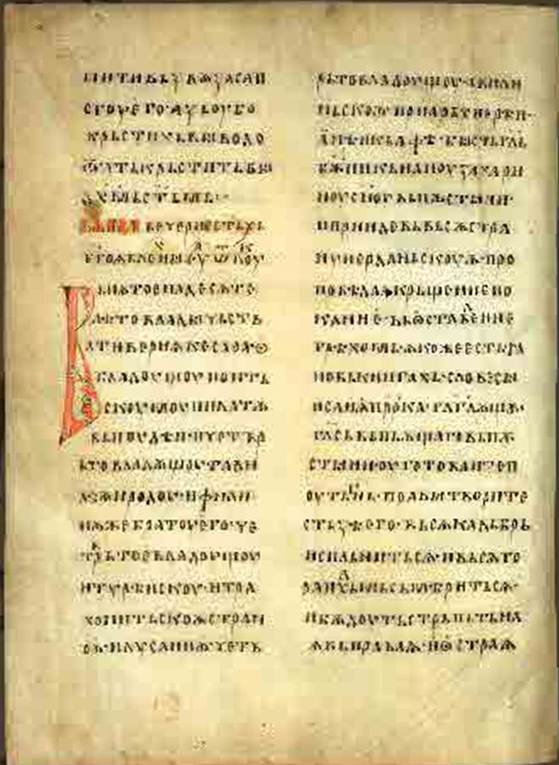
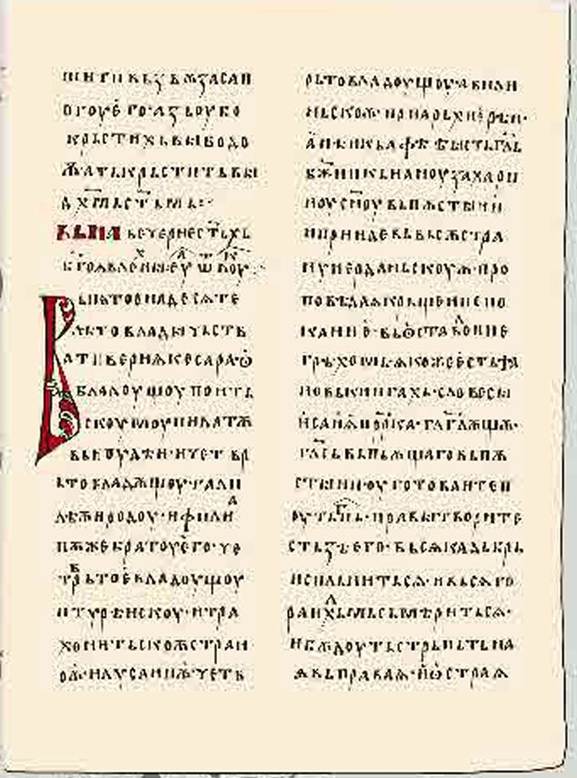
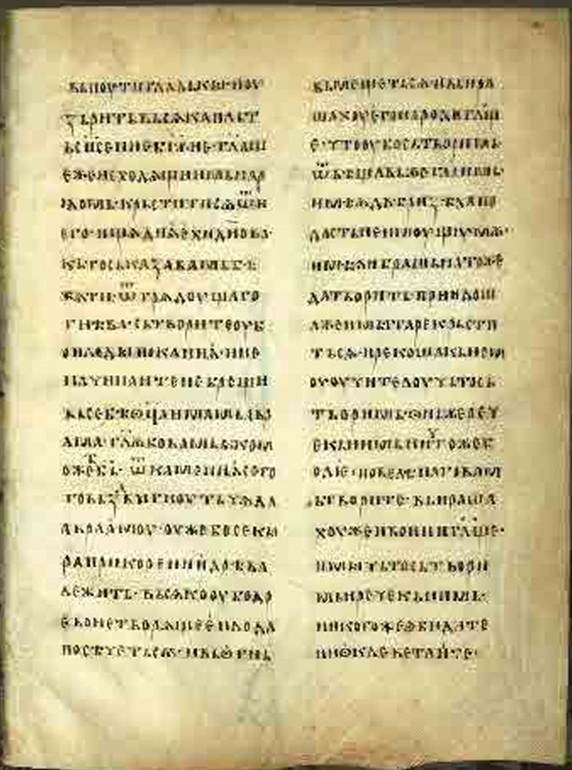
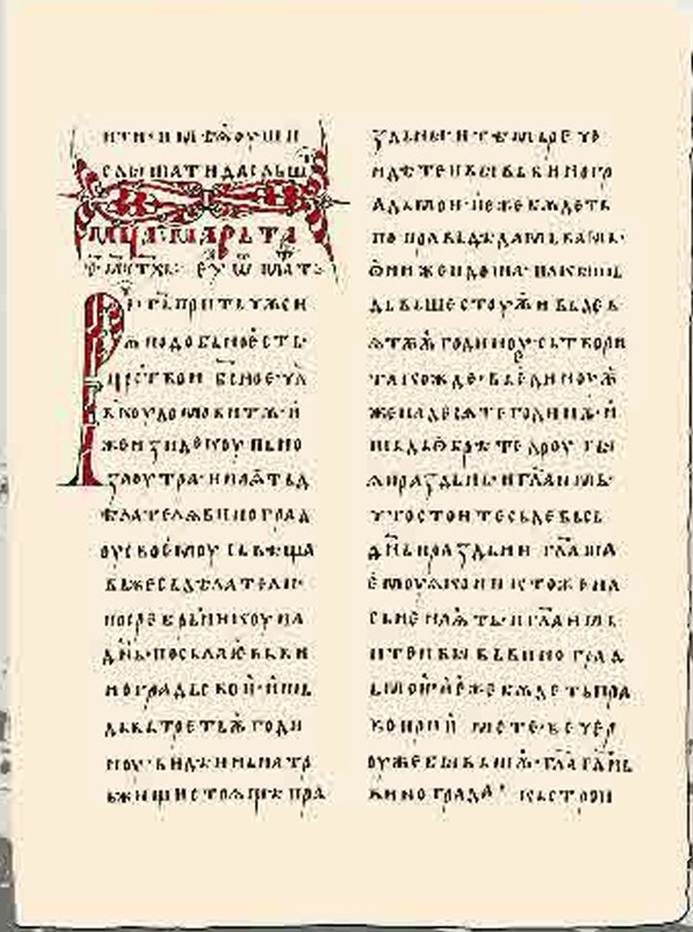
КИЇВСЬКІ АРКУШІ РЕЙМСЬКОГО ЕВАНГЕЛІЯ
Перша половина XI ст. увійшла до української історії як один із найважливіших етапів творення національної традиції у якнайширшому спектрі її конкретних виявів. Визначальним фактором тогочасного історичного процесу став знаменний акт святого Володимира Великого, який прийняв християнство східного, візантійського зразка й утвердив його релігією своєї держави.
Це дало початок новому, самобутньому українському варіантові східнохристиянської цивілізації, заклало основи усього подальшого поступу національного життя.Прийняття християнства у домінуючій на кінець першого тисячоліття на европейському континенті візантійській версії природно означало перенесення на власний ґрунт комплексу надбань візантійської релігійної культури, а водночас також окремих світських виявів традиції. Християнство на той час мало в Україні вже століття досвіду контактів із Візантією та візантійським Кримом. Початки цього сусідства, як і власного християнського досвіду, губляться у віках. З конкретних фактів історії першим варто пригадати хрещення князів Аскольда і Діра під час походу на Константинополь 860 р. Проте воно не виросло поза приватний захід самих правителів та їх найближчого оточення.
Раннє українське християнство тривалий час співіснувало з язичницькими віруваннями, що яскраво засвідчує літописний опис урочистого підтвердження вірності договору з Візантією 945 р. коли язичники з княжої дружини складали присягу на капищі, а християни - в соборній церкві пророка Іллі1. Зміцненню позицій християнства у Києві сприяло константинопольське хрещення княгині Ольги 955 р.2, яке розпочало остаточне утвердження релігії серед правлячої еліти. Зрештою, уже в цей ранній період київське християнство взорувалося
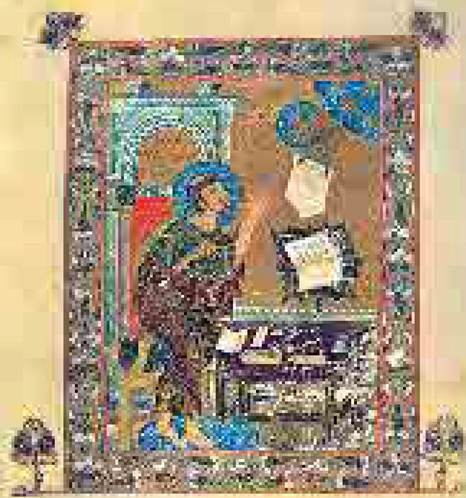
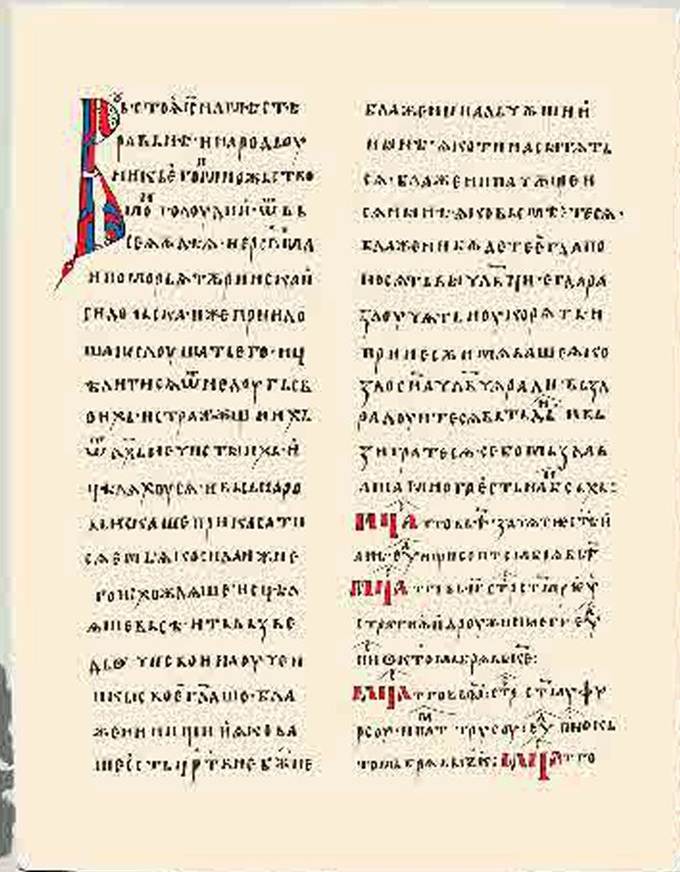
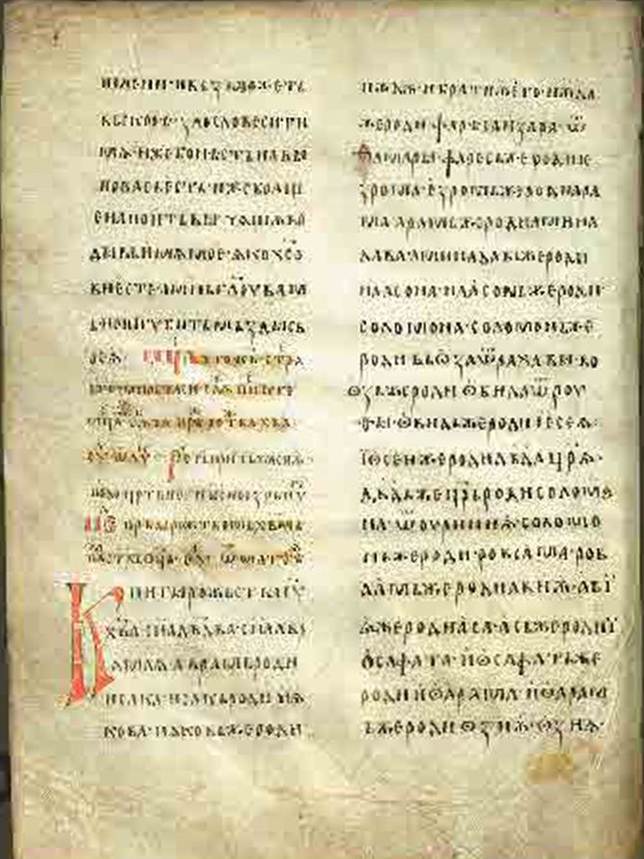
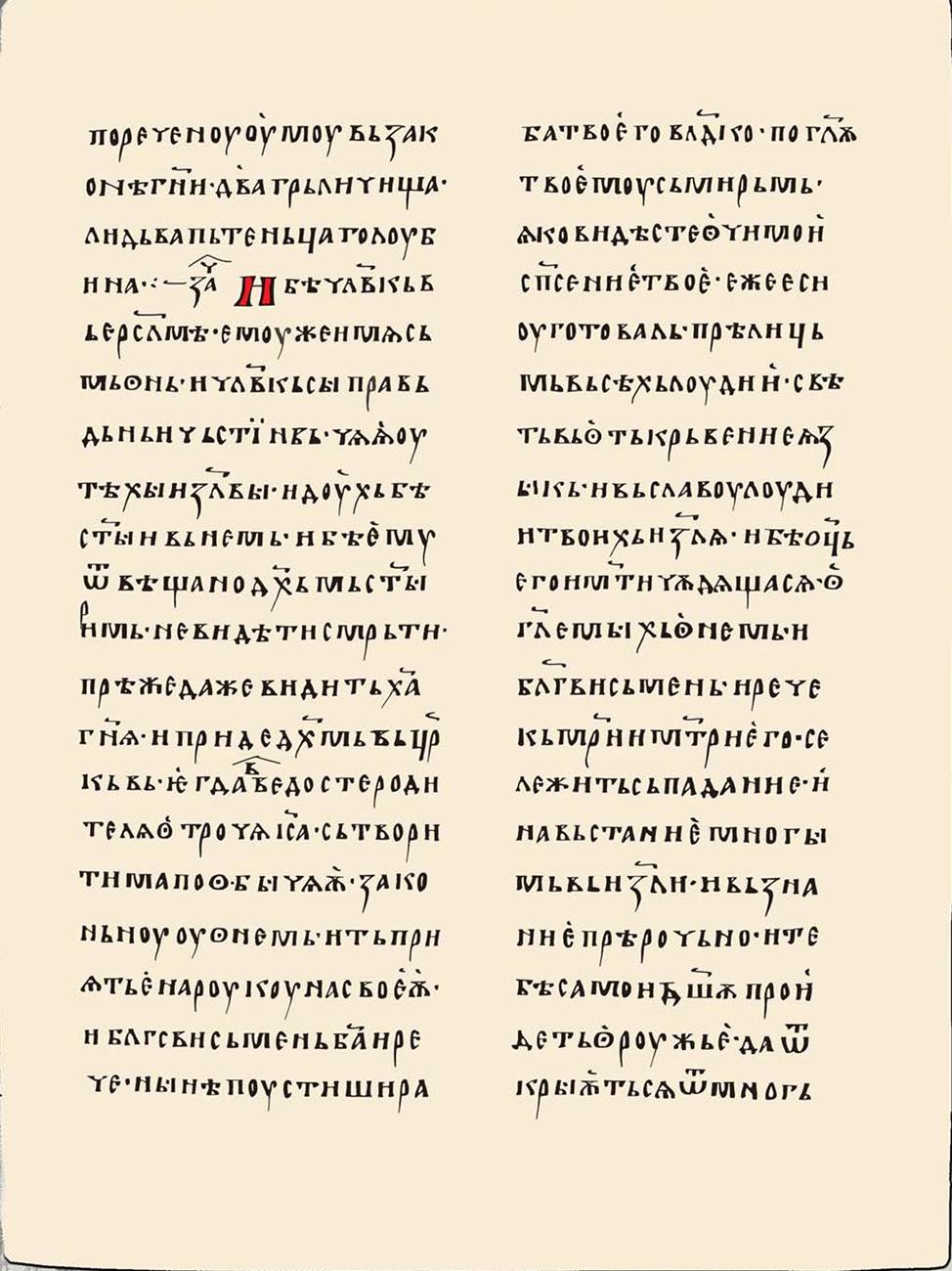
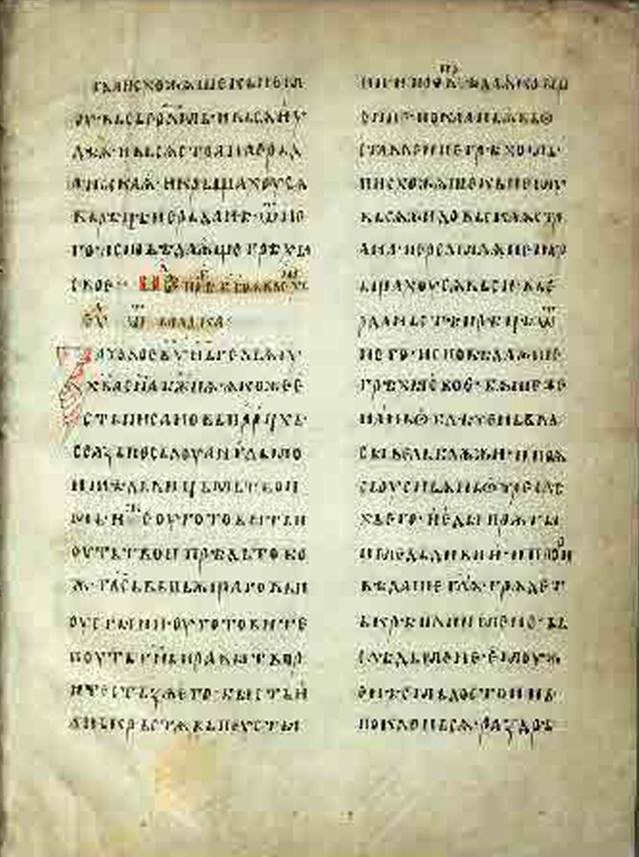
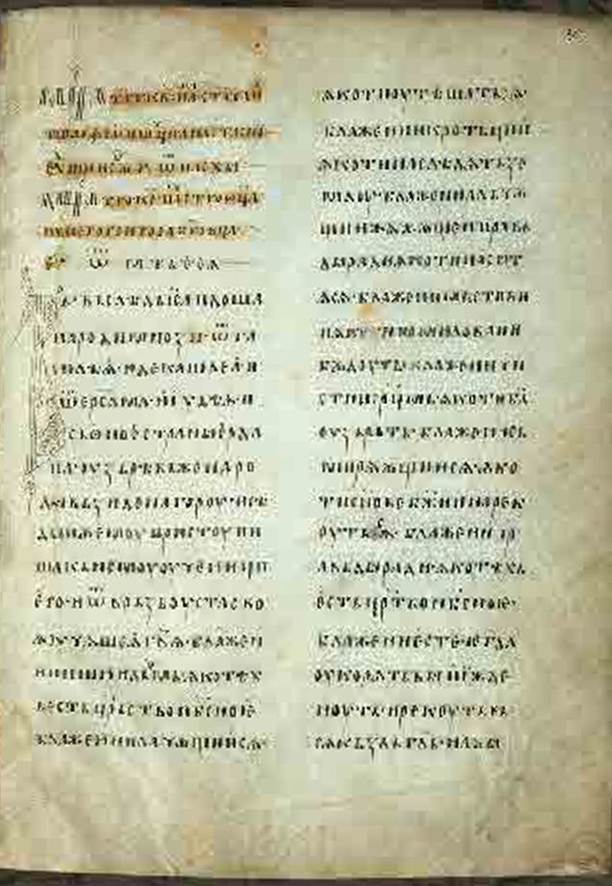
А Евангеліст Лука.
Остромирове Евангеліє. 1056-1057.A- Saint Luc. Evangeliaire d’Ostromyr, 1056-1057.
A Saint Luke the Evangelist. Ostromyr Gospel, 1056-1057.
1 Ипатьевская летопись // Полное собрание русских летописей. Москва 1962. Т. 2, стб. 40.
2 Там же, стб. 49.
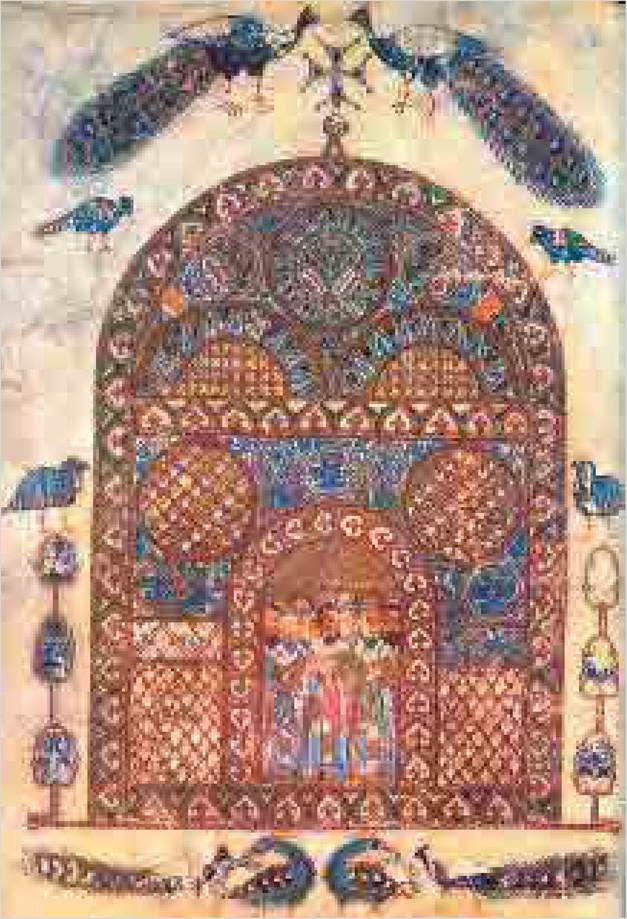
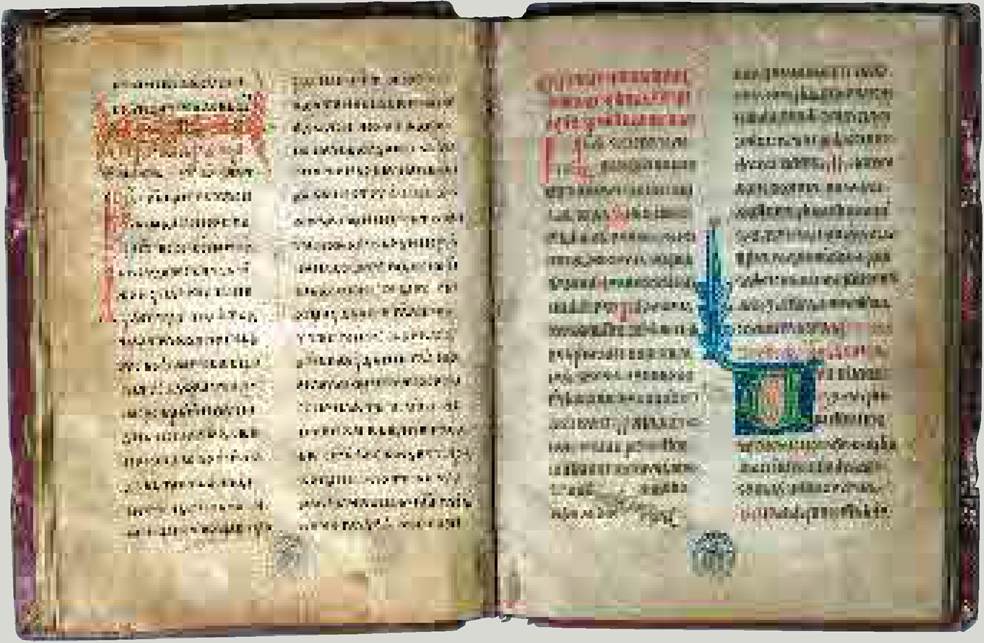
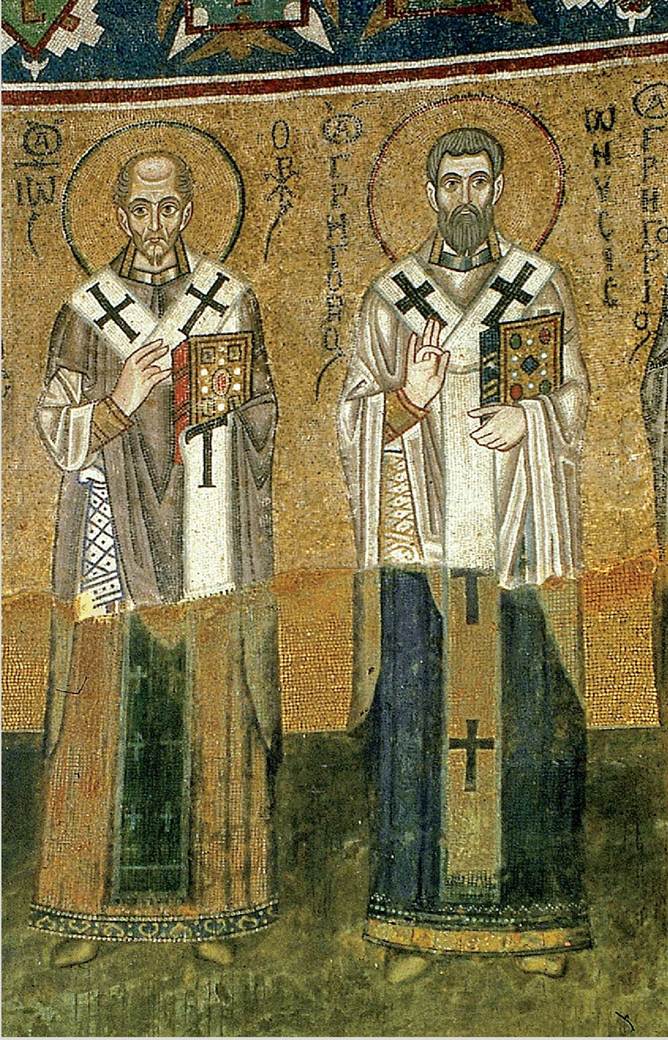
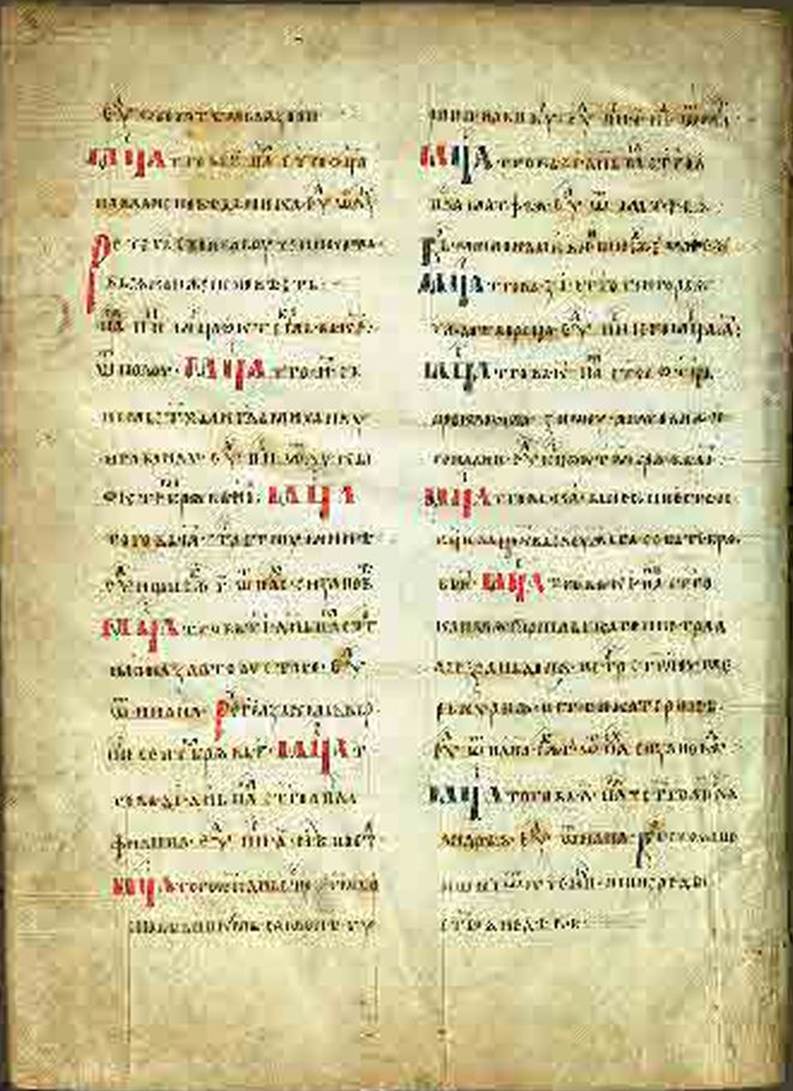
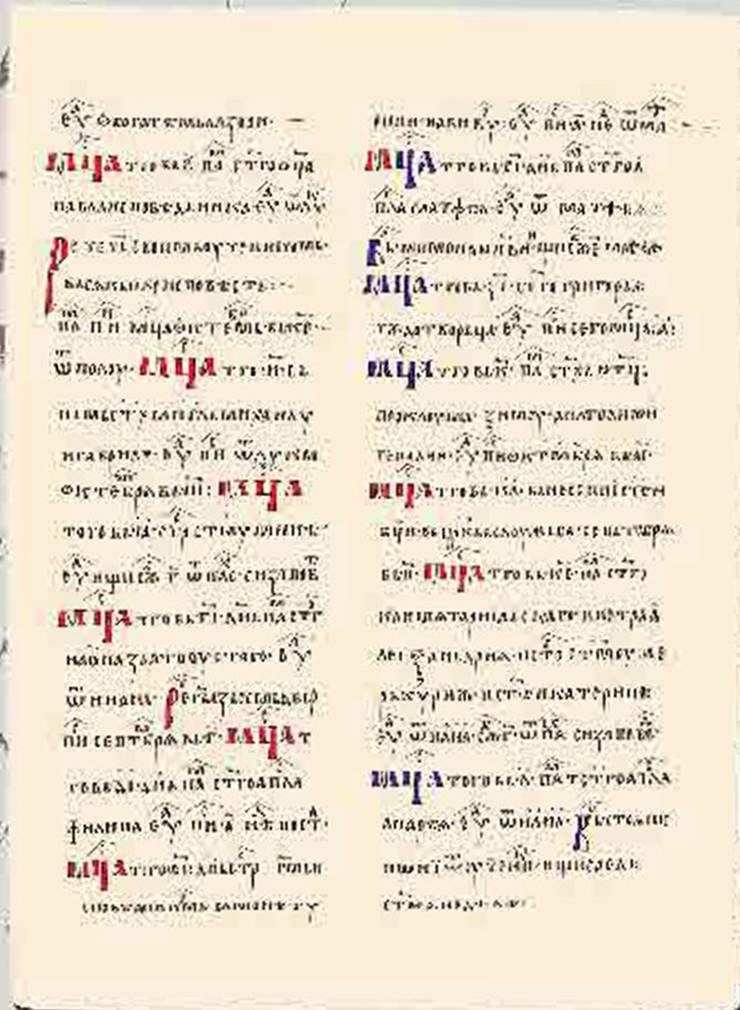
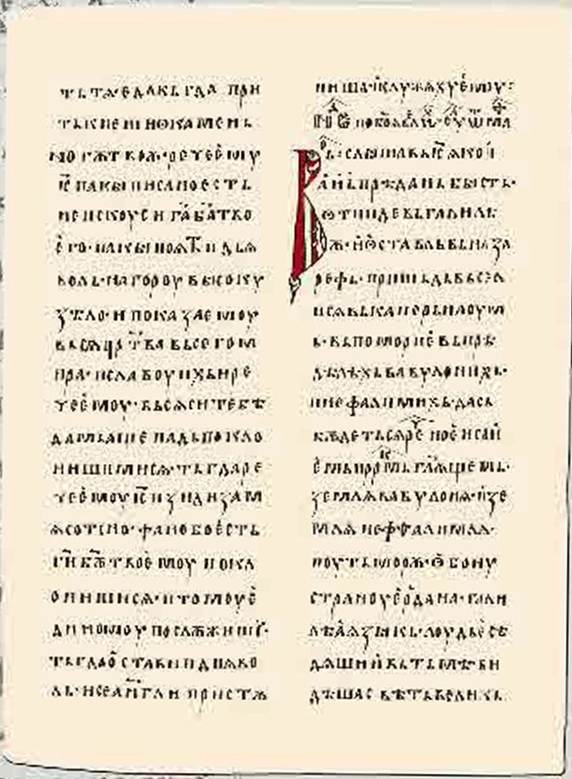
А Собор Святих Отців. Ізборник. 1073.
A Concile des Saints Peres. Izbornyk, 1073.
A Council of the Fathers of the Church. Izbornyk, 1073.
не лише на Візантію. Були контакти на церковному ґрунті і з Німеччиною. Зокрема, 961 р. до Києва прибув місійний єпископ Адальберт, для якого на зразок каплиці Карла Великого в Аахені не пізніше наступного року збудовано церкву-ротонду[3]. Віднайдені 1970 р. й ідентифіковані через чверть століття її залишки стали першим розшуканим досі в Україні (поза, зрозуміло, візантійським тоді Кримом) християнським храмом. Проте історичний перелом настав щойно за святого Володимира Великого, який, за словами митрополита Іларіона, “заповіда по всій землі своїй хреститися”, після чого, за свідченням того ж митрополита, “і в єдин час вся земля наша вславила Христа”[4]. Останнє твердження, звичайно, є апологетичним перебільшенням, за яким насправді неминуче мав стояти довготривалий історичний процес.
Київське християнство об’єктивно постало з поєднання власної історичної традиції, втім також власного попереднього християнського досвіду, та візантійської релігійності. Самобутність українського синтезу визначала історична основа, виведена з визрілої на місцевому ґрунті слов’янської спільності, що об’єктивно накреслило й своєрідний кінцевий результат самого процесу. Він поєднував дві нерідко протилежних у непоодиноких виявах тенденції, окреслених візантійською складовою й творенням самостійного стосовно неї варіанту релігійної культури спільного зразка. До Києва перенесено насамперед комплекс визначальних ознак релігійної традиції, відбувалося приєднання до візантійського - схід- нохристиянського - досвіду за неодмінного збереження якнайширшого спектру історично обумовлених виявів власної самобутності.
Це виразно показали уже часи святого Володимира Великого, який прийняв християнство на тлі військового конфлікту з Візантією. Не бракувало таких акцентів і надалі. Варто пригадати наступну києво-візантійську військову сутичку 1043 р. та докладніше не відображене джерелами релігійне протистояння, внаслідок якого щойно на сьомому десятку літ після офі-ційного прийняття християнства 1051 р. поставлено першого митрополита з середовища руського духовенства. Ці факти красномовно показують, що попри істотний струмінь візантійського впливу раннє київське християнство, історична традиція загалом не підпорядковувалися Візантії.
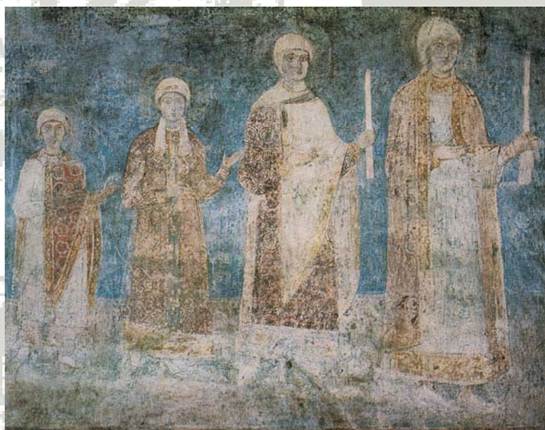
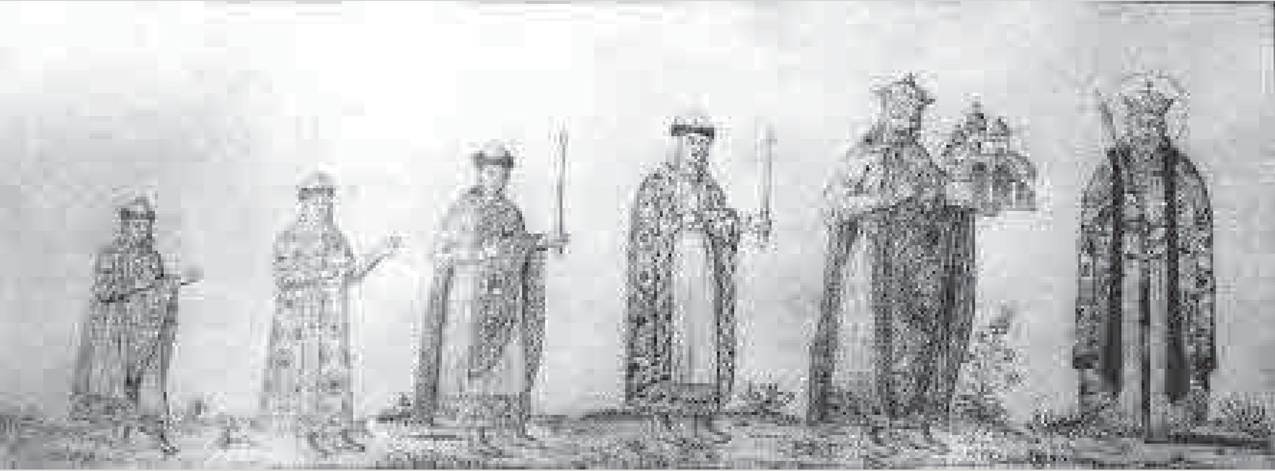
Винятково яскраві приклади самобутності зберегла старокиївська культурна спадщина. Тут варто пригадати найперше цитоване “Слово про закон і благодать” митрополита Іларіона. Показово, що, попри недавнє запо- чаткування заснованої на візантійських зразках мистецької культури, поодинокі ранні вияви якої, природно, поставали найперше під руками прийшлих митців, такі свідчення належать і до мистецького доробку. Їх доніс насамперед одинокий для усього тогочасного світу світський ансамбль малярства - фрески “шлюбного циклу” святого Володимира Великого та його дружини з дому візантійських імператорів - Анни у вежах фасаду Софійського собору5. Як нещодавно встановлено, вони відтворюють перебування посольства святого Володимира Великого в Константинополі та весільні церемонії при імператорському дворі. Не менш вражаючим є величний портрет родини князя Ярослава Мудрого в інтер’єрі собору (вціліли лише бокові частини композиції). Репліку питомо “київського” варіанту теми групового портрету родини правителя пропонує також вихідна мініатюра Ізборника князя Святослава Ярославича 1073 р. Вони доводять, що навіть там, де залежність від візантійського досвіду об’єктивно мала виявлятися чи не найвиразніше, автохтонний струмінь творчості виходив на поверхню визначальним фактором власного культурного досвіду.
Історично склалося так, що доленосний для національної традиції процес творення її основ упродовж перших десятиліть київського християнства надто скромно відображений писемними свідченнями та автентичними пам’ятками.
Зокрема, головне джерело для подій тієї доби - Повість минулих літ - за 989-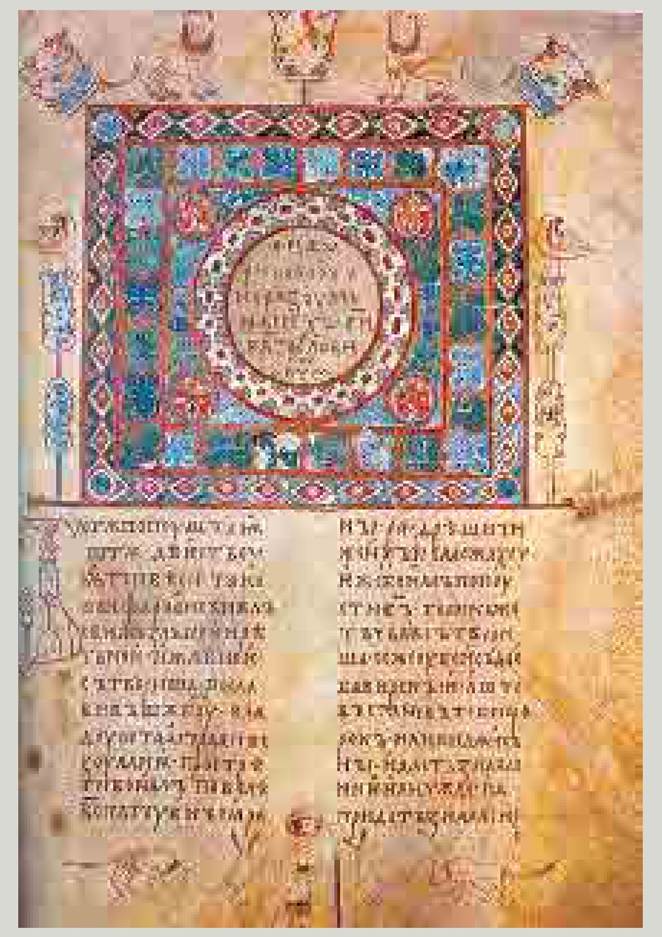
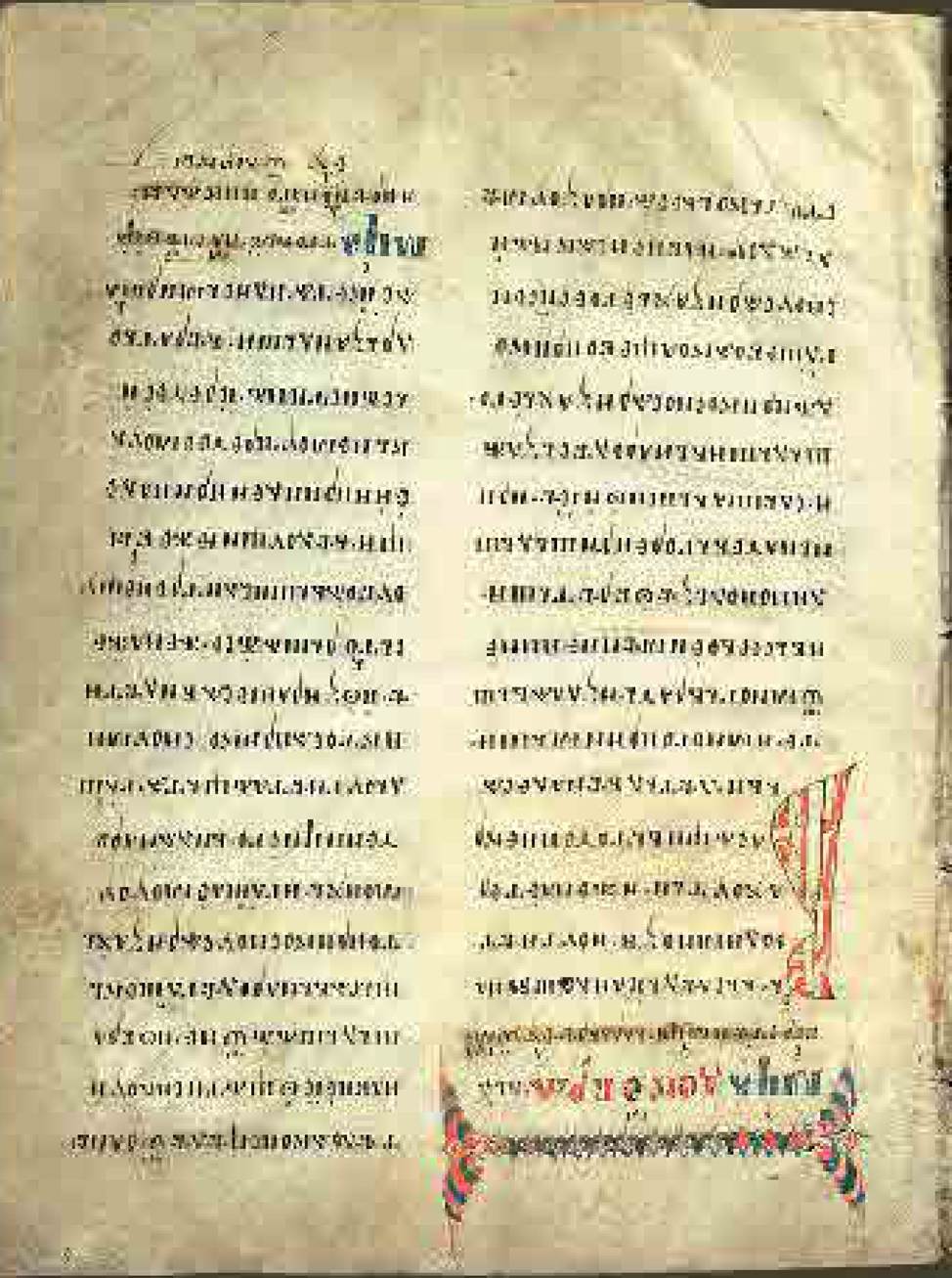
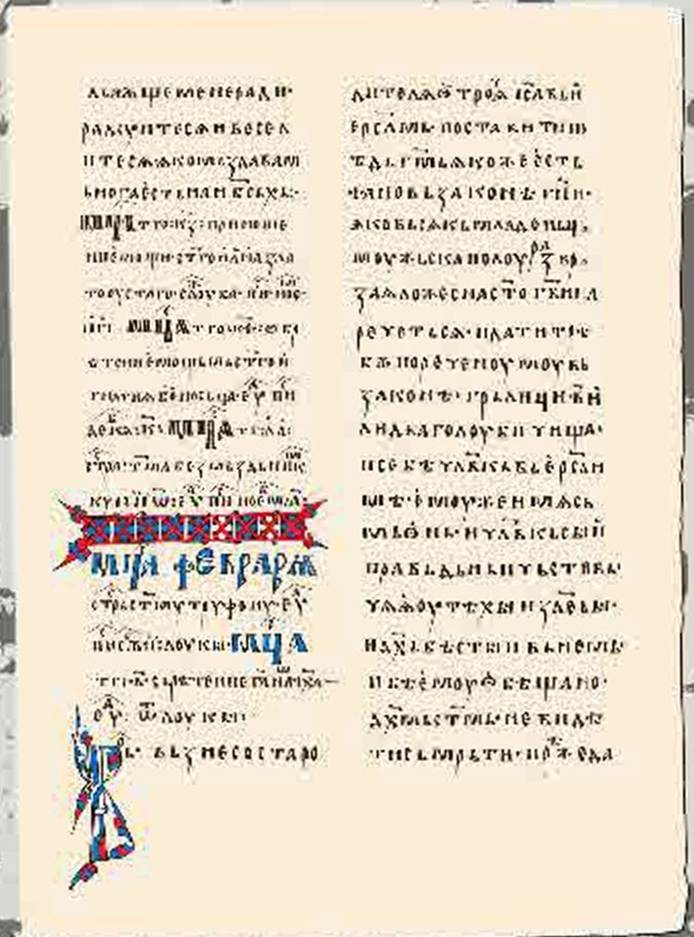
А Сторінка із заставкою. Ізборник. 1073.
A Page avec une vignette. Izbornyk, 1073.
A Illuminated page. Izbornyk, 1073.
Н. Н. Никитенко, Княжеский групповой портрет в Софии Киевской и время создания собора [в:] Памятники культуры: Новые открытия. Ежегодник 1986, Ленинград 1987, с. 237-244.
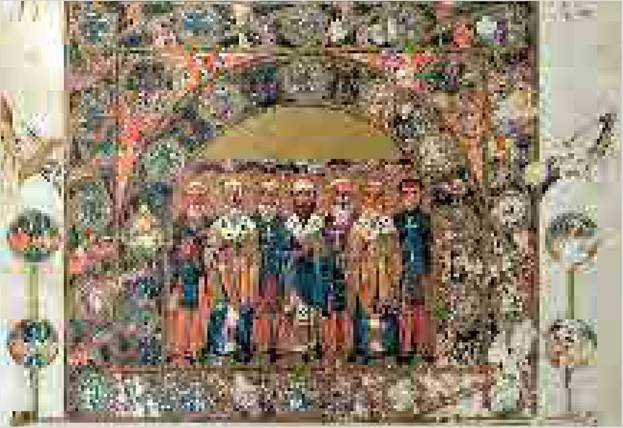
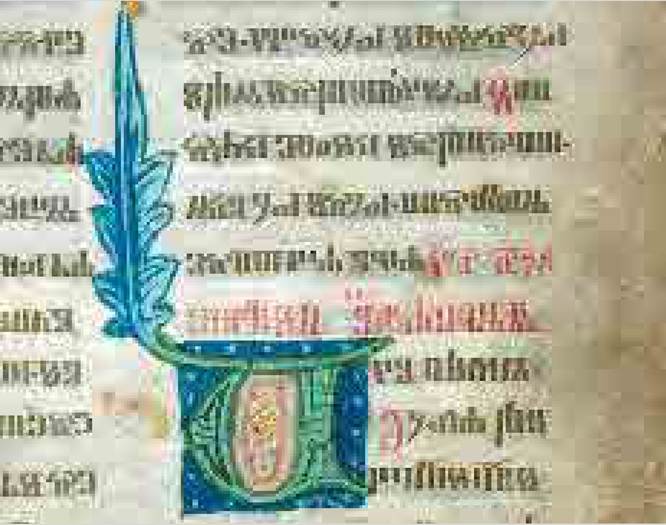
А Собор Святих Отців. Фрагмент. Ізборник. 1073.
A Concile des Saints Peres. Fragment. Izbornyk, 1073.
A Council of the Fathers of the Church. Fragment. Izbornyk, 1073.
Ипатьевская летопись, стб. 118.
7 Там же, стб. 139-140.
1013 роки подає лише лаконічні повідомлення про смерть членів правлячої у Києві родини. Не так уже докладно зафіксовано і наступний період правління князя Ярослава Мудрого. Одиноким об'єктом тієї знаменної епохи, винятковим не лише для України, але й усього тогочасного східнохристиянського світу, є величний Софійський собор з унікальним малярським ансамблем, що включає двісті шіст- десять квадратних метрів мозаїк та близько трьох тисяч квадратних метрів фресок. Іншого такого обширного комплексу малярства XI ст. у світі не збереглося. Ці нечисленні вже нині конкретні свідчення належать до різних сфер культурного життя, природно наголошуючи на багатопланових пошуках та здобутках молодого київського християнства.
Одним із визначальних напрямів власного утвердження “нових людей, просвітлених Духом Святим”, як їх невдовзі окреслив святий Нестор-літописець6, покликане було стати приєднання до великого доробку християнської книжної культури. Звичайно, зовсім не випадково серед корсунських трофеїв святого Володимира Великого літопис окремо відзначив також книги. Вони - “ріки, що наповнюють увесь світ”, - так само не випадково стали не лише лейтмотивом похвали князя Ярослава Мудрого, але й зайняли більшу частину її короткого тексту.
За твердженням літопису, князь “до книг мав схильність, читаючи часто і вдень, і вночі. І зібрав він переписувачів багатьох, і переклали вони з грецької слов'янською мовою Письмо і списали багато книг. І придбав він книги, що ними поучаються люди...”, “любив книги і многі списавши, положив у храмі святої Софії”7. За цими скупими свідченнями криється один з найважливіших напрямів розроблення духовної традиції. Дослідники справедливо трактують наведений фрагмент свідченням про закладення першої в Україні бібліотеки Софійського собору.Християнська практика потребувала книг як одного з найважливіших засобів поширення релігії, хоча на київському ґрунті, природ-
но, побутували не лише християнська книга. Водночас сприймалася й світська література, втім також античного світу: джерела XII ст. уже віднотовують, наприклад, київських цінителів Гомера. Від кінця Х ст. у Києві опрацьовувався корпус найважливіших літературних текстів насамперед богослужбового циклу, які склали історичну основу майбутньої української книжності. Літопис наголошує на особливих заслугах у цій роботі князя Ярослава Мудрого. За його свідченням, “... цей великий князь Ярослав, син Володимира, засіяв книжними словами серця віруючих”8. Значення такого історичного діяння було для сучасників очевидним: “коли хто читає книги, то бесідує з Богом і святими мужами. Читаючи бесіди пророків, евангель- ські та апостольські повчання і житія святих отців, знайде він для душі користь велику”9.
Попри панегіричний тон внесаної до літопису під 1037 р. похвали князеві як своєрідного підсумку його діянь, з наведеного викладу найважливіших положень цього своєрідного тексту постає яскрава картина цілеспрямованих систематичних зусиль задля прилучення до всього комплексу винятково багатої схід- нохристиянської книжної традиції, його прищеплення і засвоєння на місцевому ґрунті. Митрополит Іларіон підвів ніби своєрідний підсумок цього процесу, вочевидь випереджуючи пізнішу літописну апологію книги.
Він, безперечно, мав достатні підстави ствердити очевидною прикметою своєї епохи забезпечену зусиллями попередників своєрідну адресу своєї знаменитої, як сам її окреслив, - “повісті”: “Не до незнаючих пишеться, а до через край наповнених солодкості книжної”10. Нині вже складно навіть здогадуватися, що конкретно мало стояти за цим окресленням. Проте сама повість київського митрополита переконує, що така характеристика - набагато більше ніж звична фігура урочистого красномовства.Доробок тогочасних київських книжників зберігся хіба що в пізніших списках, тому конкретний перебіг їхньої роботи перебуває поза можливістю осягнення. Перші кроки, безсум-
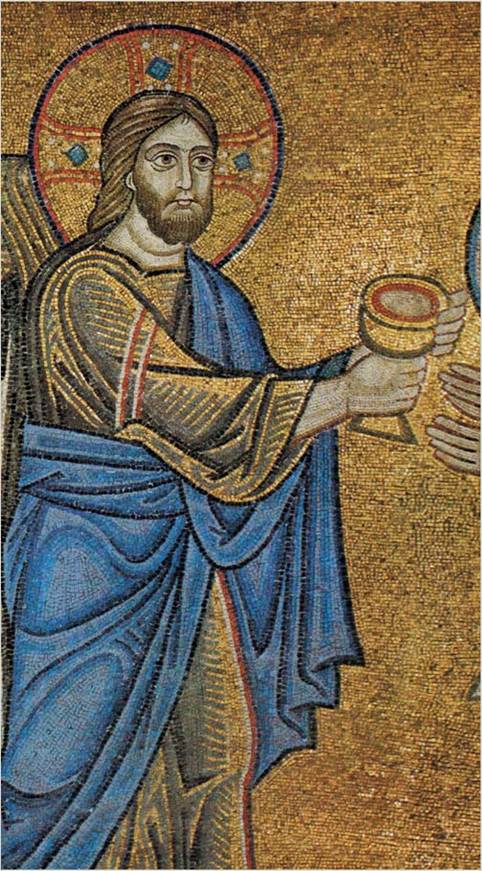
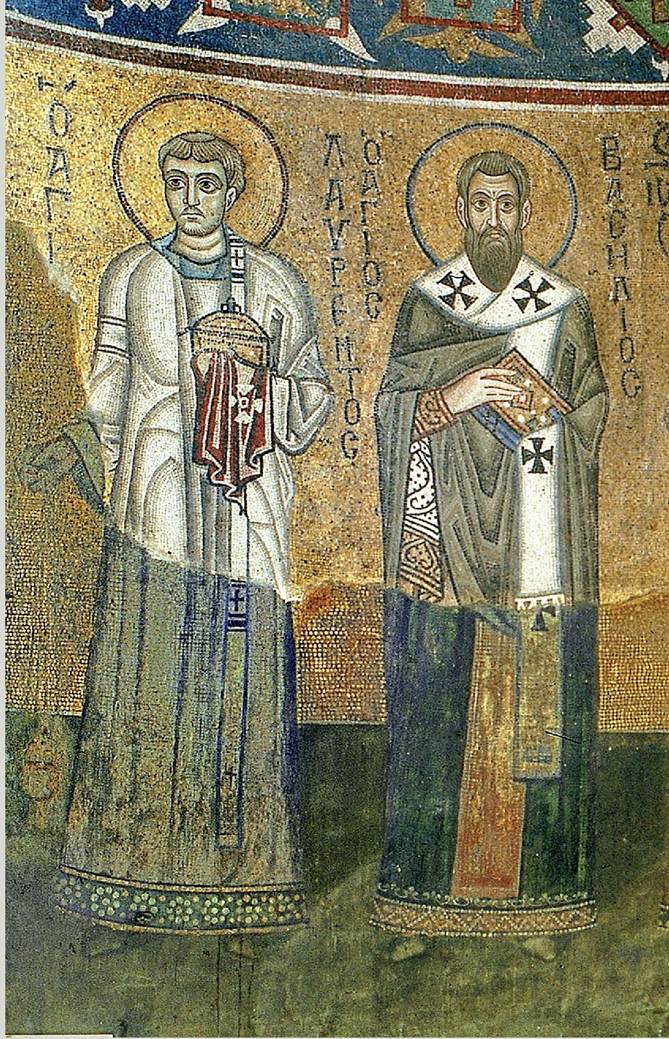
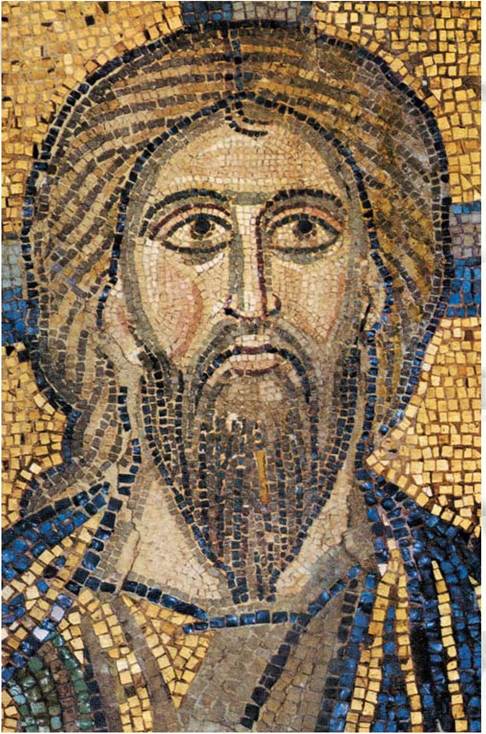
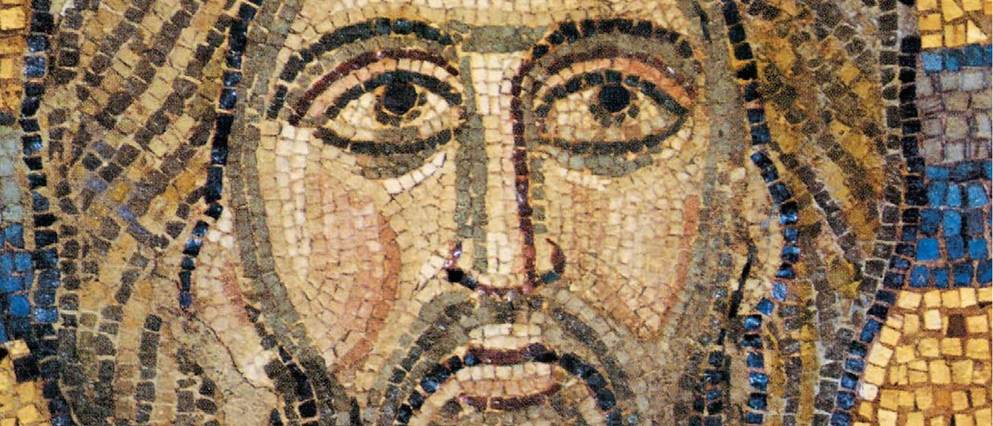
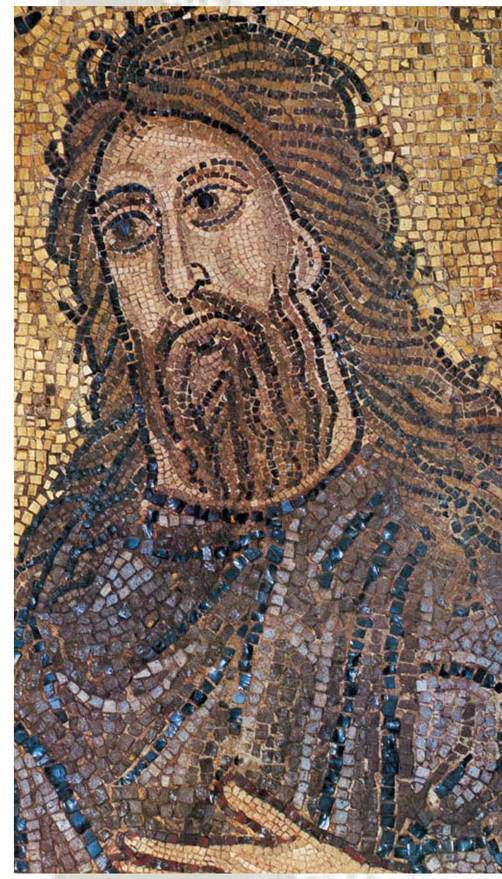
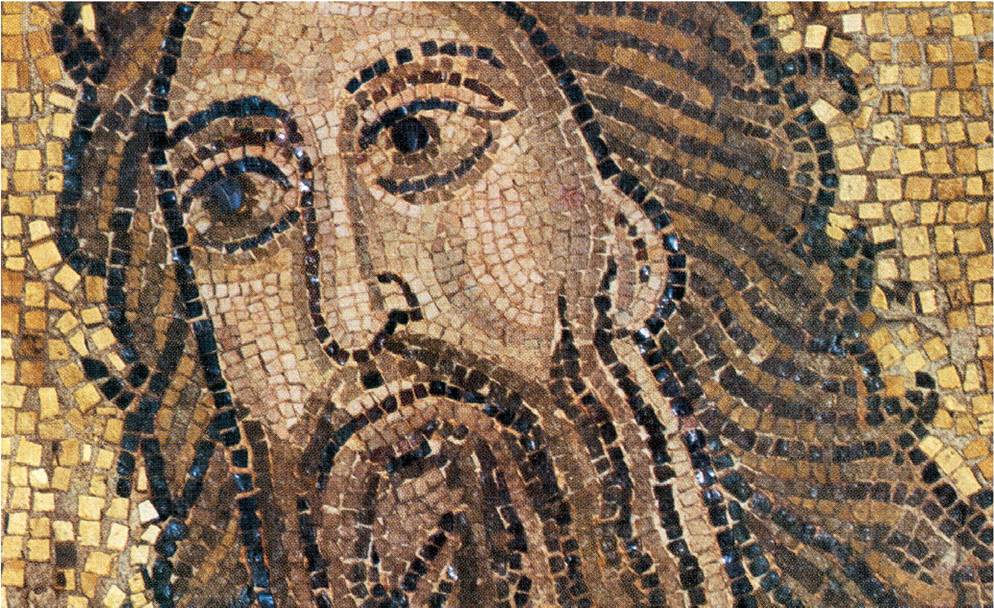
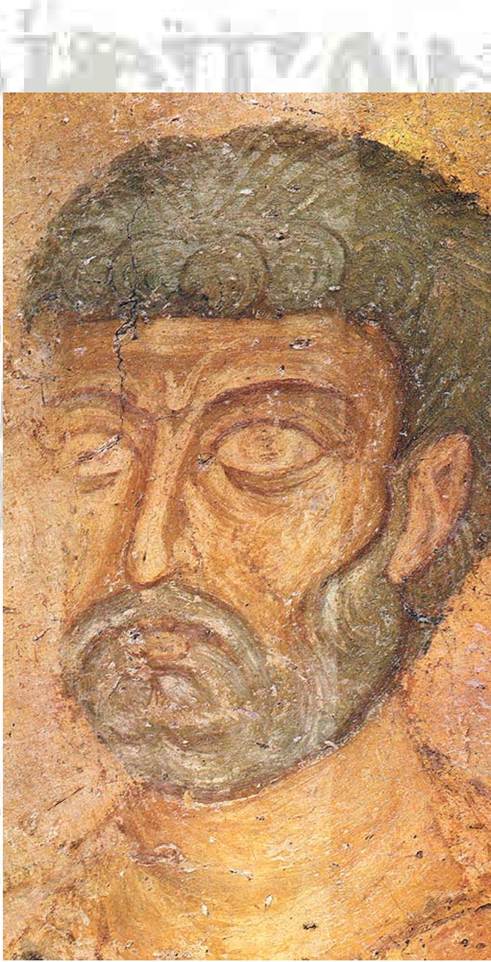
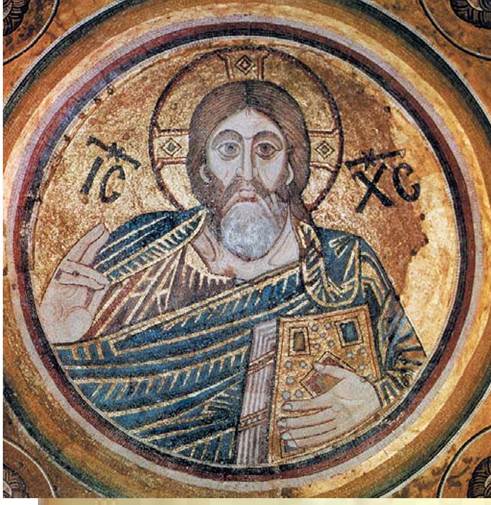
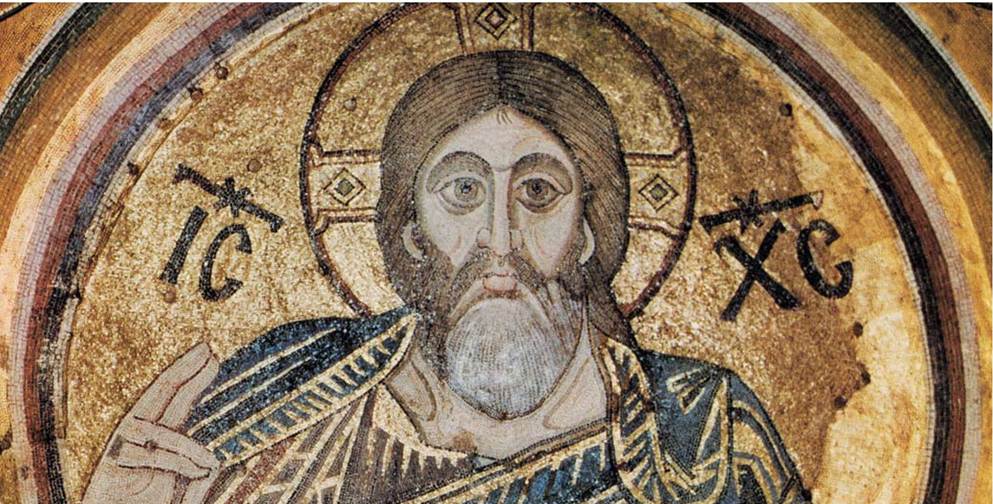
А Христос. Права постать Євхаристії. Фрагмент. Софійський собор у Києві.
А Le Christ de I’Eucharistie. Fragment. Cathedrale Sainte-Sophie a Kiev.
A Christ distributing the Eucharist. Fragment. Cathedral of Saint Sophia in Kyiv.
8 Там же, стб. 140.
9 Там же.
10 А. М. Молдован, “Слово...”..., с. 79.
нівно, зроблено ще за часів святого Володимира Великого. Як переконують збережені ранні пам'ятки, крім власне візантійських джерел, важливу роль при цьому відіграли напра- цювання раніше християнізованої Болгарії. Книжники князя Ярослава Мудрого діяли на підготовленому й освоєному ґрунті, використовуючи досвід попередників. Проте водночас літописна розповідь однозначно стверджує самостійний всебічний розвиток книжності щойно за часів князя-книголюба. Найважливішим свідченням цього стала стверджена літописом поява саме тоді повного комплекту Святого Письма. Це визначальне для релігійної традиції осягнення потрактовано здобутком співвіднесеного з часами правління знаментитого князя остаточного утвердження київського християнства, заслугою згуртованої навколо нього ученого прошарку, над плеканням якого князь працював самовіддано і послідовно. Лаконічні вирази літописної похвали Ярослава Мудрого яскраво обрисовують особистий інтерес самого князя до книжності та книжної культури, водночас у найзагальніших рисах окреслюючи те середовище учених людей, зусиллями якого творився цей зовсім новий напрям традиції молодого християнського суспільства.
Судячи як з вимовного свідчення митрополита Іларіона, так і значно докладнішого висловлювання літописної похвали, сучасники сприймали книжність важливим чинником тієї високої позиції, яку Київ часів Ярослава Мудрого посів у тогочасному європейському світі. На це своєрідне місце недавно християнізованої держави київських володарів вимовно вказують насамперед родинні зв'язки знаменитого князя. Через матір сам він доводився двоюрідним братом візантійському імператорові Костянтину IX Мономахові. Його друга дружина Інгігерда (Ірина) була донькою шведського короля Олафа III. Через доньок князь породичався з багатьма правлячими династіями Європи. Найстарша Анастасія вийшла заміж за угорського короля Ендре I, Єлизавета стала дружиною норвезького короля Гаральда III Су-
ворого, а після його загибелі - датського короля Свена II Естрідсена, Анна вийшла за французького короля Генріха I. Сестру Добронігу князь видав за польського князя Казимира I Відно- вителя. Син Всеволод одружився з Марією - донькою візантійського імператора Костянтина IX Мономаха, своєю троюрідною сестрою. Дружиною сина Ізяслава стала Гертруда - донька польського короля Мєшка II. Син Святослав одружився з Киликією, донькою німецького графа Етелера. Син Вячеслав правдоподібно взяв шлюб з Одою, донькою нижньосаксон- ського графа Ліппольда Штаденського, а Ігор - Кунегундою, донькою саксонського маркграфа Оттона. Династичні родинні зв'язки засвідчу-
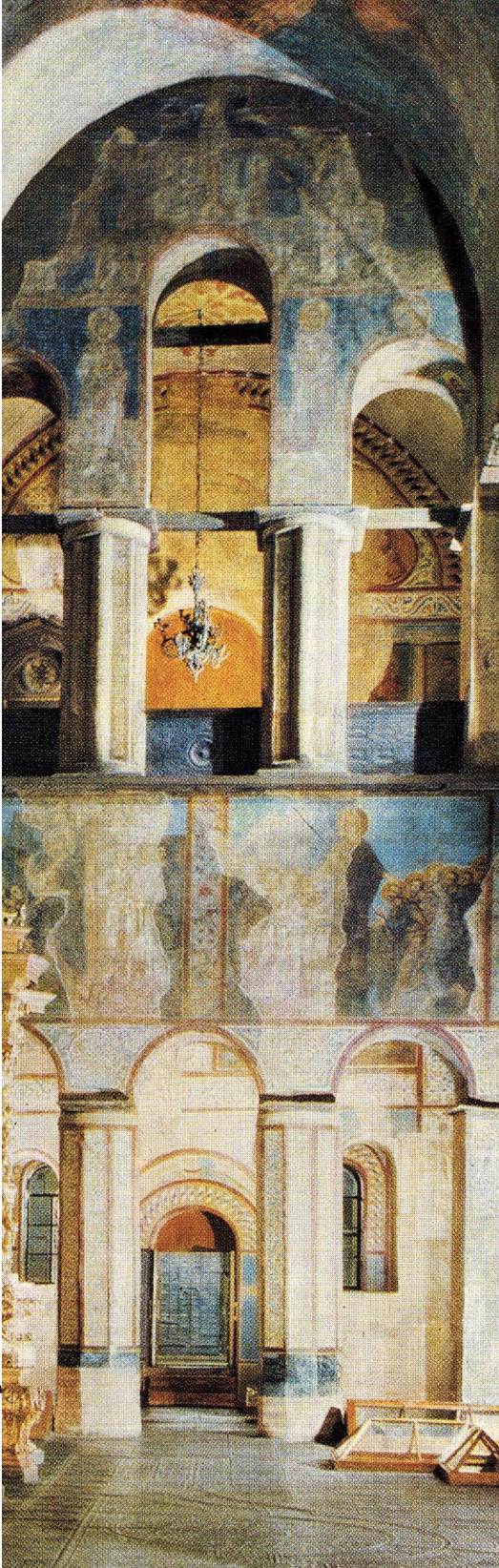
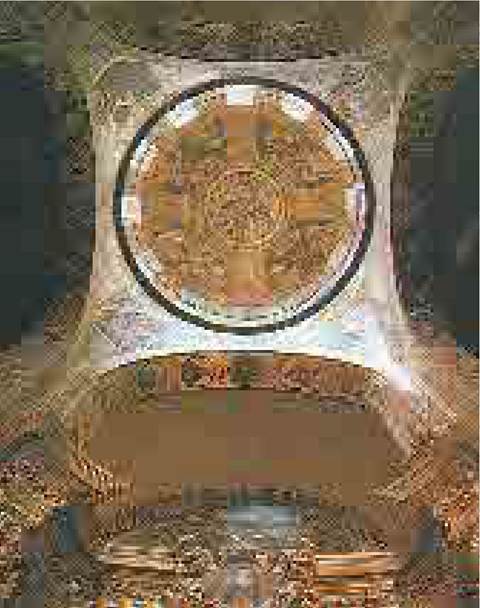
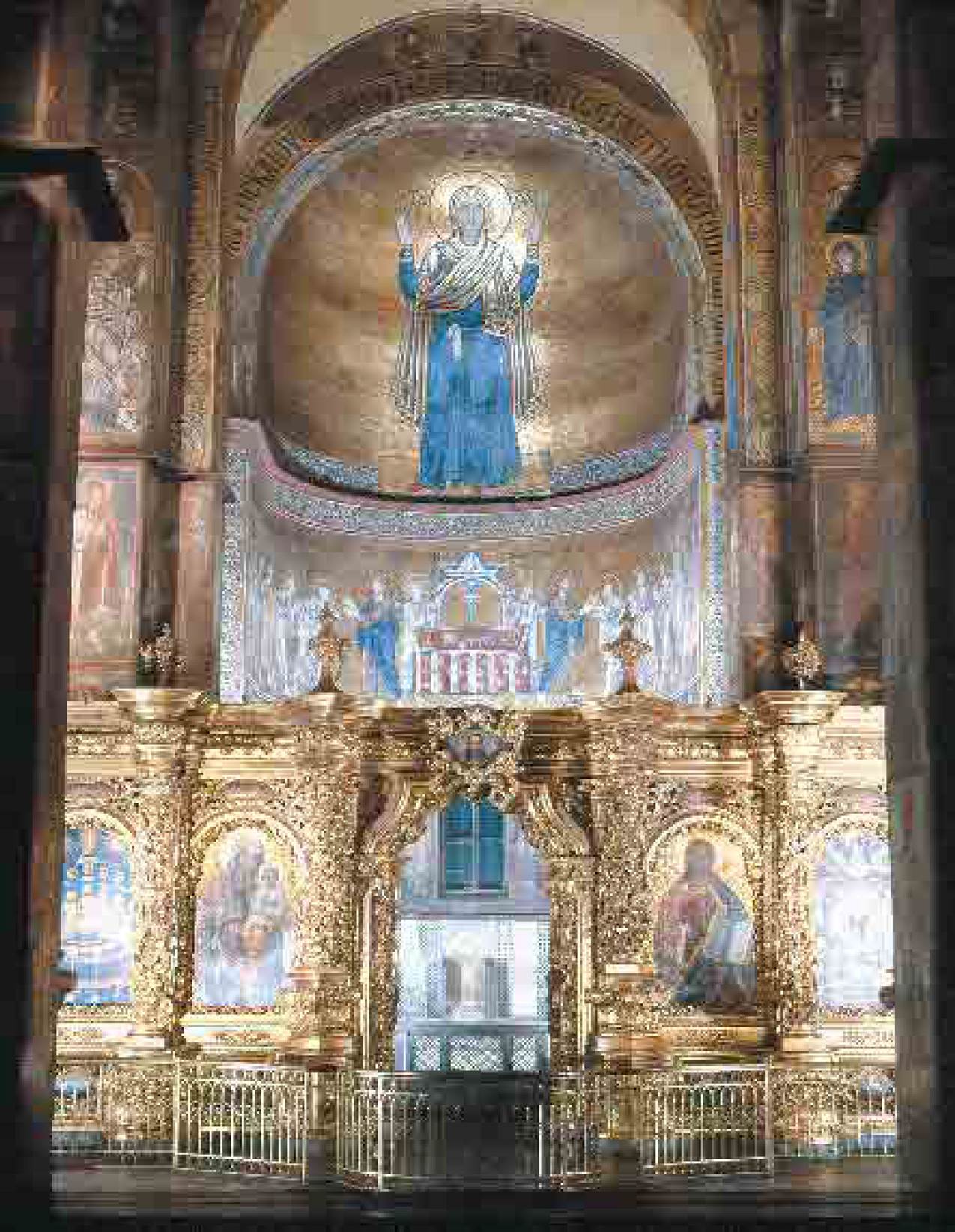
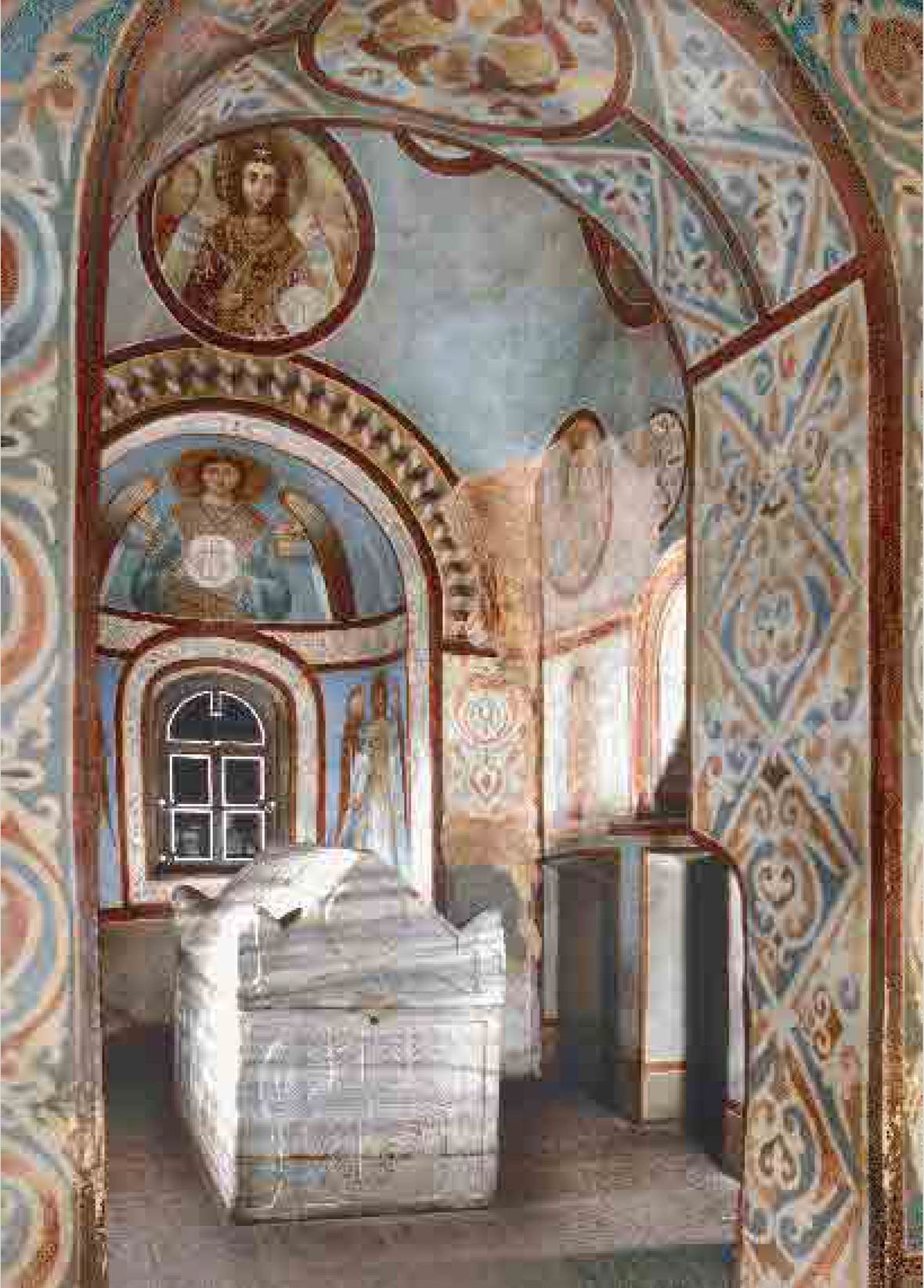
Ч Софійський собор у Києві. Інтер’єр. Вигляд на вівтар. Ч Cathedrale Sainte-Sophie a Kiev. Interieur. Vue du sanctuaire.
4 Cathedral of Saint Sophia in Kyiv. Interior. View of the sanctuary.
ють органічне входження держави Ярослава Мудрого до широкої європейської спільноти. Вони як би зі свого боку підтверджують знаменитий зворот митрополита Іларіона з його похвали святому Володимирові Великому - уже він “не в бідній бо і незнаній землі владарював, а руській, знаній і чутній по всіх чотирьох кінцях світу”11. Князь Ярослав причинив цієї слави, немало доклавши до здобутків попередньої епохи. Час розпорядився так, що одиноким автентичним київським свідченням не тільки європейських контактів, але й водночас цілеспрямованої роботи київського культурного середовища на полі книжності судилося стати збереженому в невеликому фрагменті одинокому спискові Евангелія, який мав потрапити до Франції з донькою Ярослава Мудрого Анною й зберігається у міській бібліотеці давнього коронаційного міста французьких королів - Реймсу.
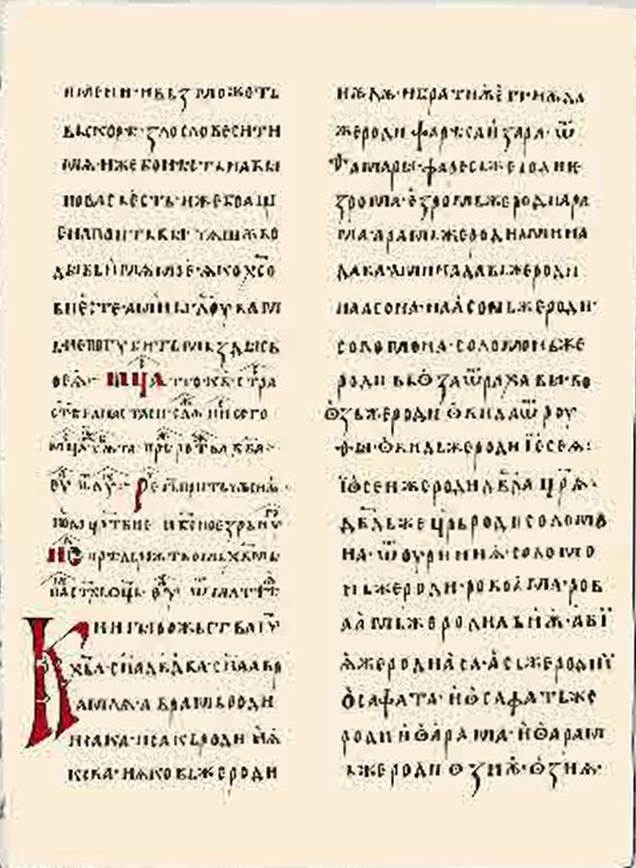
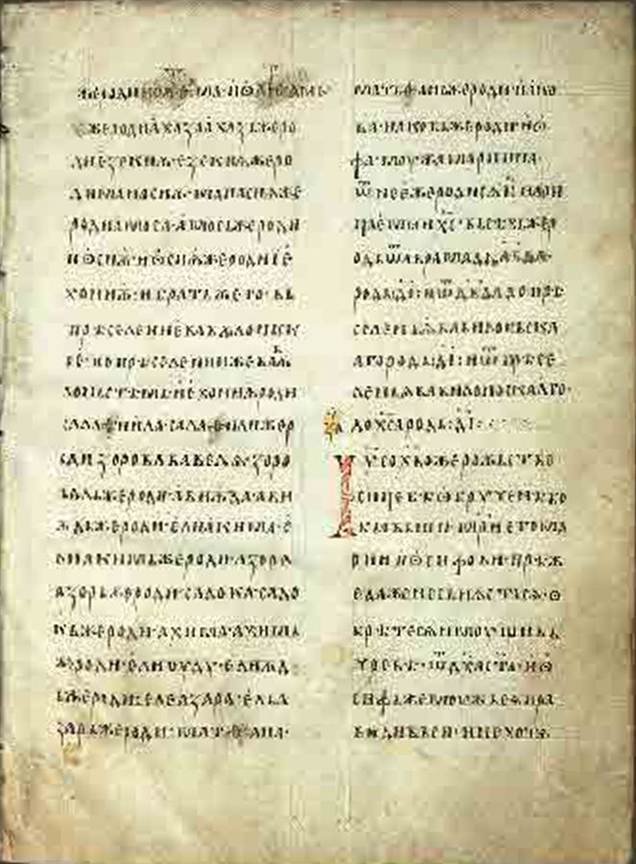
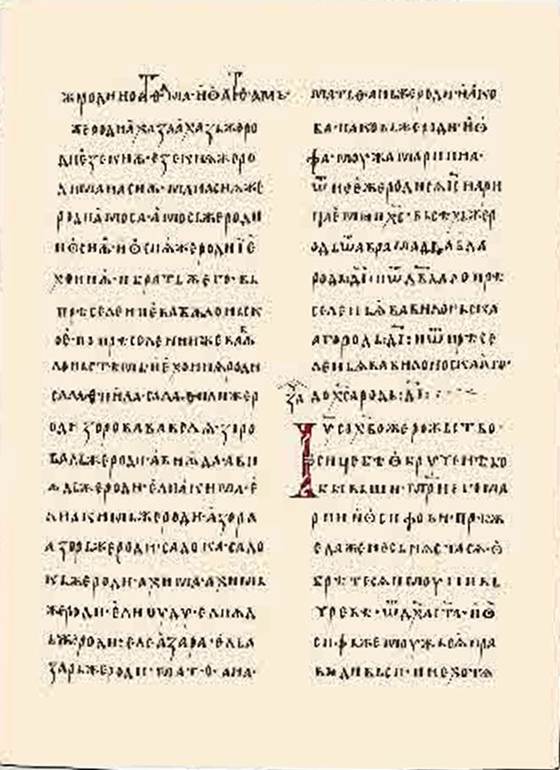
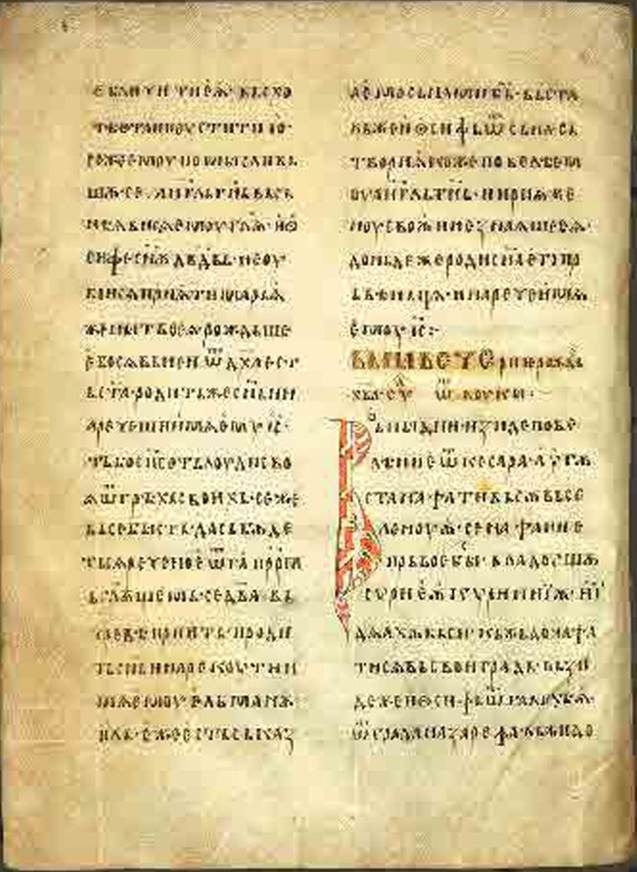
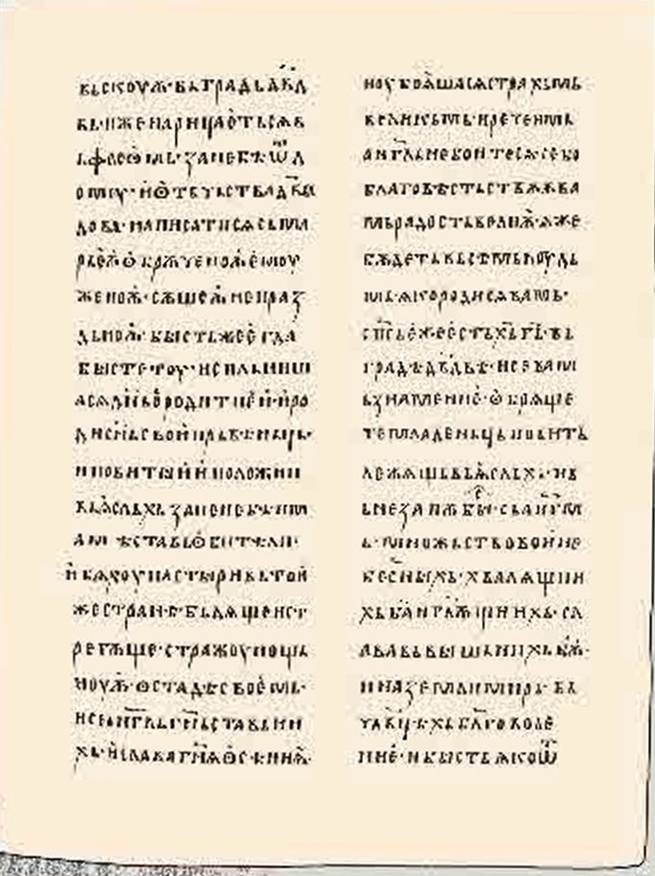
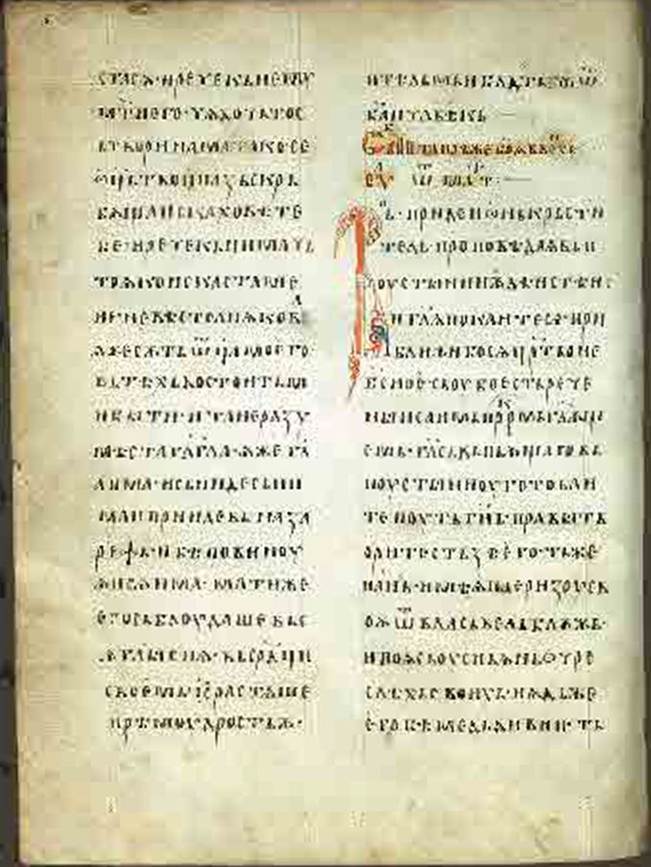
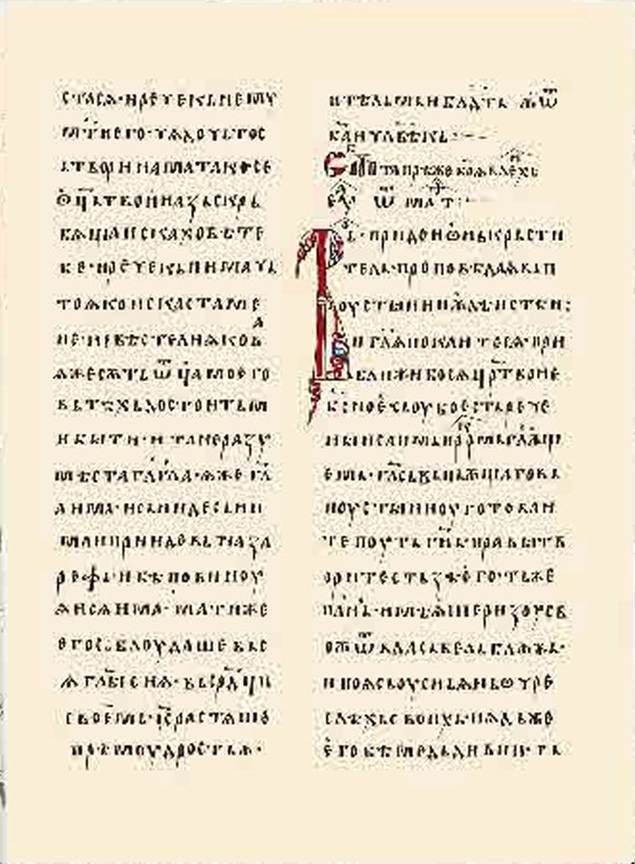
Старокиївське Реймське Евангеліє - доволі своєрідна позиція культурної спадщини України. Досить скромно засвідчене писемними джерелами та автентичними пам’ятками творення нової християнської культурної традиції природно знайшло відображення і в поодиноких її аспектах. Книжна культура не могла стати винятком із цього загального правила. Окрім скупих літописних швидше натяків, ніж конкретних повідомлень, оригінальих свідчень про ці зусилля з епохи немає. Їхні сліди збереглися насамперед як у самому складі, так і конструкції та оздобленні найдавніших київських рукописів. Першим загальновідомим серед них є постале щойно в 1056-1057 роках Остромирове Евангеліє, наступними - два ’’Ізборники” 1073 та 1076 років, створених у княжому середовищі і для нього. Відсутність автентичних сучасних слідів не заперечує реального історичного процесу, проте назагал його доводиться реконструювати насамперед за пізнішими, до того ж, - здебільшого посередніми переказами, поодинокими дотичними повідомленнями та на підставі здогадів. Комплекс конкретних свідчень до початків київської книжності розпочинає Евангеліє, переписане в Києві для новгородського посадника Ост- ромира. Проте кирилична частина згаданого Евангелія зі знаменитого Реймського собору, яке нині переховується у міській бібліотеці Реймсу, так само має київське походження і навіть випереджує Остромирове Евангеліє. Сам кодекс знаний від 1717 р. коли його оглядав під час перебування у Франції і визнав “руським” російський цар Петро I й неодноразово відно- товувався у літературі ще XVIII ст. 1835 р. його заново віднайшов Олександр Тургенєв під час
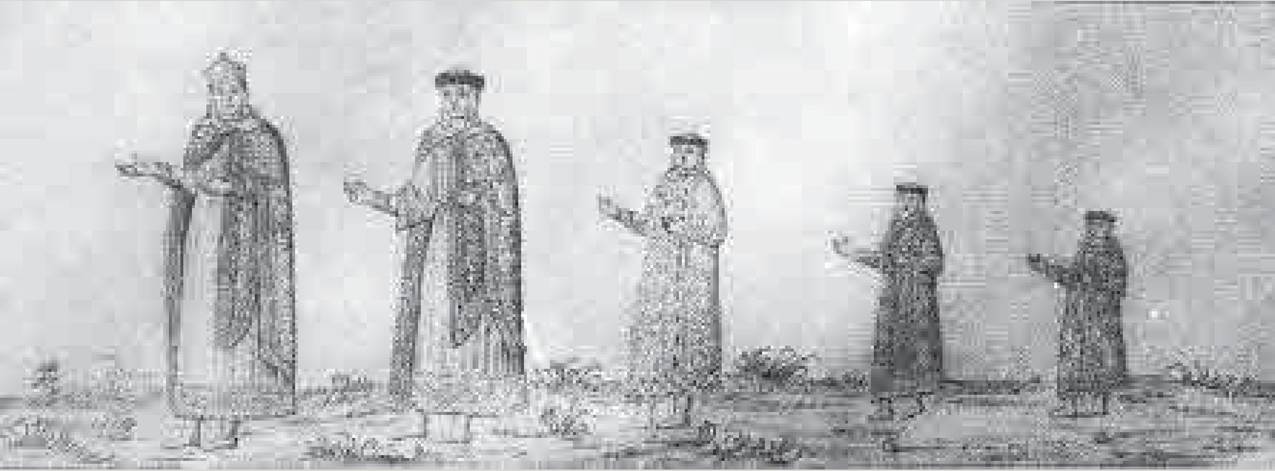
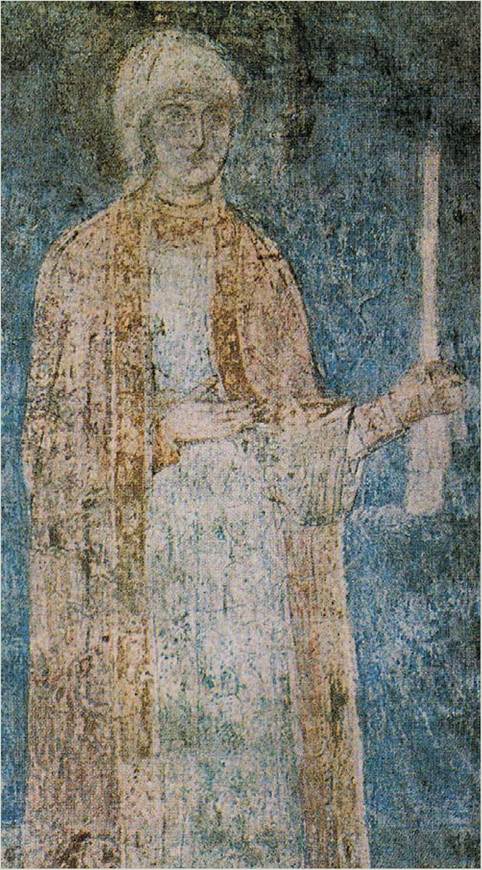
[ZA Абрагам ван Вестерфельд. Сім’я князя Ярослава Мудрого. Рисунок з фрески Софійського собору в Києві. 1651.
європейської поїздки задля пошуку матеріалів до історії Росії.
Конволют, у складі якого збереглися аркуші Реймського Евангелія, досліджений мало; як на пам'ятку зовсім виняткового значення для старокиївської традиції він фактично надалі перебуває поза головною сферою наукових інтересів. Тим більше скромною є його дотеперішня присутність в українській культурній свідомості. Київське Реймське Евангеліє так і не посіло належного йому місця серед українських культурних надбань, фактично надалі залишається маловідомим. Хоча його ніби й не випадало б визнавати забутим, українські вияви пам'яті про реймські аркуші як власну найстаршу книгу ніяк не співмірні з їхньою винятковою позицією не тільки на тлі початкового періоду київського християнства, але й історичної традиції України загалом. Це ширше значення заслуговує окремого наголошення, оскільки реймський фрагмент - не лише найдавніший київський оригінальний рукопис, але водночас повинен бути визнаний ще й найстаршою богослужбовою книгою Київської Церкви.
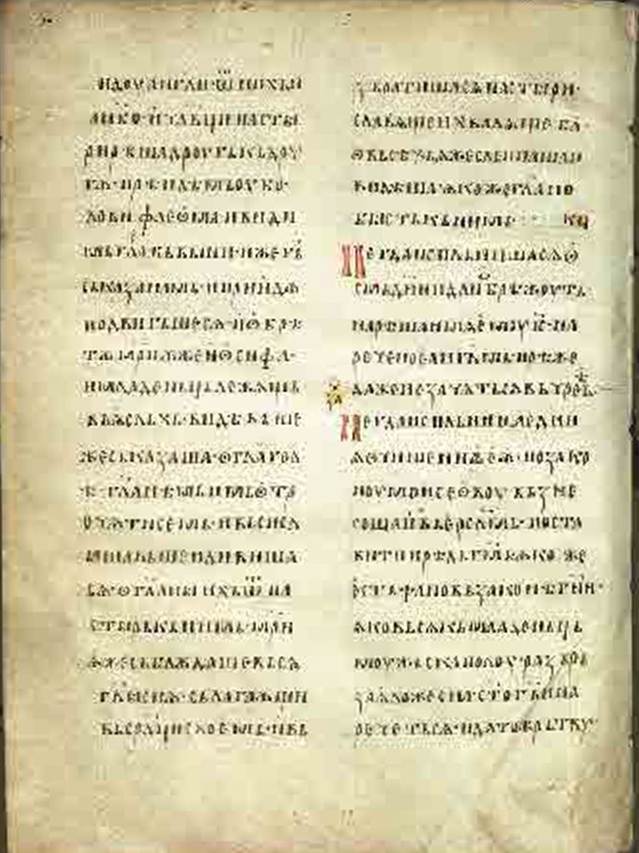
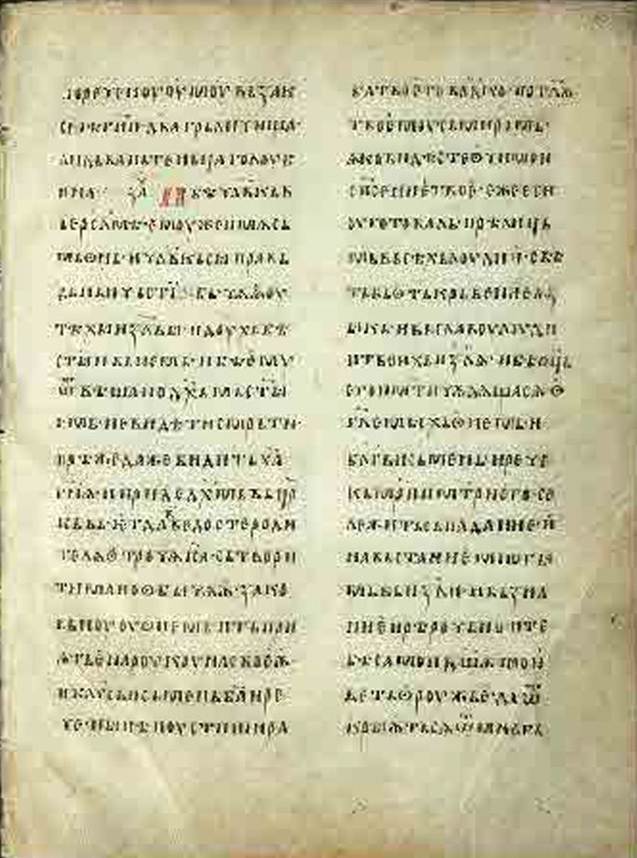
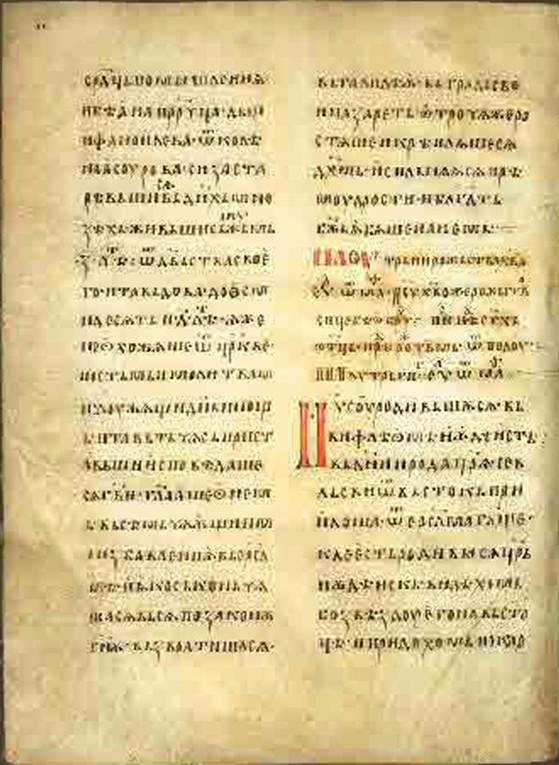
Вціліла кирилична частина Реймського Евангелія нараховує лише шістнадцять арку-
Abraham Van Westerfeld. Famille du grand-prince Yaroslav le Sage. Dessin de la fresque de la cathedrale Sainte-Sophie a Kiev, 1651.
ГА Abraham Van Westerfeld : Family of Prince Yaroslav the Wise. Drawing of fresco in the Cathedral of Saint Sophia in Kyiv, 1651.
11 А. М. Молдован, “Слово...”.., c. 92.
шів, приєднаних як заключні 19 та 20 зошити до глаголичного ілюстрованого рукописного Евангелія і Апостола, що має тридцять один аркуш; цю молодшу частину кодексу відносять до XIV ст. Таке зіставлення доводить, що на час укомплектування обидві вони розглядалися повноцінними складовими єдиного кодексу й були об'єднані саме на таких засадах. 1843 р. в Парижі коштом російського уряду кириличний фрагмент рукопису опубліковано літографським способом. Правда, тоді допущено численні помилки, оскільки французький літограф не розумів не лише самого тексту, але навіть накреслення поодиноких літер, які йому доводилося відтворювати. Допущені спотво-
рення природно породили невірні інтерпретації серед дослідників середини - другої половини XIX ст. Нерідко вони даються взнаки й у новіших публікаціях. Наступне факсимільне видання способом геліогравюри побачило світ 1899 р., проте й після нього рідкісна пам'ятка залишилась на обочині наукових досліджень, не викликаючи належного й оправданого зацікавлення. Фахова література ХХ ст. навіть зверталася до унікального рукопису рідше, ніж попереднього століття. Він виявився ніби загубленим у регіональній французькій колекції. Для української науки давньокиївське Реймське Евангеліє взагалі існує винятково через принагідні короткі згадки на сторінках оглядових видань та популярної літератури. Систематичні дослідження над тим комплексом проблем, який постає при зверненні до цієї унікальної позиції національної спадщини, в Україні практично не ведуться.
Не змінив не зовсім зрозумілої, правду кажучи, новішої долі унікального старокиївсько- го рукопису навіть показ Евангелія на виставці у Москві 1975 р. Як не дивно на тлі загальновідомого російського інтересу до старокиївської спадщини, вираженого через її послідовне присвоєння, але це також не дало істотного зрушення у вивченні рукопису. Мало не одиноким науковим результатом московського показу стала видана невеликим накладом брошура - скромна попередня публікація знаного російського мовознавця Лідії Жуковської12. Вона підвела короткий підсумок наявних у науці інтерпретацій реймської пам'ятки, переконано віднісши її до київської книжкової спадщини першої половини XI ст., вказала на найвиразніші помилкові моменти раніших трактувань, дала лаконічну характеристику мовних особливостей списку, навела докладний його склад, відзначила помилки переписувача і в додатку відтворила сам текст. Московська дослідниця стала першим фахівцем-філологом, який мав можливість вивчити реймські аркуші в оригіналі, однак оприлюднений конкретний науковий результат виявився надто скромним.
Найважливішим позицією публікації став висновок про відображення у списку редакції євангельських книг, що випереджує Остро- мирове Евангеліє, пропонуючи ранішу версію перекладу канонічних Евангелій. Згодом дослідниця опублікувала ще одну, але так само коротку студію текстології збереженого в Реймсі фрагменту старокиївського кодексу. У брошурі Л. Жуковська, правда, анонсувала окреме дослідження з аналізом письма, мови та тексту, однак цього наміру не реалізувала.
Найраніша частина рукопису не донесла ніяких вказівок щодо свого походження - будь-які записи у ній відсутні, оскільки до нас дійшов тільки випадковий фрагмент самого списку, який за місцем у кодексі звично не міг включати такої інформації. Тому, з огляду на найдавніший родовід - його найважливішим свідченням є мовні особливості самого тексту, історія цих аркушів нині реконструюється лише гіпотетично через зіставлення зі знаними фактами взаємозв’язків Києва та Франції середини XI ст.
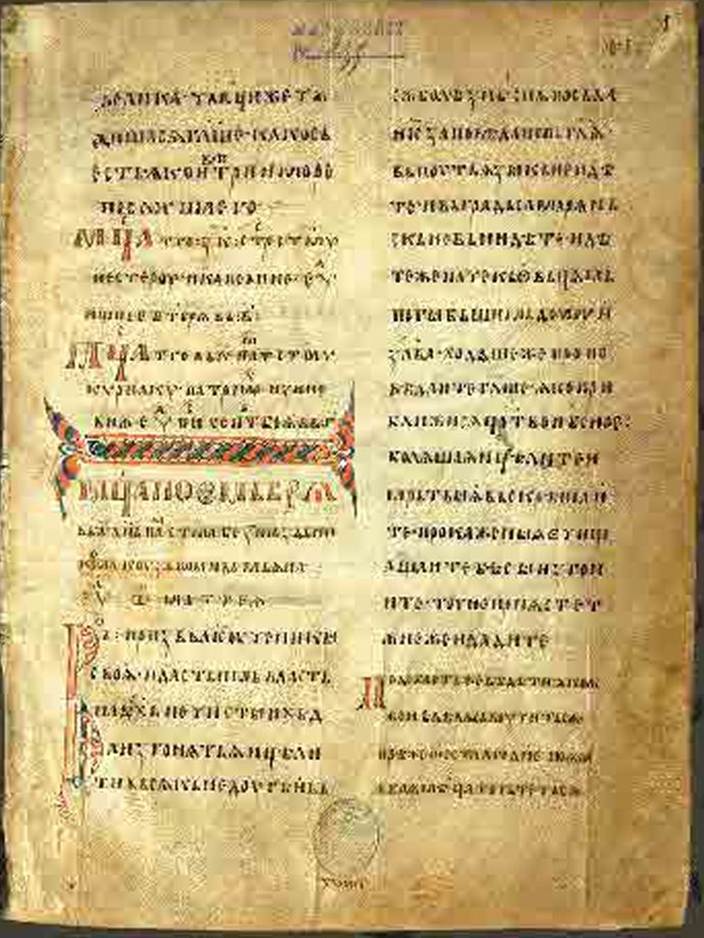
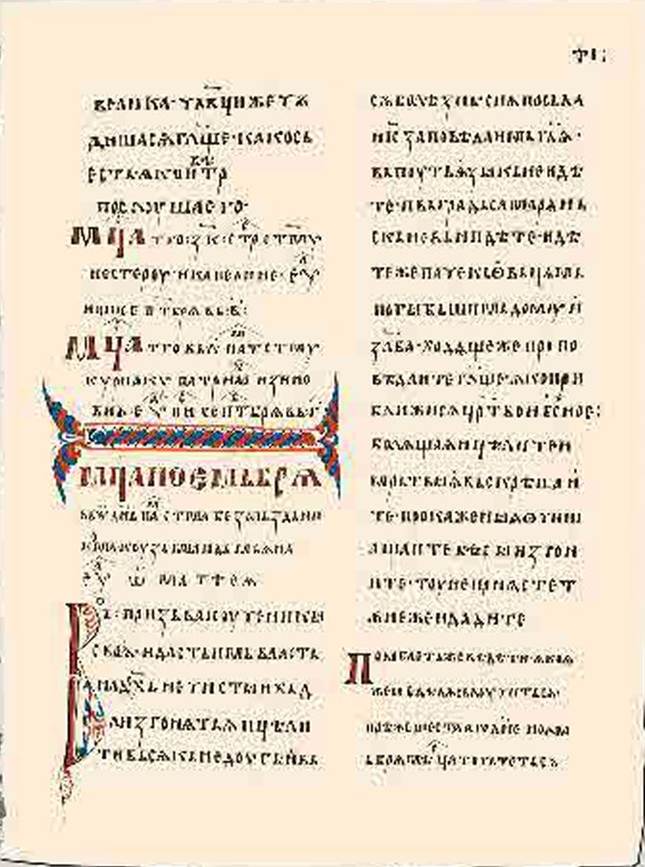
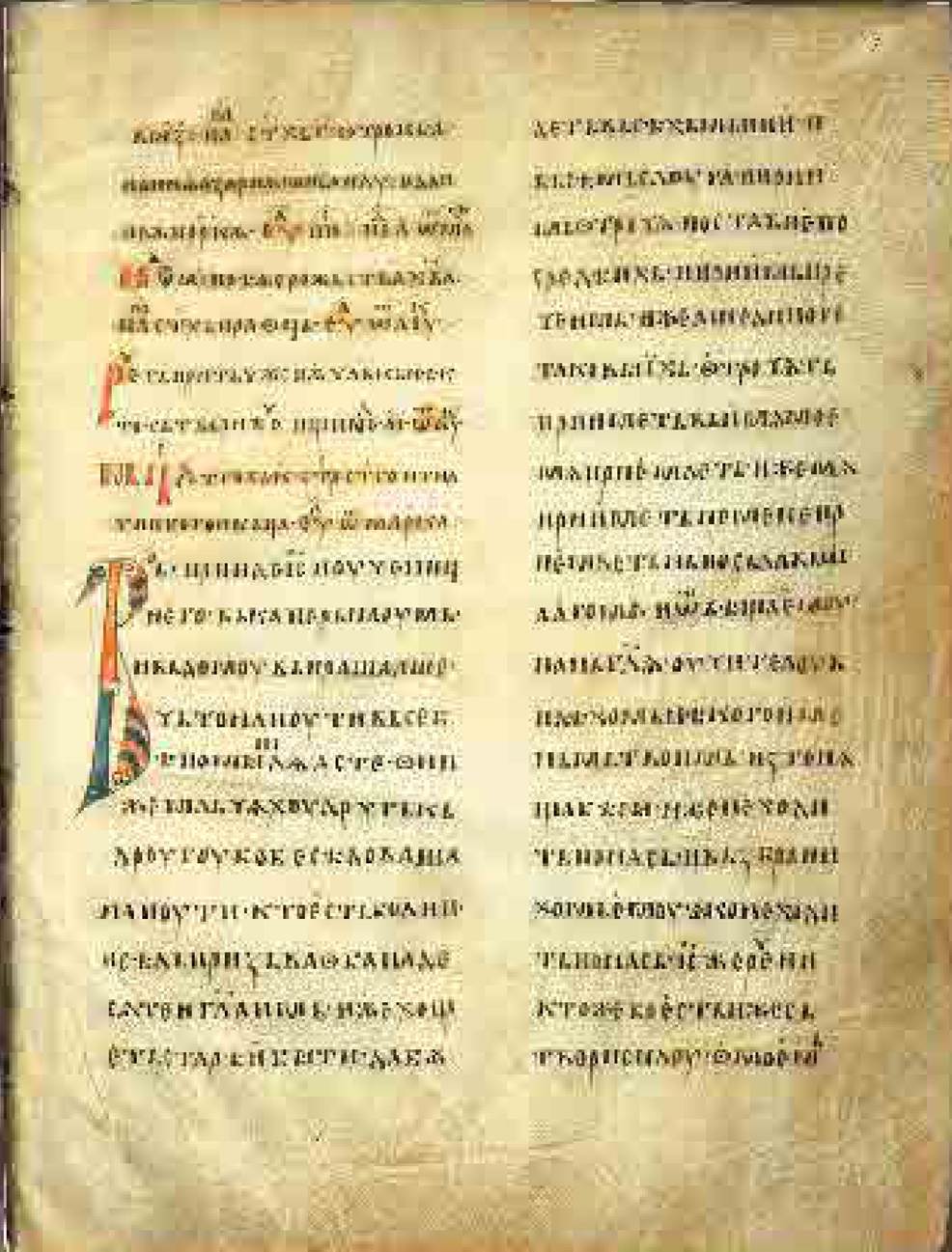
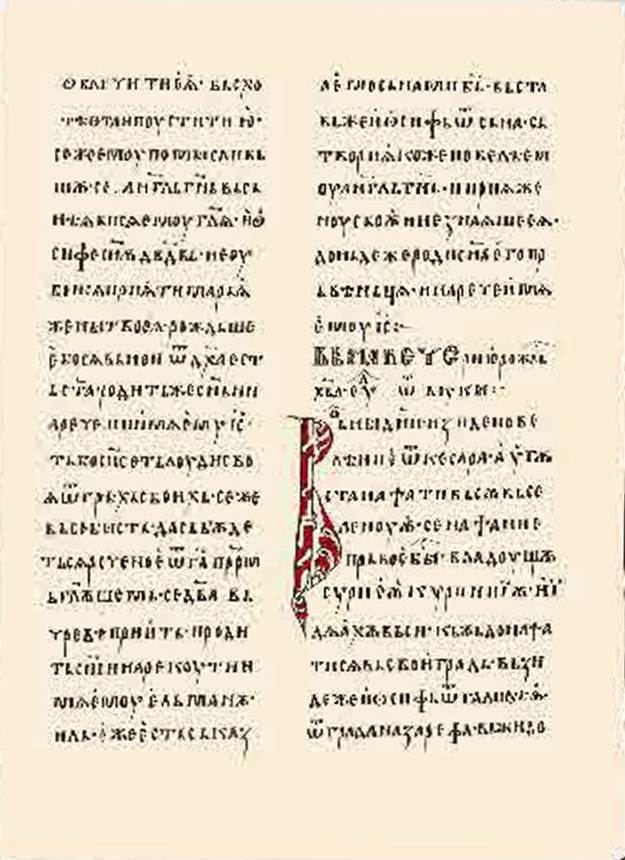
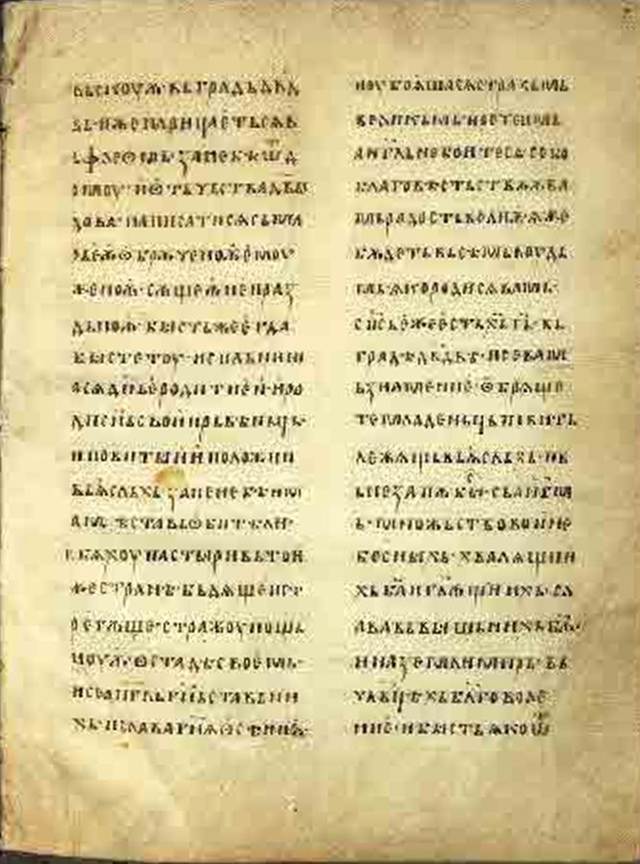
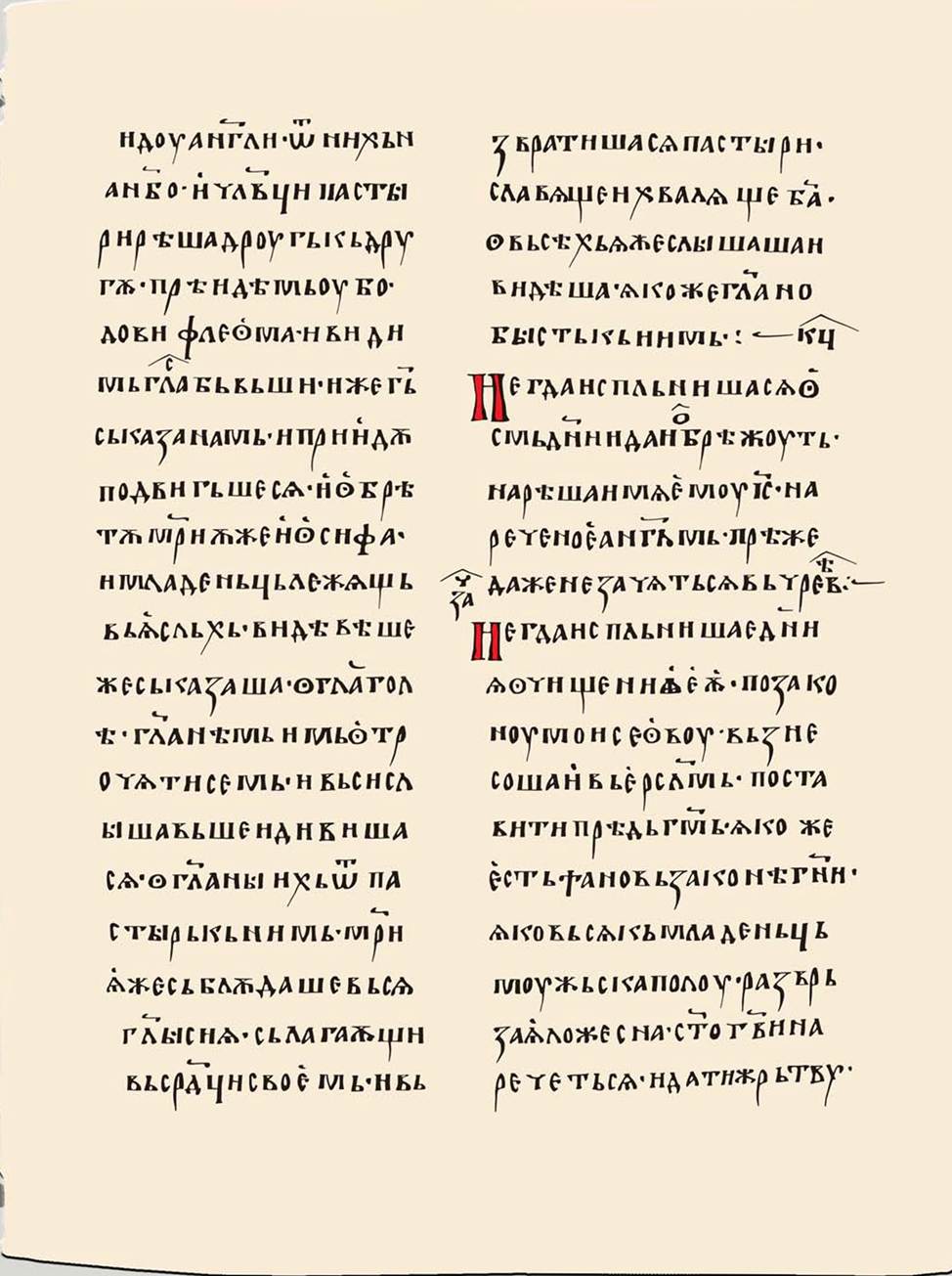
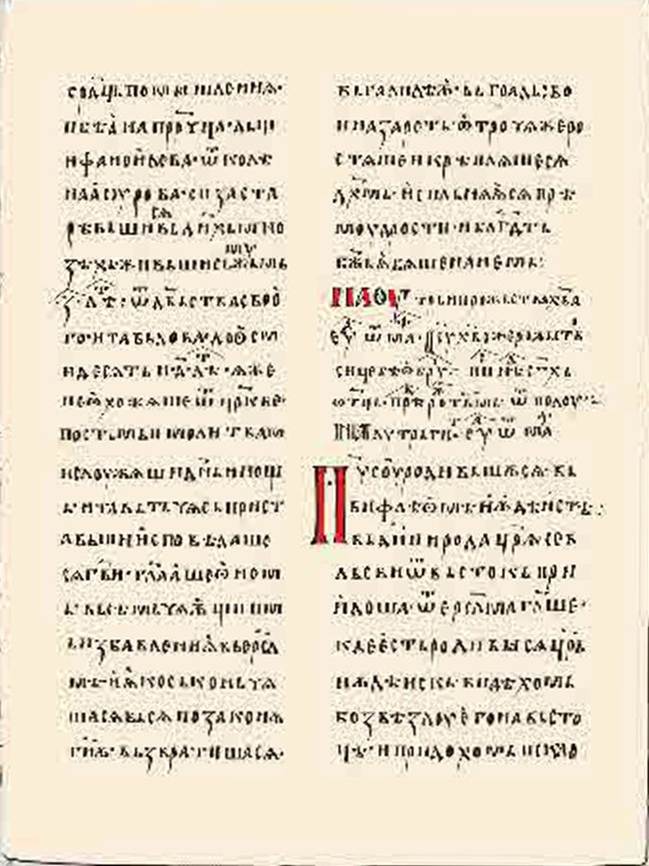
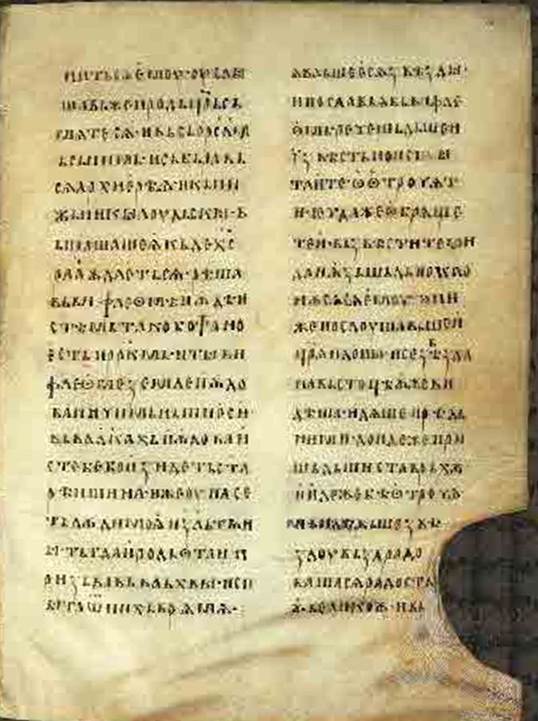
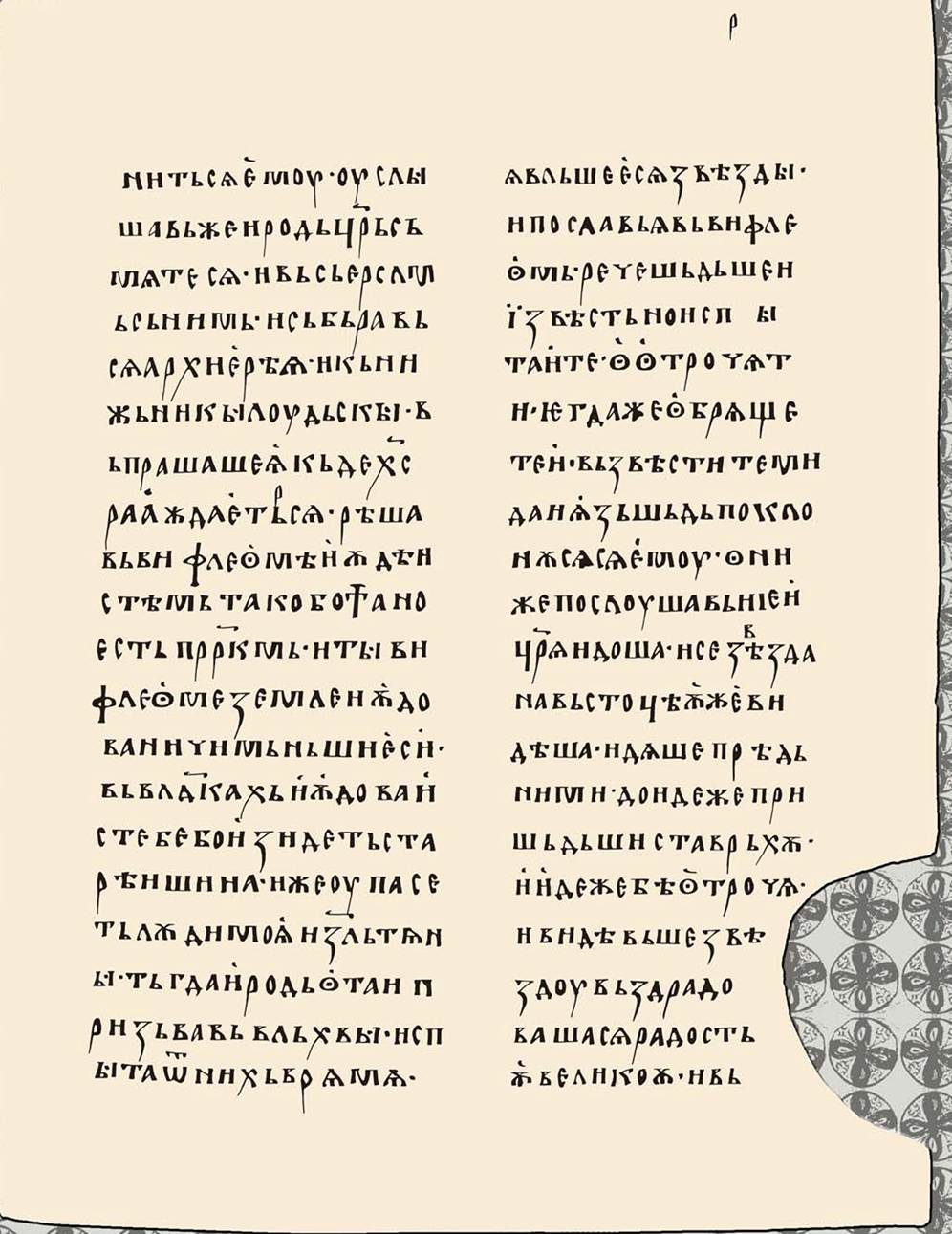
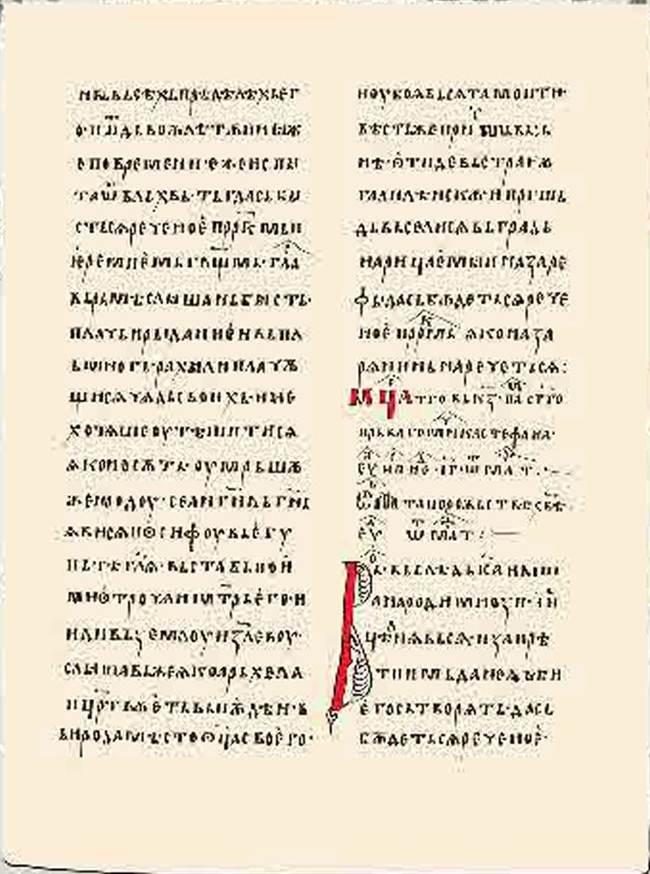
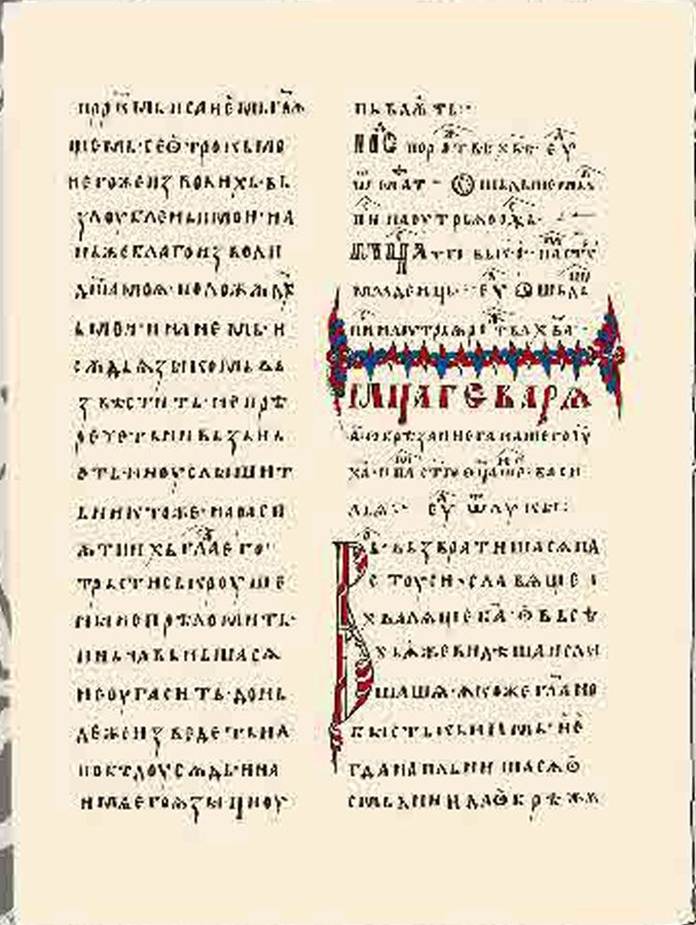
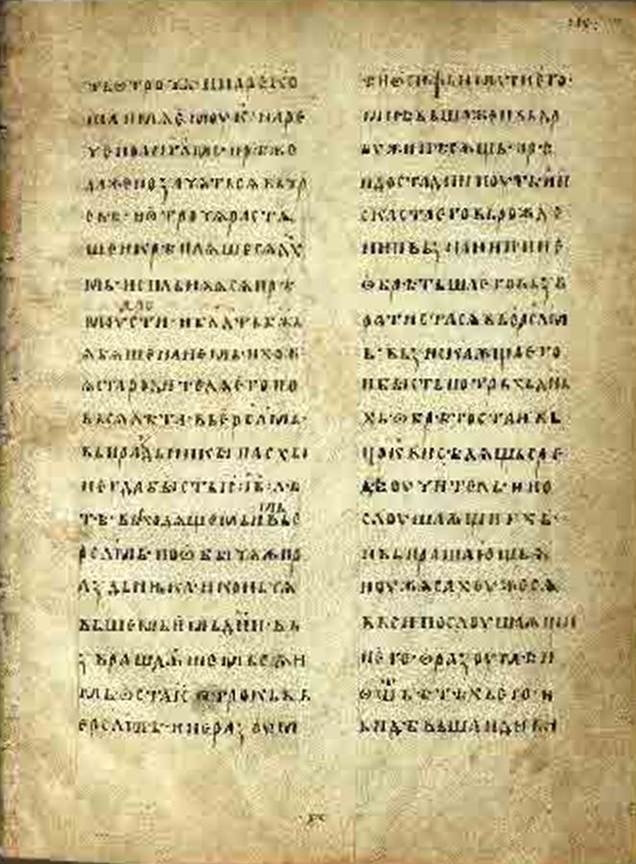
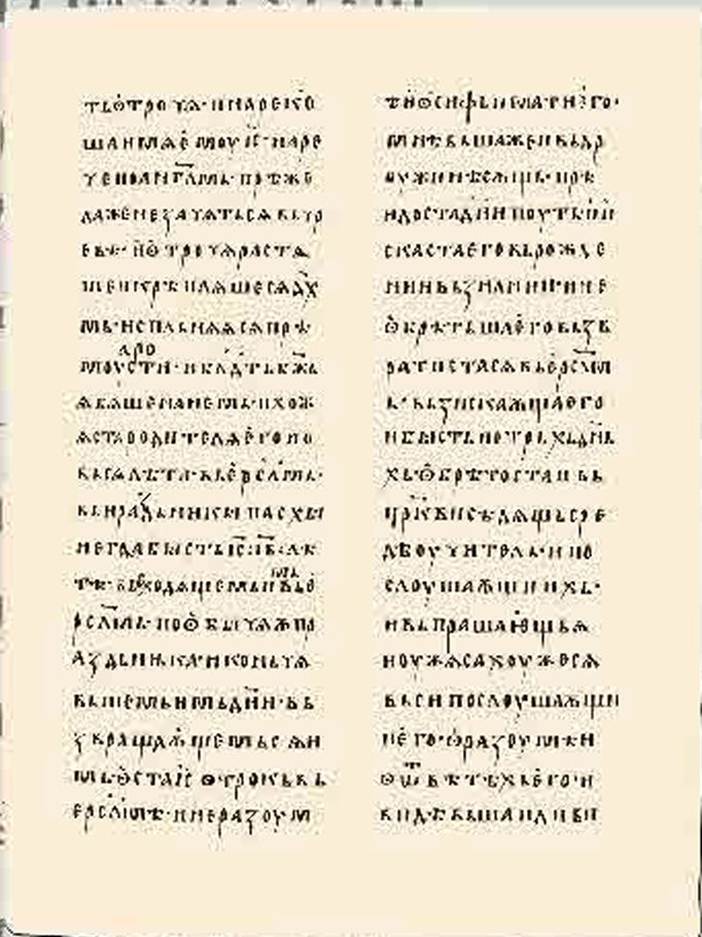
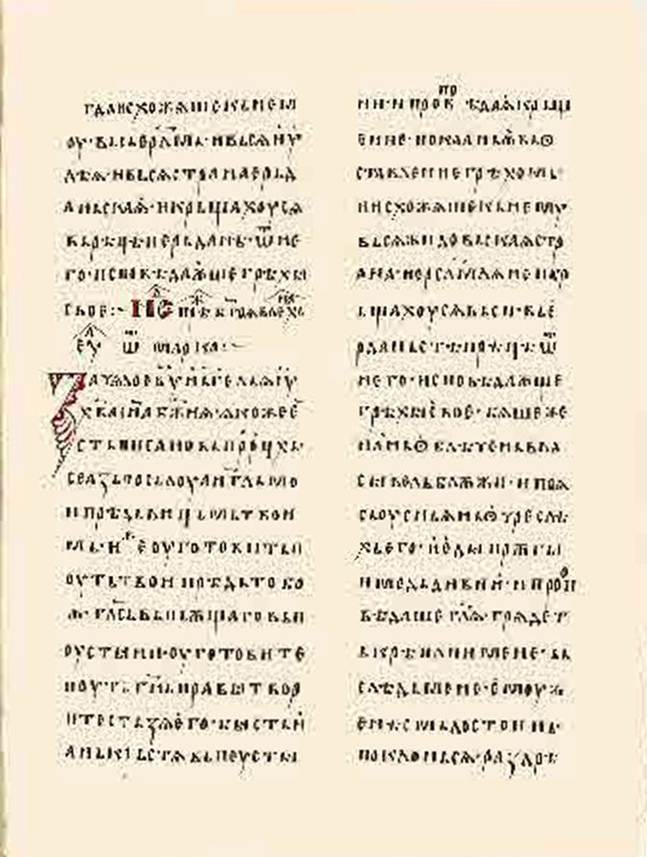
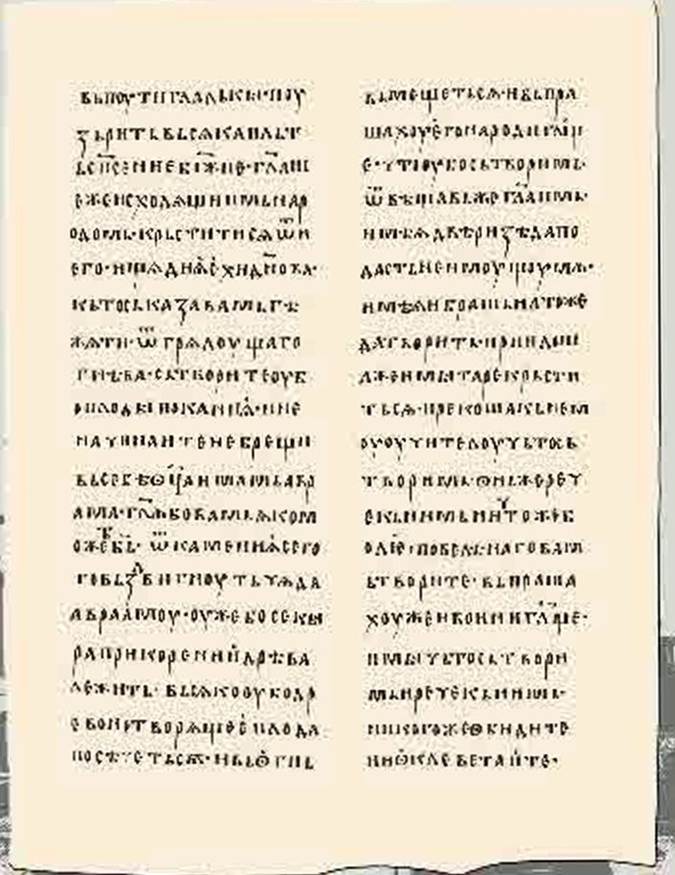
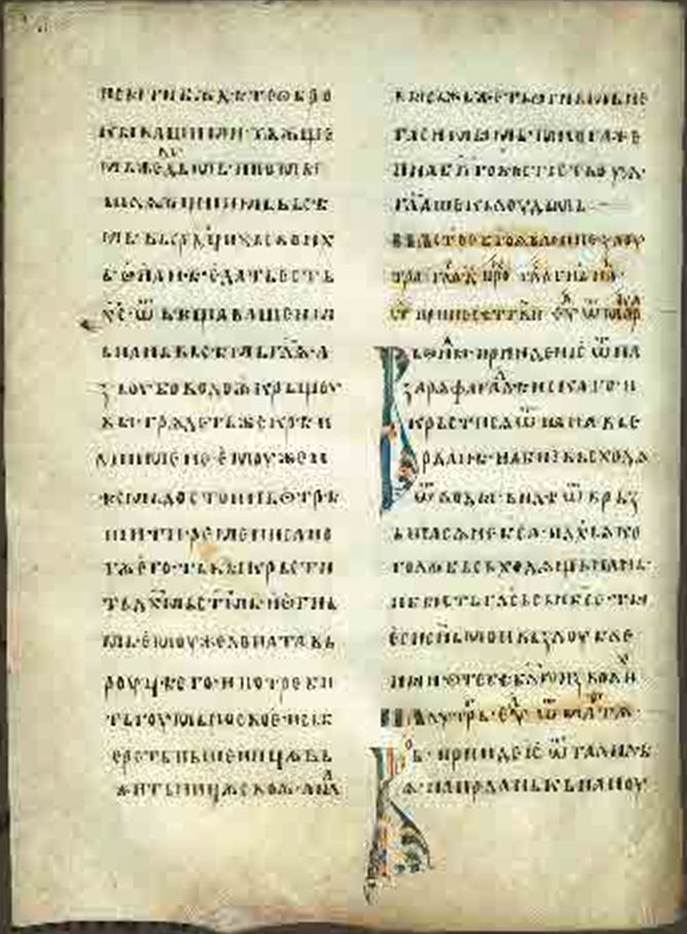
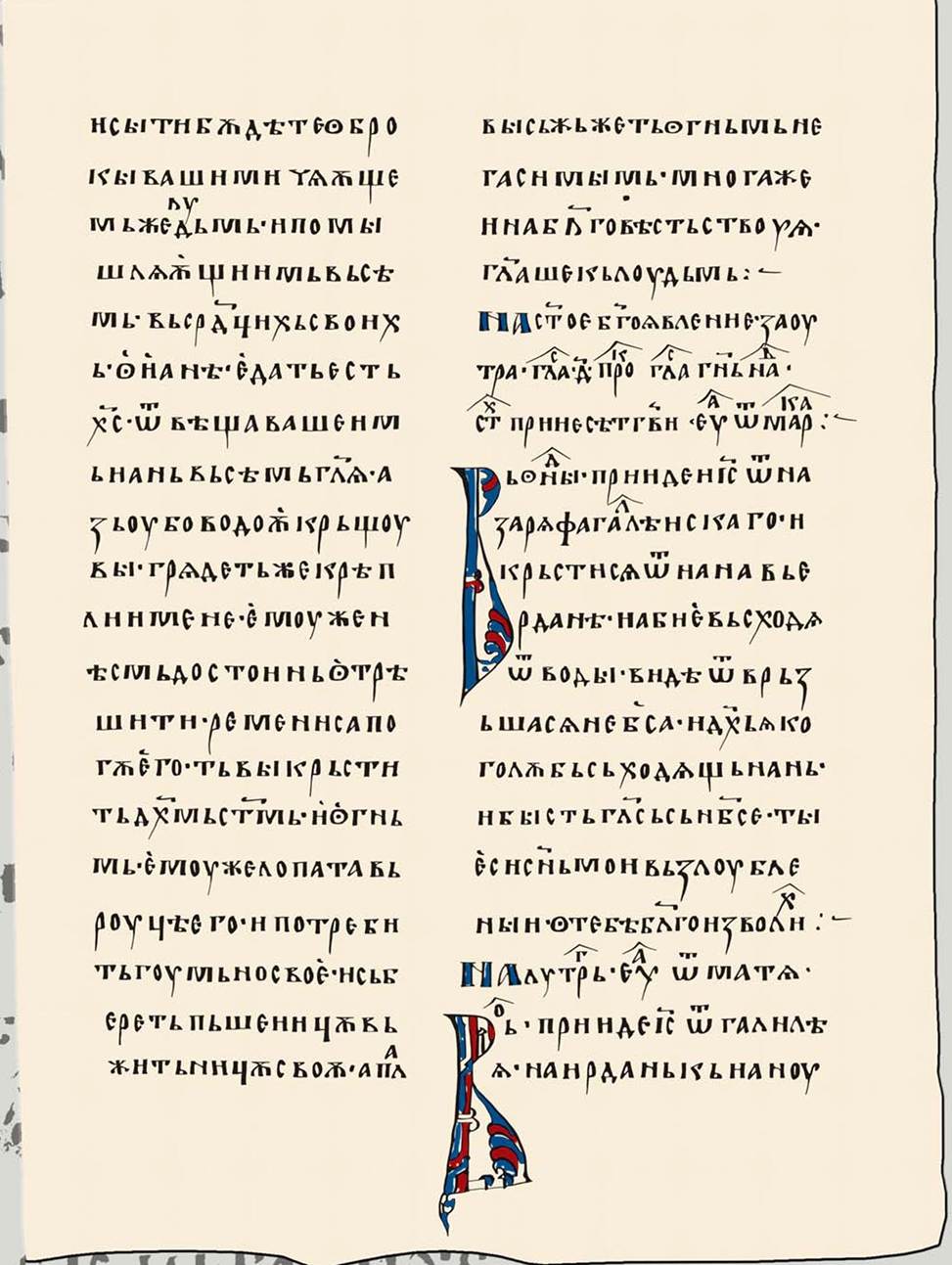
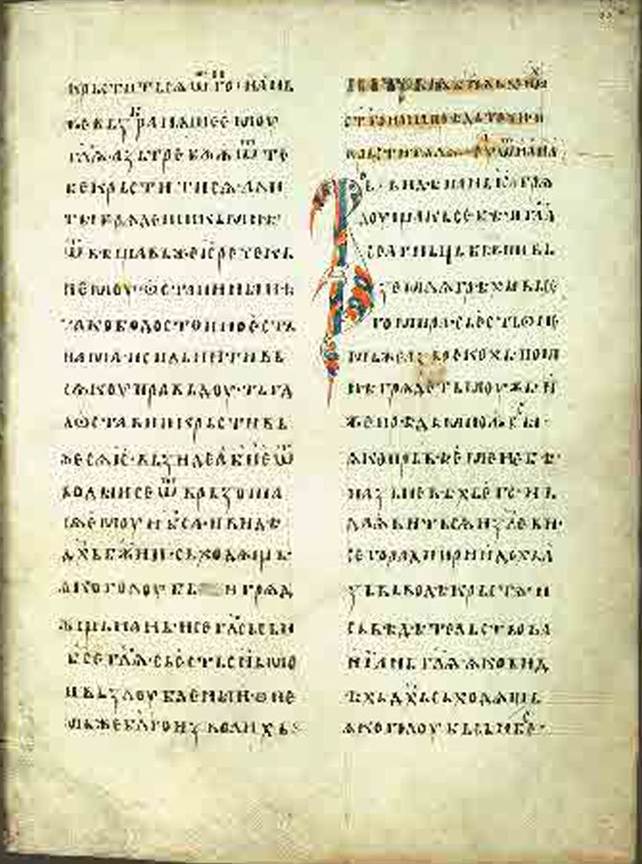
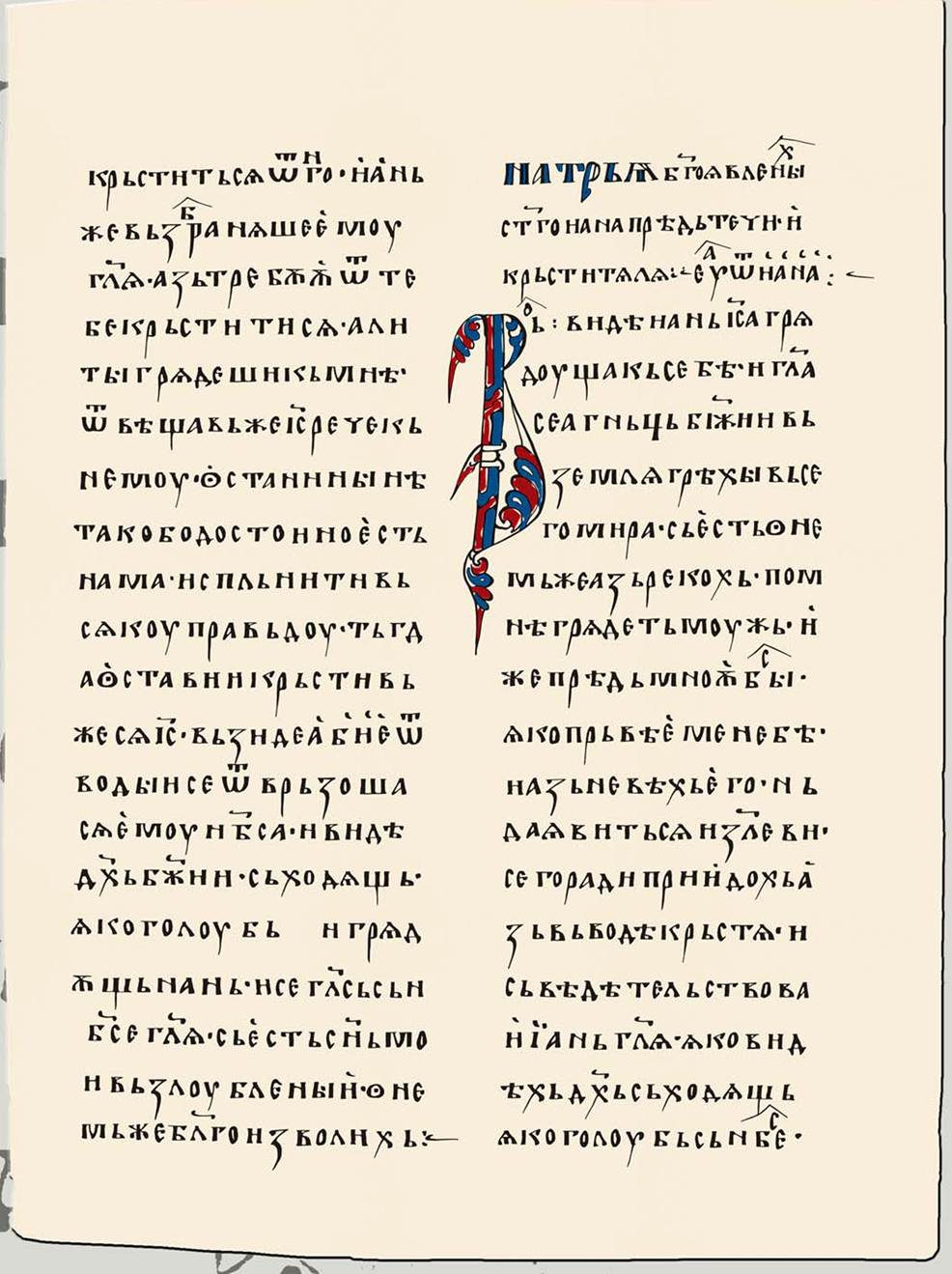
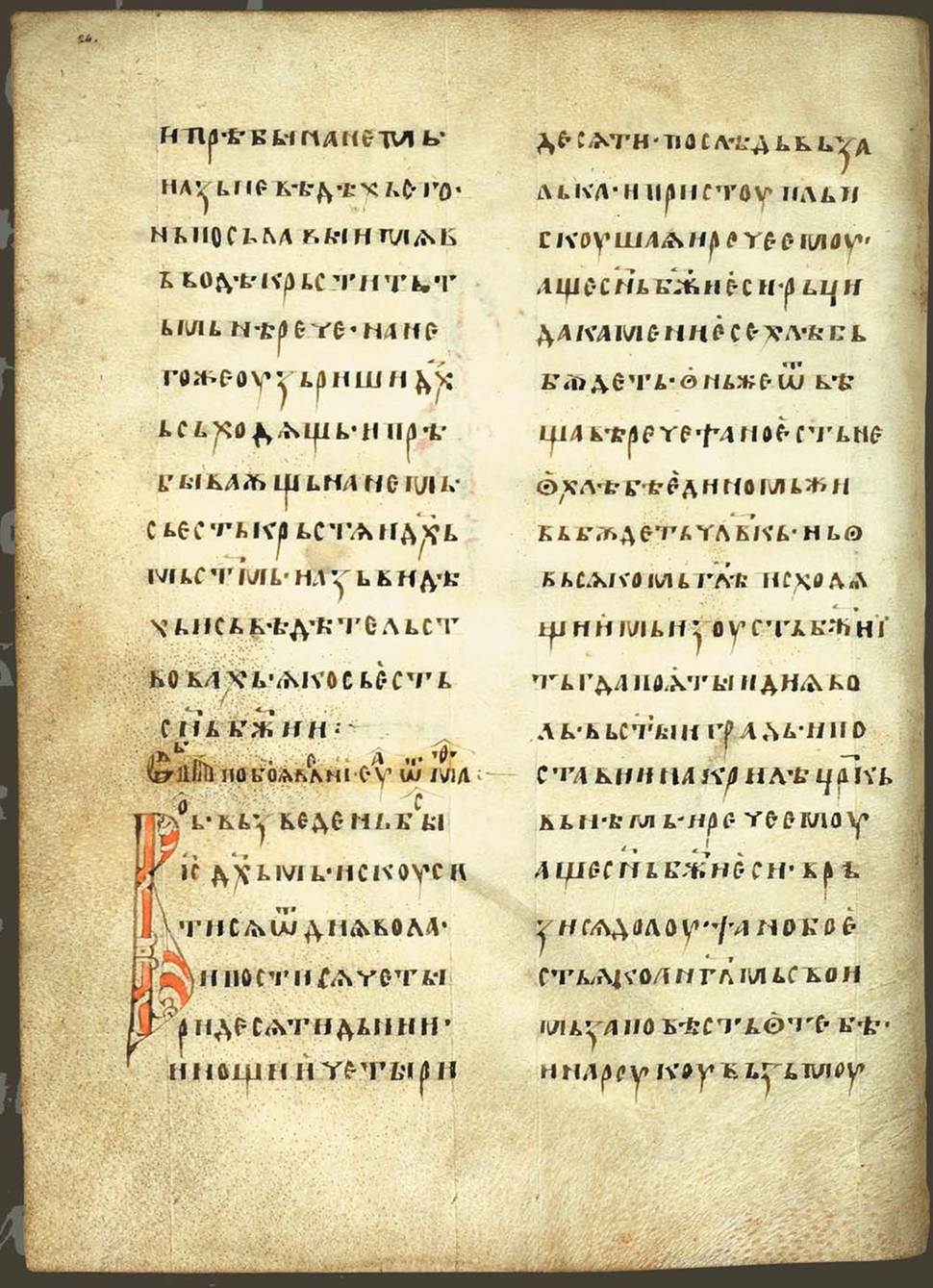
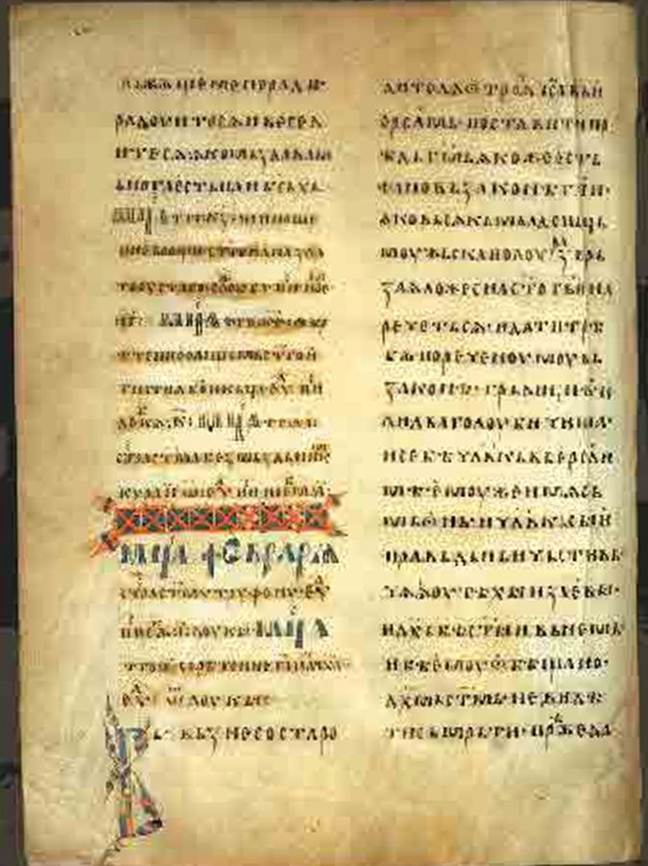
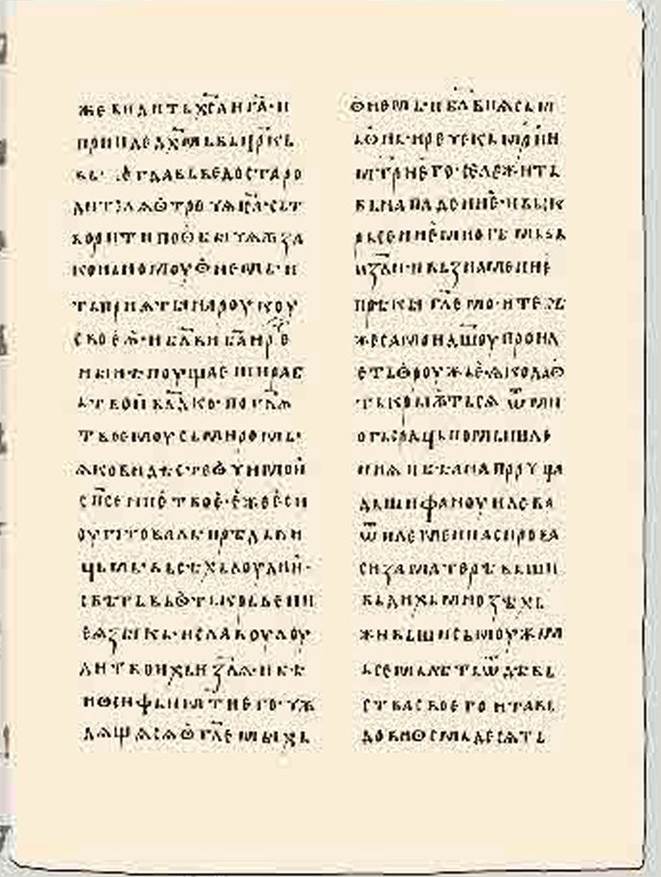
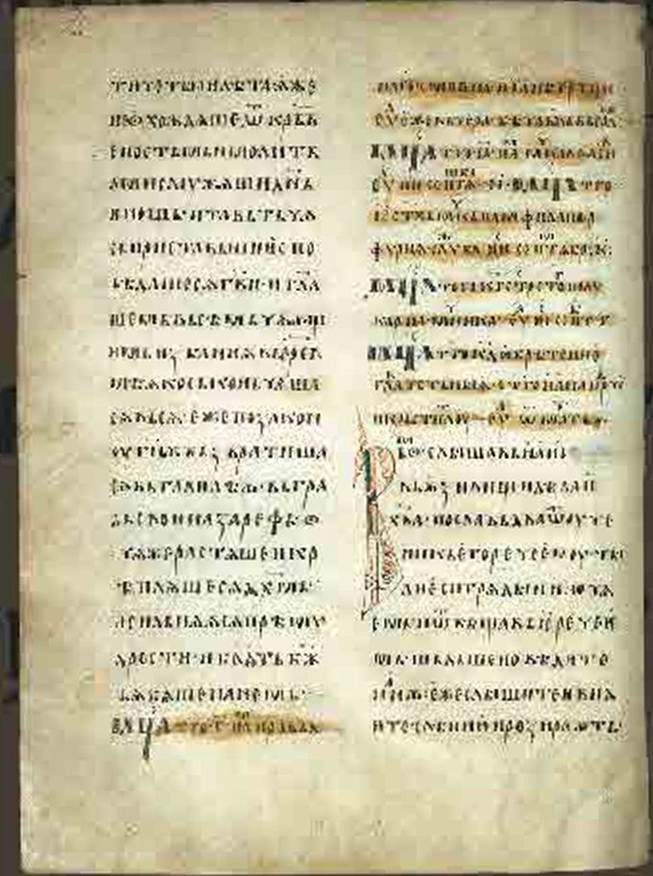
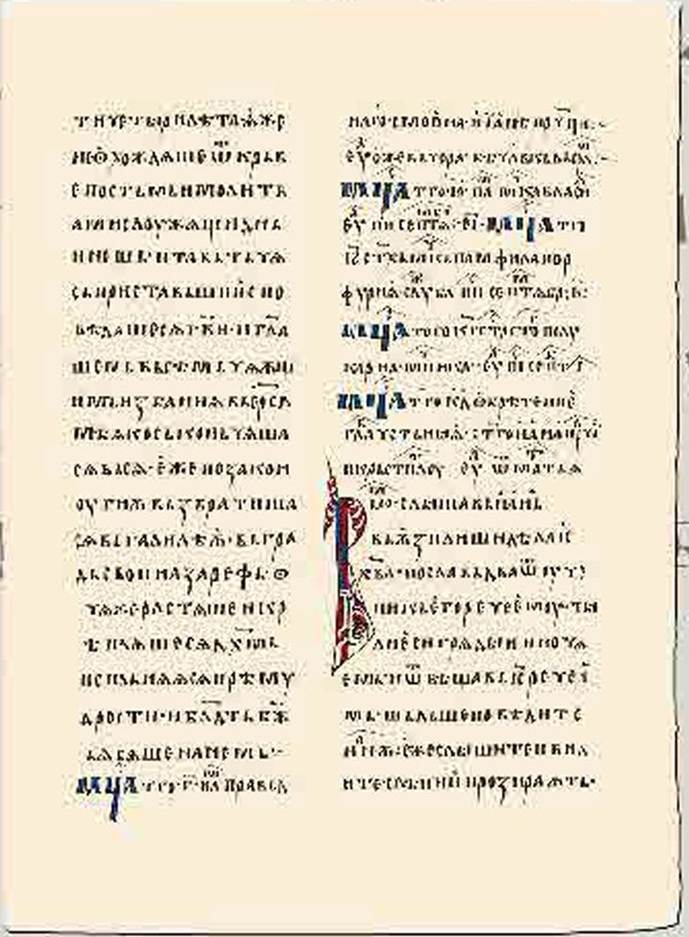
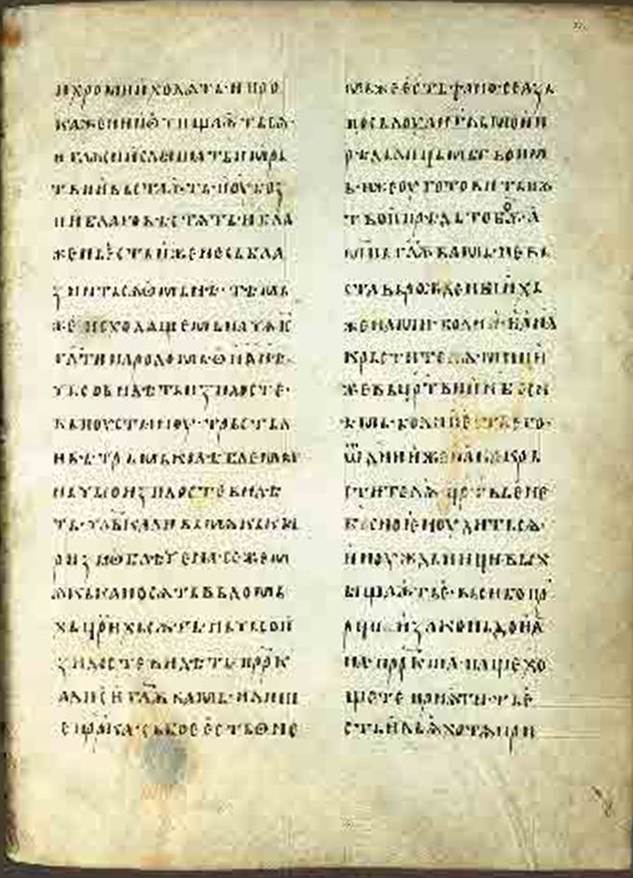
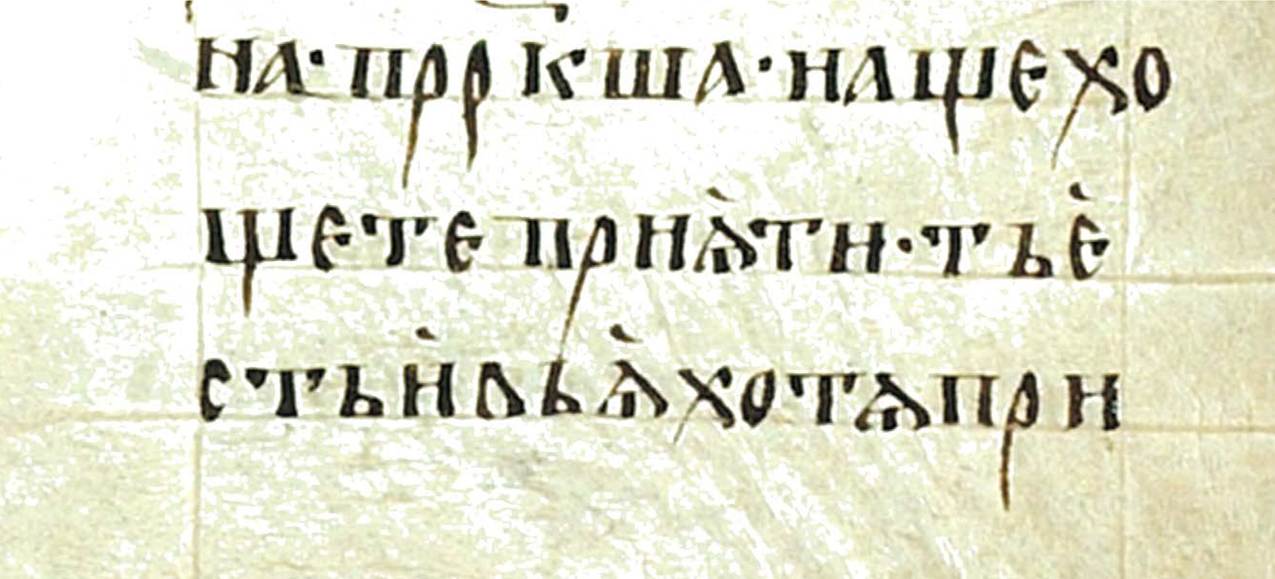
Реймські аркуші належать до заключної половини кодексу й відтворюють Місяцеслов списку Евангелія-апракосу, який вміщувався після чотирьох канонічних Евангелій. Витяги з евангельських текстів зіставлено в тому порядку як вони читалися під час богослужбових відправ упродовж року. Проте реймські зошити відтворюють лише половину Місяцеслову. За календарем це читання на період від останніх днів жовтня до початку березня. Вцілілий фрагмент розпочинає прикінцевий рядок (початок був на звороті попереднього втраченого аркушу) читання з Евангелія св. Матвія на двадцять третю неділю після П’ятдесятниці з викладом епізоду втихомирення бурі на морі (Мт 8 26-27): “вєлика. челвеци жє чудишася глаще какось єст яко и вітри и морє послоуша єго” (“[і настала тиша] велика. Люди ж дивувалися, кажучи, хто він, якщо і вітри, і море слухаються його”). Перший збережений датований запис має такий вигляд: “М[С]ЦА тго ж: стр[с] стму нестероу. и капелине. еул ищи
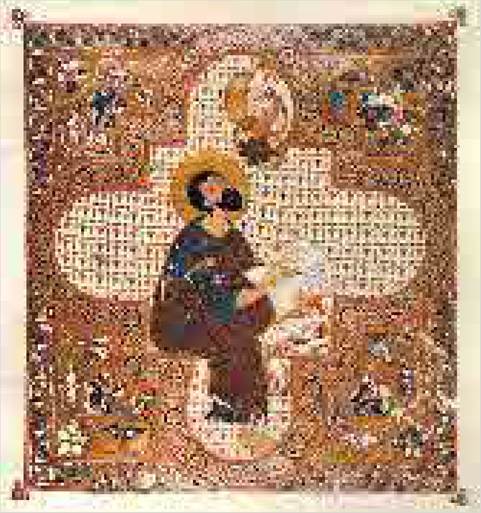
Д Евангеліст Марко. Остромирове Евангеліе. 1056-1057.
А Saint Marc. Evangeliaire d’Ostromyr, 1056-1057.
A Saint Mark the Evangelist. Ostromyr Gospel, 1056-1057.
12 Л. П. Жуковская, Реймсское евангелие, история его изучения и текст, Москва 1978.
септебр въ: в:” (місяця того ж: страсть святого Нестора і Капітоліни. Евангеліє шукай вересня з другого [дня]). Він стосується пам'яті мучеників Нестора та Капітоліни - у церковному календарі цей день припадає на 27 жовтня (9 листопада за сучасним календарем) - й відсилає до тексту Евангелія, переписаного раніше, під 2 вересня. Остання датована пам'ять вцілілої частини Місяцеслову - віднайдення глави Іоана Предтечі, що припадає на 24 лютого. Прикінцевий текст на звороті останнього збереженого аркушу денної дати не має. Він подає читання з Евангелія від св. Матвія з викладом притчі про робітників у винограднику (Мт 20 1-8) й уривається посеред слова на восьмому стиху “гла гднь винограда кь строи” (наказав господар винограду управителеві]. Збережений текст є найстарішим Місяцесловом Еван- гелія-апракоса київської традиції нарівні з відповідною частиною Остромирового Евангелія. Він включає читання з Евангелія від св. Матвія (1 1-25; 2 1-23; 3 1-6, 13-17; 4 1-17, 26; 5 1-12, 10 1, 5-8; 11 2-15, 27-30; 12 15-21; 20 1-8), св. Луки (2 1-52; 3 1-18; 6 17-23), св. Марка (1 1-41; 5 2434; 9 33-41) й св. Іоана (1 29-34).
Сама редакція тексту збережена найстаршими рукописами київської традиції починаючи від Остромирового Евангелія 1056-1057 років. Водночас, як наголосила Л. Жуковська, вона відображає найдавнішу знану за виявленими досі поодинокими пам'ятками версію тексту, конкретні особливості якої вказують на відсутність остаточно усталеної мовної норми та очевидну невпорядкованість орфографії13. Такі риси можуть свідчити лише про дуже раннє на тлі традиції виникнення як протографу, так і його конкретного списку. Відсутність слідів місцевих діалектів давньоруської мови вказує на вірогідне київське походження рукопису та київський родовід самого переписувача. Усе це слугує аргументом на користь не просто найдавніших коренів реймських кириличних фрагментів. Вони виявляються водночас єдиною книжковою пам'яткою періоду, коли у Києві щойно вироблявся власний корпус
·< Саркофаг князя Ярослава Мудрого в Архангельському вівтарі Софійського собору. Sarcophage du Grand-Prince Yaroslav le Sage dans labside de lArchange de la cathedrale Sainte-Sophie.
Sarcophagus of Prince Yaroslav the Wise in the Archangel Apse in the Cathedral of Saint Sophia.
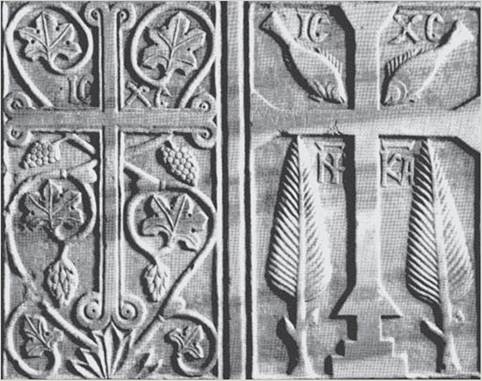
А Саркофаг князя Ярослава Мудрого в Архангельському вівтарі Софійського собору. Фрагмент.
A Sarcophage du Grand-Prince Yaroslav-le-Sage dans labside de lArchange de la cathedrale Sainte-Sophie. Fragment.
A Sarcophagus of Prince Yaroslav the Wise in the Archangel Apse in the Cathedral of Saint Sophia. Fragment.
13 Л. П. Жуковская, Реймсское евангелие..., с. 17.
не лише східнохристиянського книжного канону, але й його мовна версія, уніфікувалася сама мовна норма відповідного кола літератури. Отже, реймські аркуші старокиївського рукопису є не просто унікальним джерелом до історії української мови, але й ще одним свідченням того етапу її побутування, одиноким прикладом якого можна було сприймати загадкову нетрадиційного складу абетку, виявлену серед написів на стінах київського Софійського собору. Оскільки кодекс мав би природно походити з княжого скрипторію, “реймський” текст випадає розглядати переказом власне його активності. Правдоподібно, реймські аркуші є оригінальним конкретним слідом роботи тих книжників, що обслуговували потреби князя Ярослава Мудрого та його найближчого оточення.
Наведені висновки мовного аналізу дають підстави закладати, що два вцілілі зошити - скромний залишок заключної частини евангельського кодексу, переписаного в Києві у першій половині XI ст. З огляду на французький родовід самого рукопису, приймається їх визначення як залишку Евангелія, списаного не пізніше кінця 1040-х років. При цьому вважається, що до Франції рукопис вивезла Анна - донька князя Ярослава Мудрого, виходячи заміж за французького короля Генріха I. Подальша історія найдавнішого київського княжого кодексу до середини XIV ст. також не зафіксована. Проте в цей період він, правдоподібно, мусив пережити певний катаклізм, внаслідок якого від списку чотирьох канонічних Евангелій та Місяцеслову залишилося лише шістнадцять знаних нині аркушів - два зошити місяцесловної частини.
Наступні конкретні відомості до історії рукопису збереглися у завершенні глаголичної половини і стосуються історії рукопису уже в нинішньому складі. Згідно із вміщеним там записом, його, уже доповненого глаголичною частиною, подарував до заснованого 1347 р. Ема- уського бенедиктинського монастиря у Празі (відправи в ньому провадилися слов’янською мовою) чеський король і водночас імператор Священної Римської імперії Карл IV (13161378; король від 1334, імператор - від 1346). Оскільки замолоду Карл IV виховувався у Франції, вважається, що давніші кириличні аркуші саме він мав вивезти звідтіля й глаголичне доповнення до них зроблено в Празі перед передачею кодексу до монастиря, найвірогідніше, - ближче до часу заснування самої обителі, тобто, найправдоподібніше, в середині XIV ст. За часів гуситських воєн у першій половині наступного століття рукопис з монастиря зник. При незафіксованих обставинах він знову мав опинитися у Реймсі, де служив коронаційним Евангелієм французьких королів. Кодекс пропав із собору під час французької революції кінця XVIII ст., тоді з нього обідрали дорогоцінну оправу, яка пропала безслідно. Певний час унікальний рукопис навіть вважався втраченим поки 1835 р. О. Тургенєв не ідентифікував його у міській бібліотеці Реймсу, де він зберігається понині.
Зіставлення переконує, що саме кириличні зошити Реймського Евангелія є найранішою пам'яткою київської книжності й водночас одним з найдавніших автентичних зразків української мови - під цим оглядом його випереджують хіба що поодинокі найстаріші написи, виявлені на стінах Софійського собору. Проте цим значення реймського фрагменту не обмежується. Це ще також найстарший рукопис із середовища княжого скрипторію першої половини XI ст., як і, зрештою, одинокий ідентифікований досі автентичний зразок його продукції. Завдяки усім цим прикметам скромний фраґмент старокиївського рукопису стає в один ряд з такими загальновизнаними найвизначнішими здобутками етапу утвердження київського християнства, як Софійський собор та перший оригінальний зразок місцевої літератури - “Слово про закон і благодать” митрополита Іларіона. Попри безперечну несподіваність запропонованого зіставлення об'єктів - видавалося б - вочевидь неспівмір- них, аркуші Місяцеслову Реймського Евангелія
належить до кола перелічених найвизначніших свідчень київського християнства періоду правління князя Ярослава Мудрого.
Однією з важливих складових рукопису закономірно була мистецька сторона. Під цим оглядом як найраніше поміж української спадщини Реймське Евангеліє так само є пам'яткою винятковою. Серед найдавніших відомих нині київських та українських евангельських кодексів воно виділяється стосовно невеликими розмірами - лише 23х17,5 см. Остромирове Евангеліє має розміри 35х30 см., а найближче до нього під цим оглядом Мстиславове початку XII ст. - 35,3х28,6. Сучасне йому Юріївське Евангеліє має розміри 31х25 см. Ще меншим є фрагмент Туровського Евангелія: 21,2х16,2 см. Правда, наступне датоване - Архангельське 1092 р. - лише 20,5х16,6 см. Найближчими до Реймського є Галицьке Евангеліє 1144 р. - 23х16 см. та перше західноукраїнське ілюстроване - Добрилове 1164 р. - 24,5х19,7.
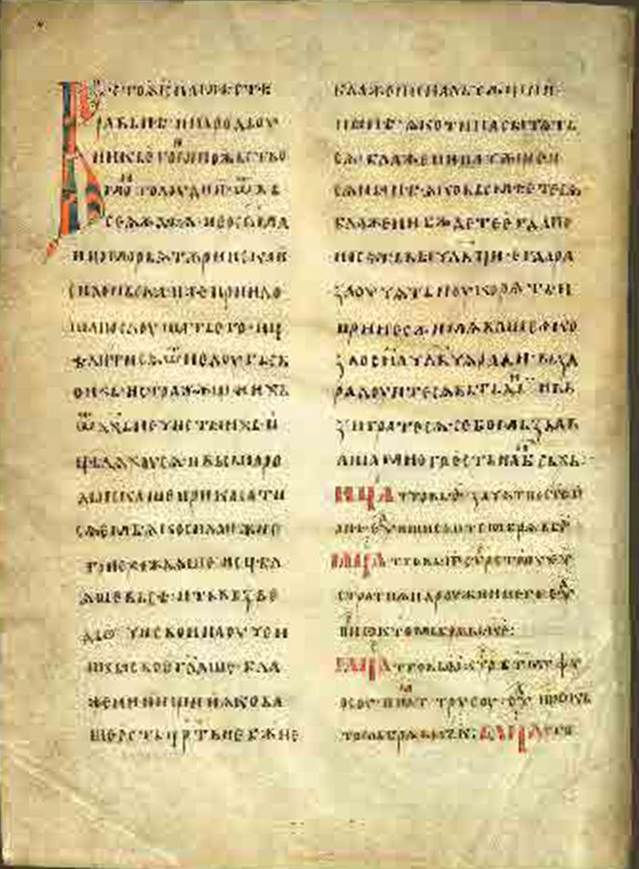
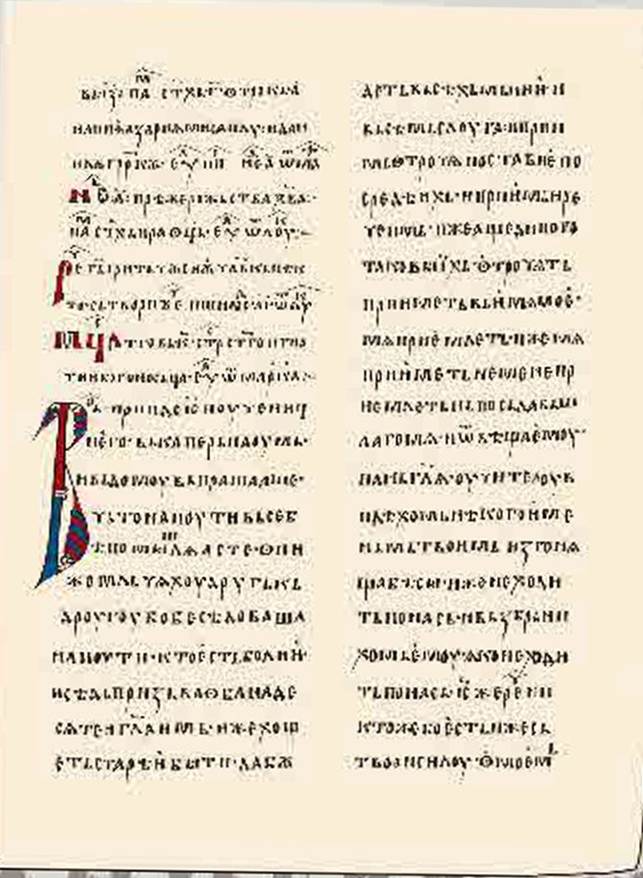
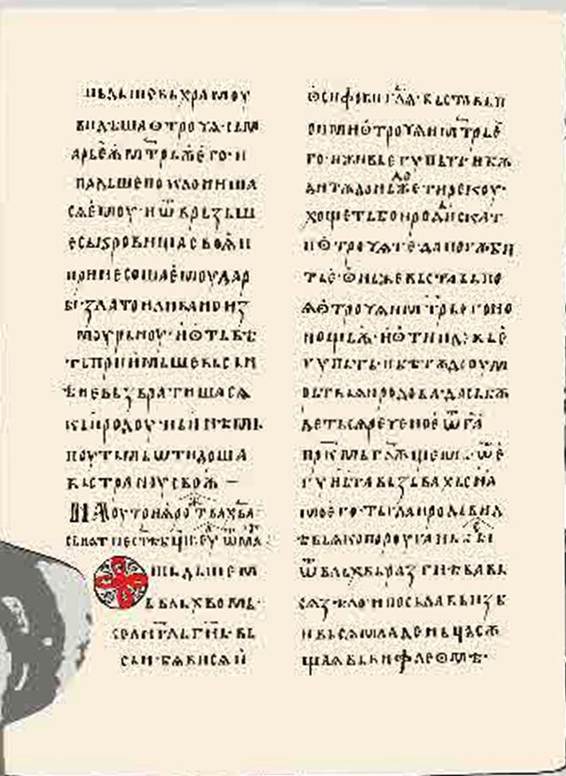
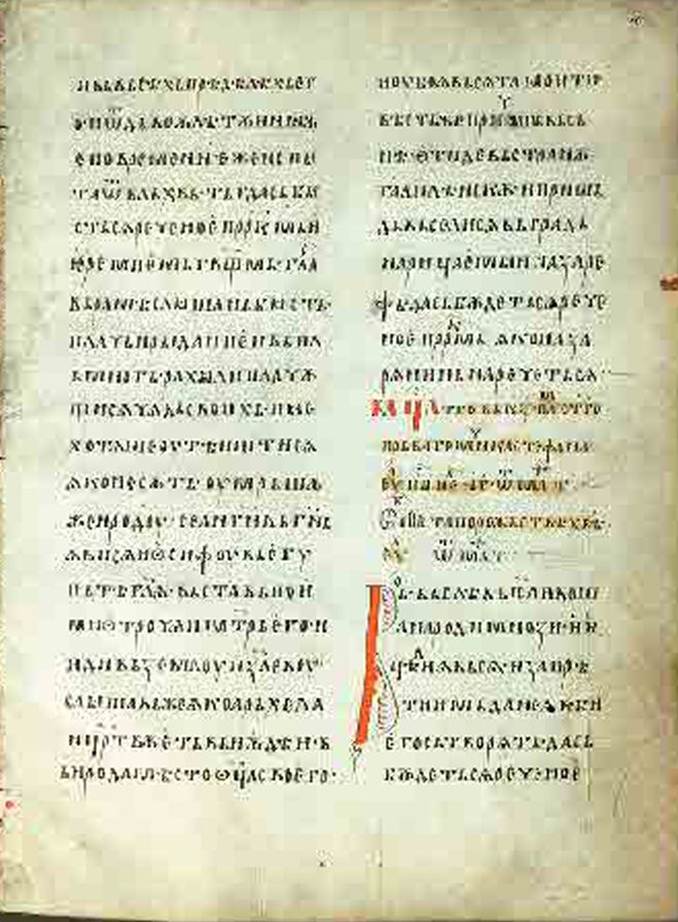
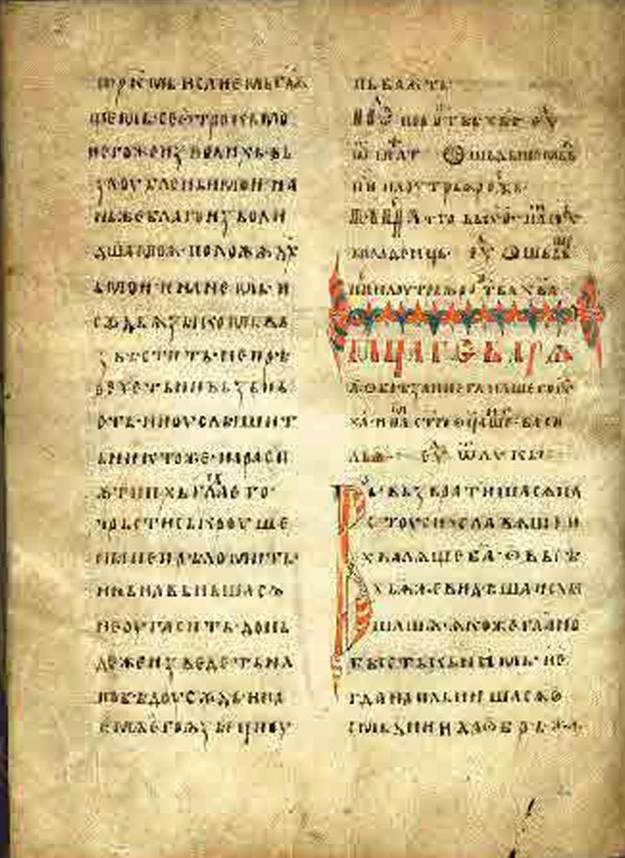
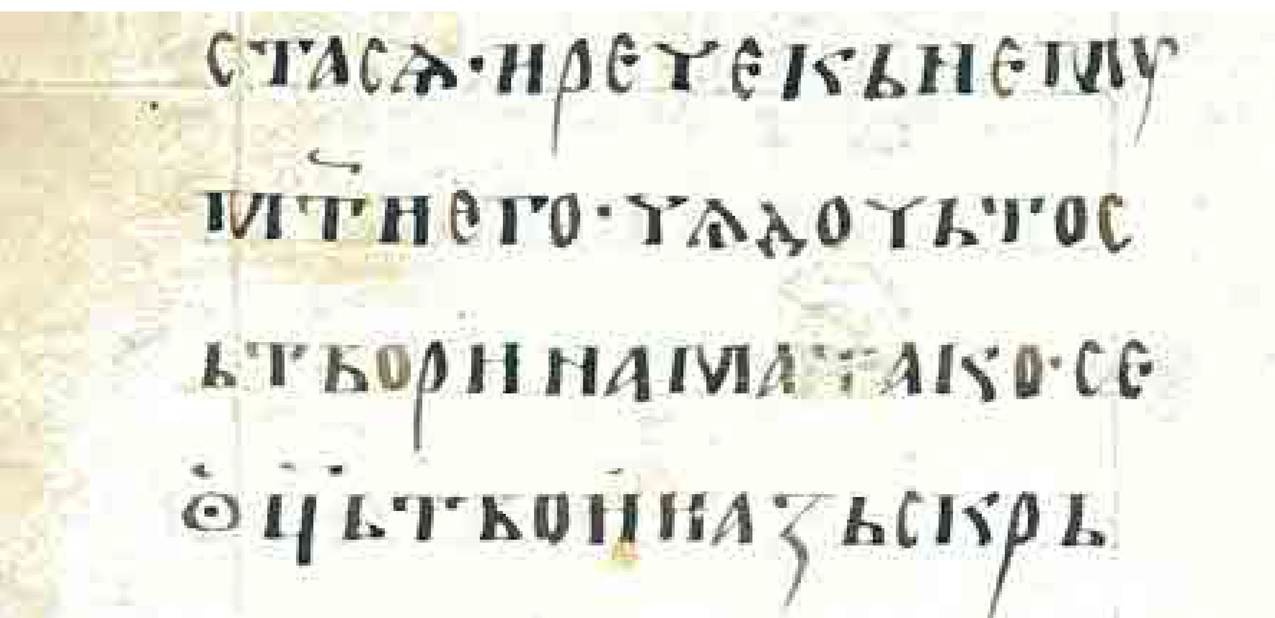
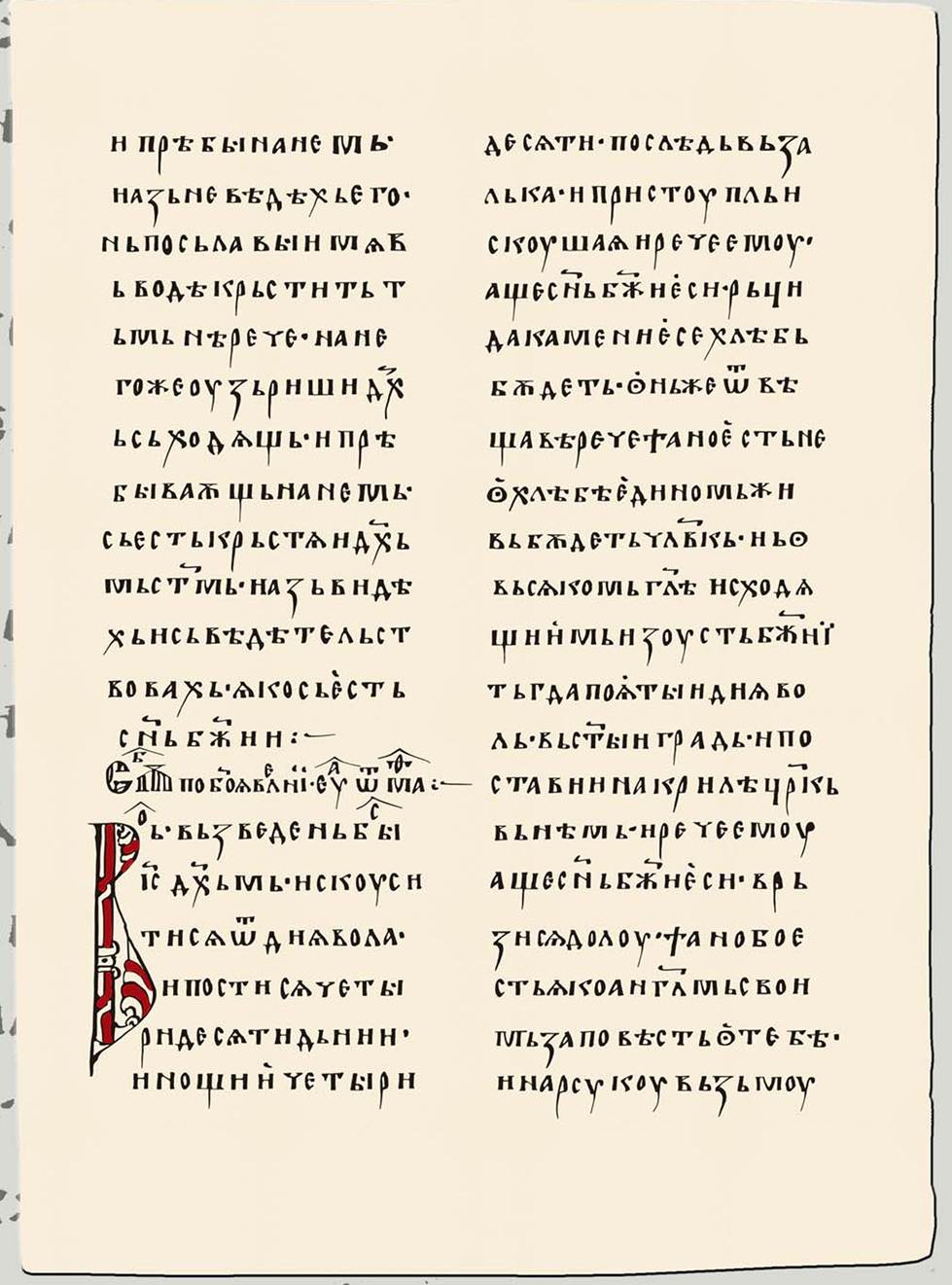
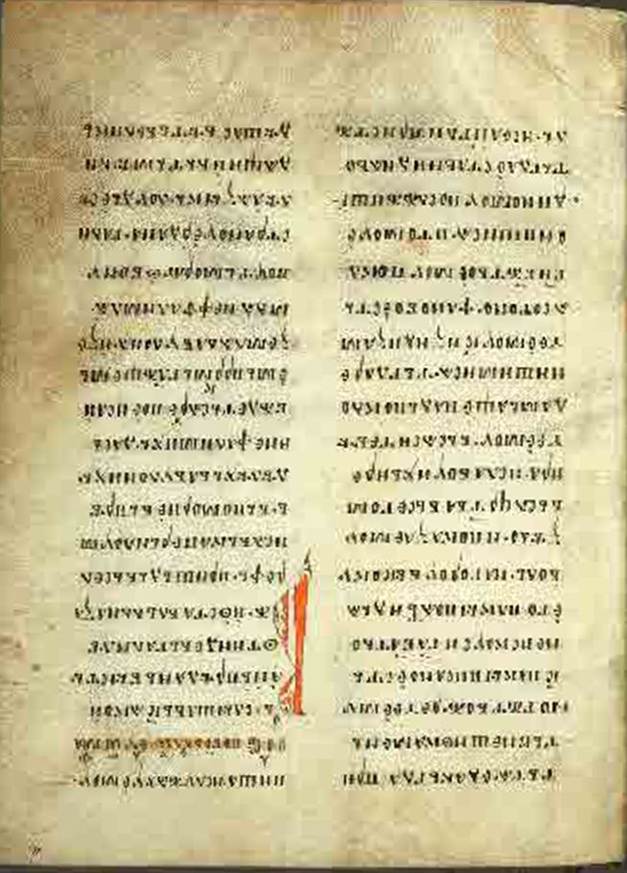
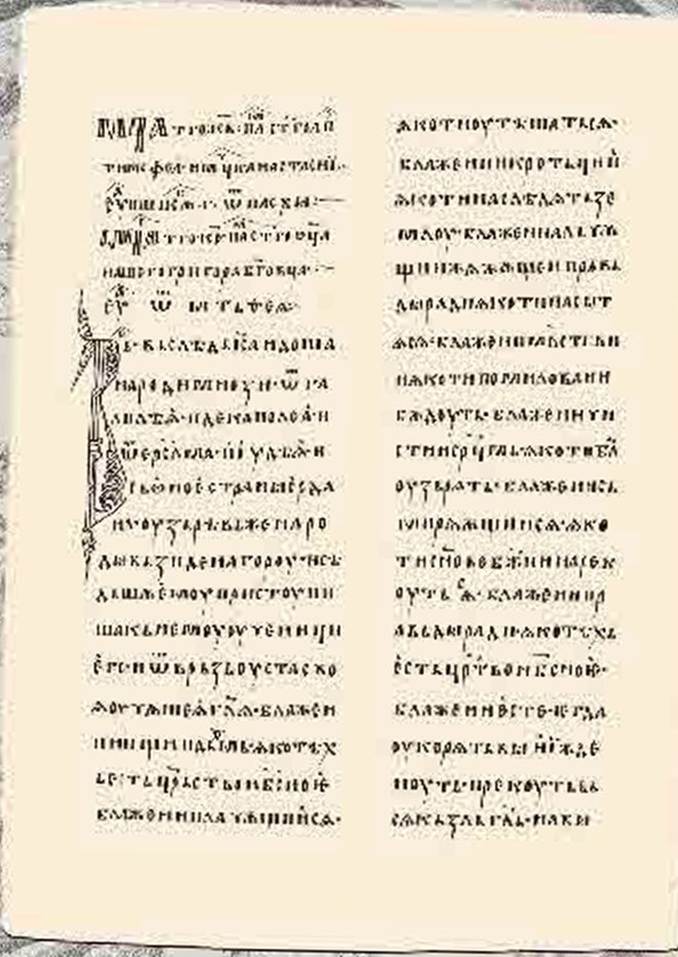
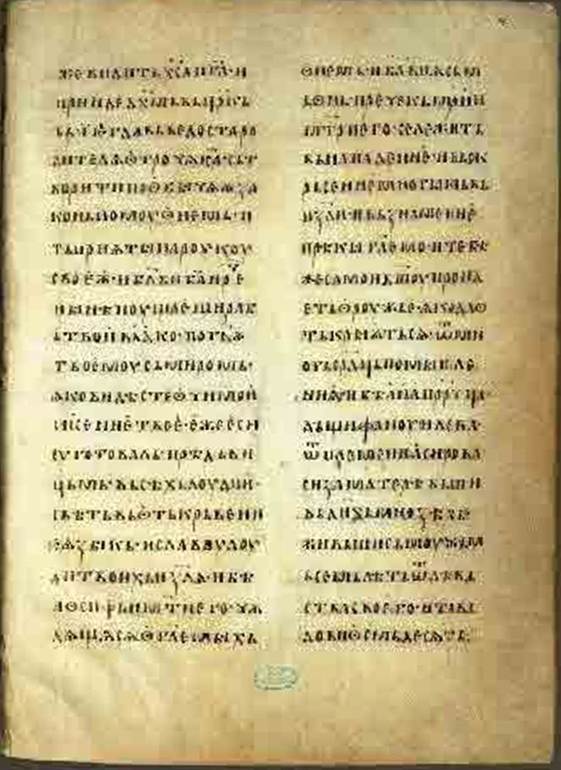
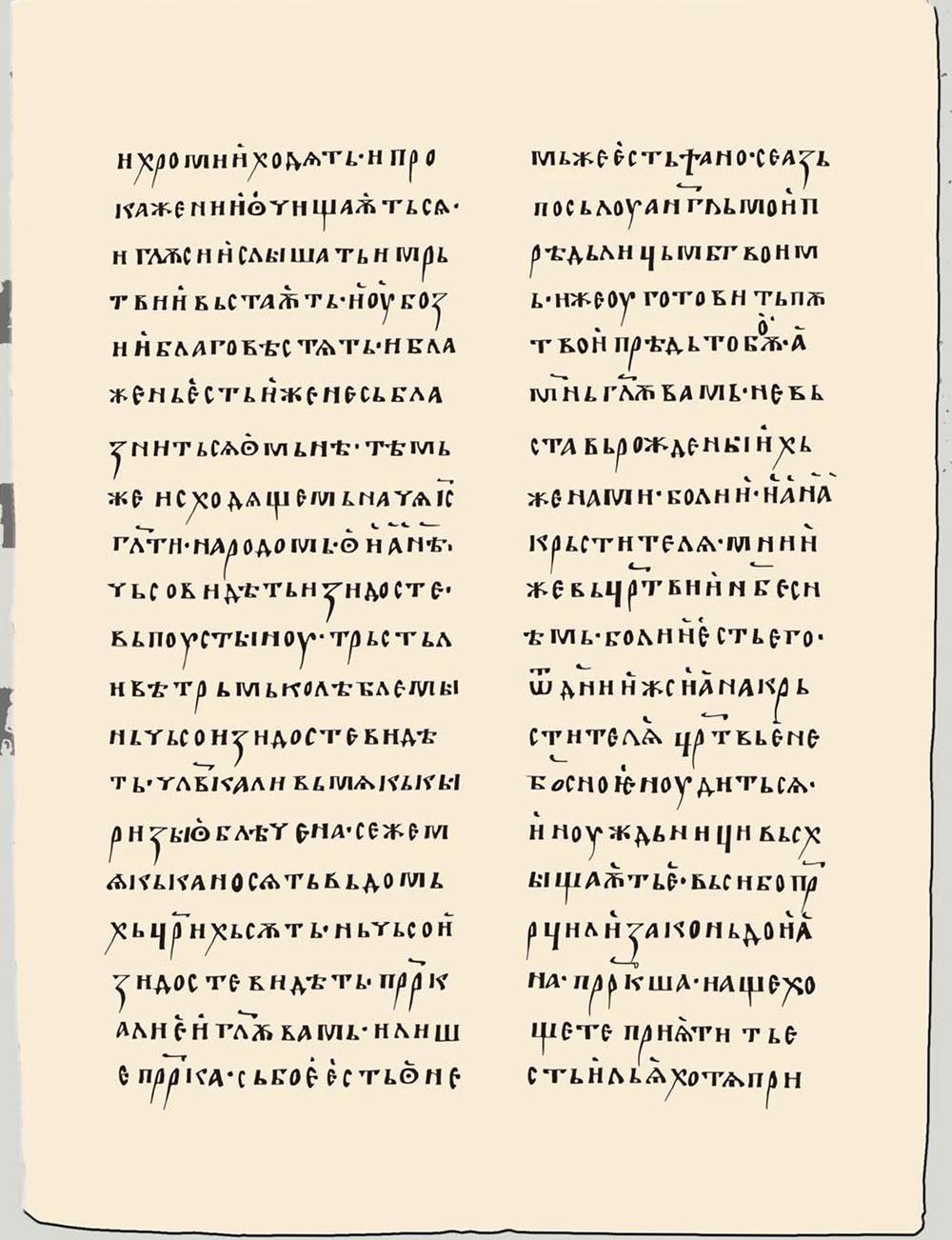
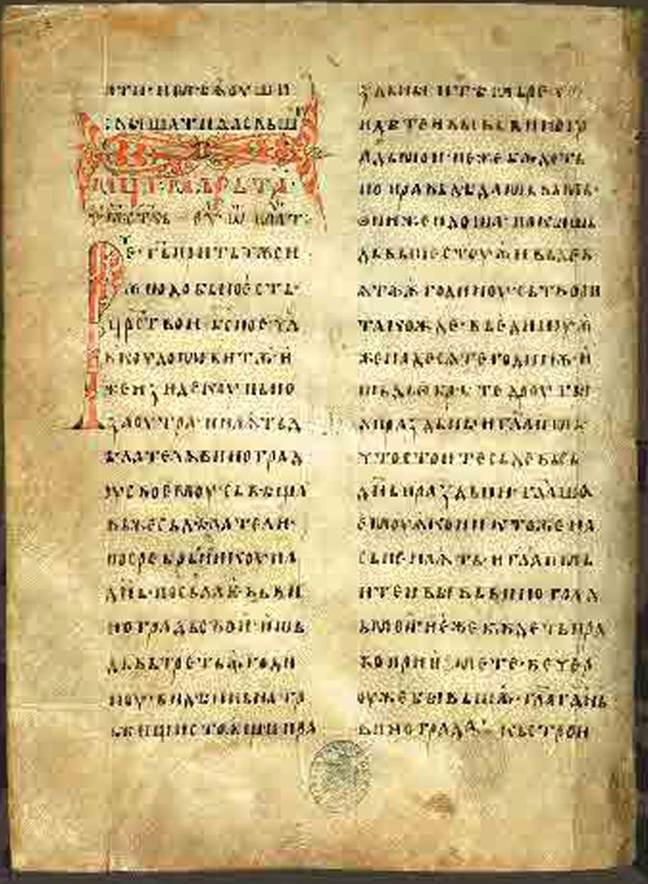
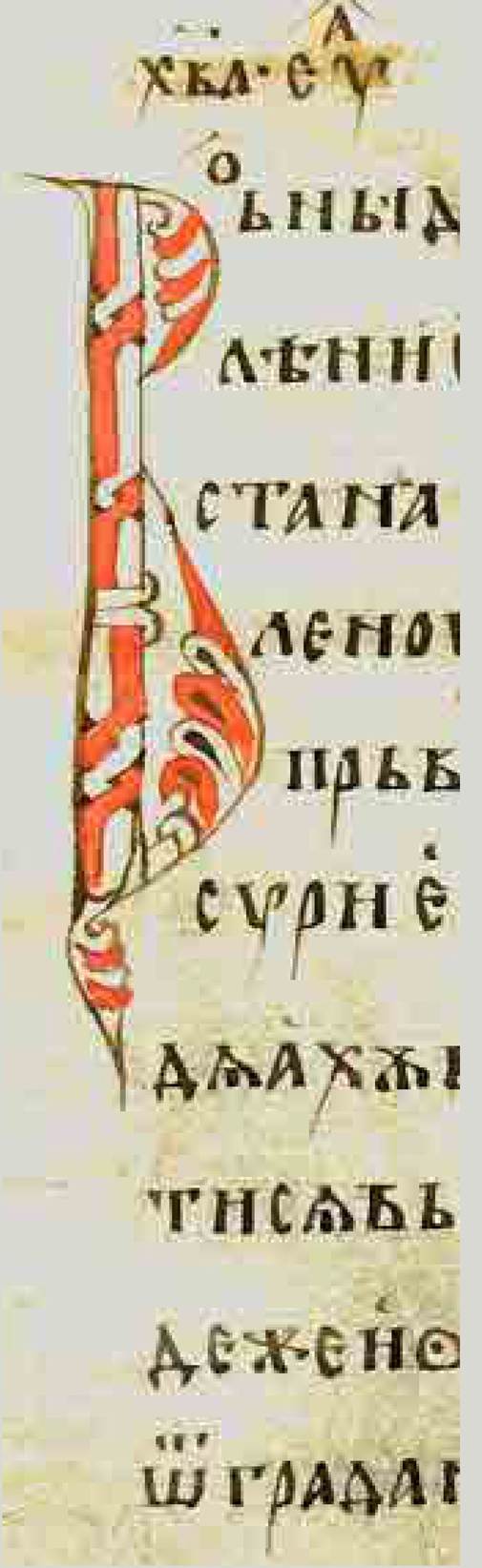
Невеликі розміри книги та походження двох збережених зошитів з прикінцевої частини самого кодексу визначили зрозумілу відсутність багатшого оздоблення, хоча скромним його теж не випадає визнавати. Текст переписано у два стовпці з вирівняною лівою стороною, поза лінію якої виходять хіба що ініціали та початкові літери заголовків. Природно виступають поза неї також заставки. Уклад тексту двома стовпцями відповідає Остромировому, Мстиславовому, Юріївському, Добриловому Евангеліям. Проте для найдавніших евангель- ських кодексів старокиївської традиції він не єдиний. Водночас Архангельське, Туровське та Галицьке Евангелія мають лише один стовпець. Кожен зі стовпців включає по двадцять рядків. Текст евангельських фрагментів переписано прямим уставом середньої величини з досить широкими літерами впевненого професійного малюнку, відзначеного послідовним протиставленням широких та тонких штрихів. Елементи літер, що виходять поза лінію, здебільшого акцентовані мало й не порушують чіткої конструктивної логіки поодиноких ряд-
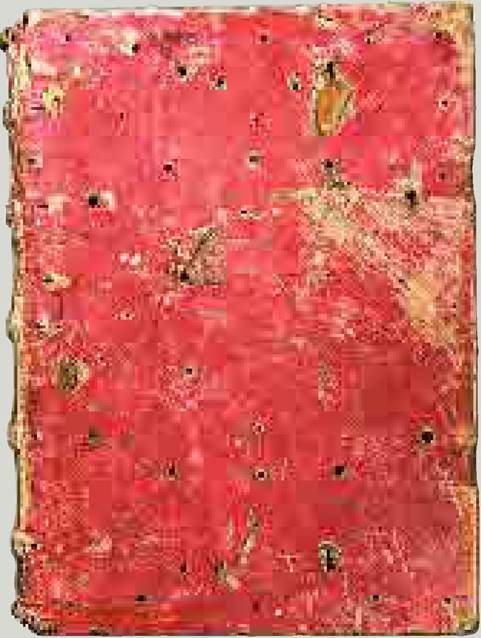
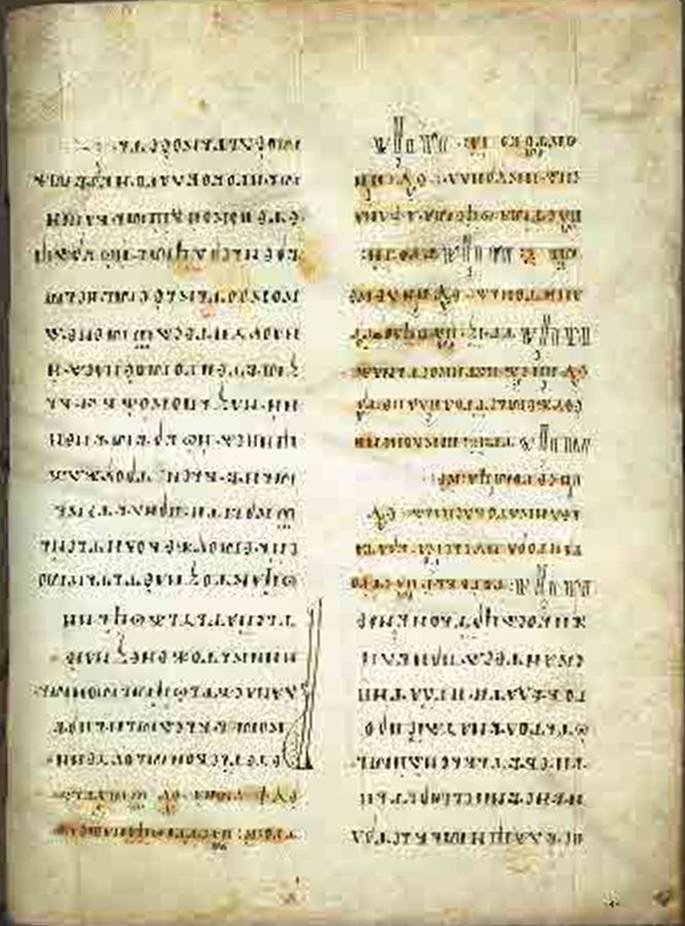
А Реймське Евангеліє. Оправа.
A Evangeliaire slavon de Reims. Reliure.
A Reims Gospel. Binding.
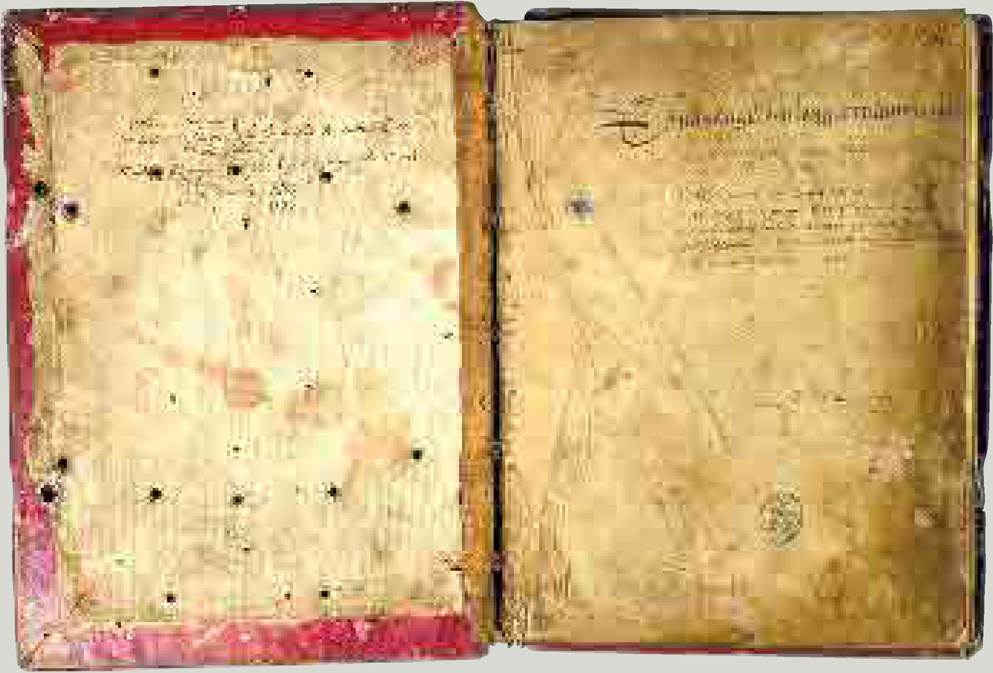
ків, так само, як і нечисленні літери, винесені понад рядок. Цілість відзначається продуманою структурою й гармонійним співвідношенням компонентів. Календарні та практичні вказівки подано дещо дрібнішим шрифтом, рядки з ними замальовано жовтою фарбою. Це дозволило виділити фрагменти Евангелій у їх зіставленні зі службовими позначеннями, дало істотний елемент укладу поодиноких частин, найвиразніший там, де немає евангельського тексту, а лише календарні нотатки та відсилання до текстів, переписаних раніше. Послідовно витримана організація сторінки засвідчує не лише професійність писаря. За нею стоїть традиція книгописної майстерні та середовища, з практики якого виводилися стосовані підходи до опрацювання аркуша, ширше коло джерел найдавнішої київської книжності.
Попри безперечну високу професійну культуру самого переписувача, він допустив чимало різноманітних помилок, особливо в тексті читання на другого лютого. Проаналізувавши їх, Л. Жуковська дійшла висновку про можливість якихось “надзвичайних”, за її окресленням, умов, при яких переписано відповідний фрагмент рукопису. Водночас дослідниця відзначила приклади коли в інших місцях такі слова передано вірно. Помилки переписувачів не були рідкістю, звідсіля в завершенні рукописів було навіть прийнято вміщати спеціальне прохання не клясти за допущені помилки. У тексті є також зауважені й виправлені помилки, насамперед поодинокі літери, написані поверх витертих помилкових.
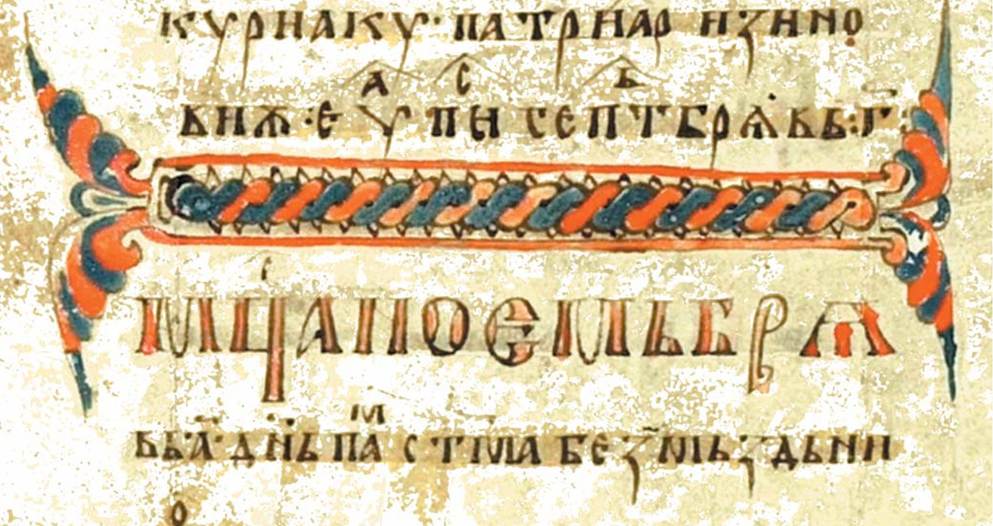
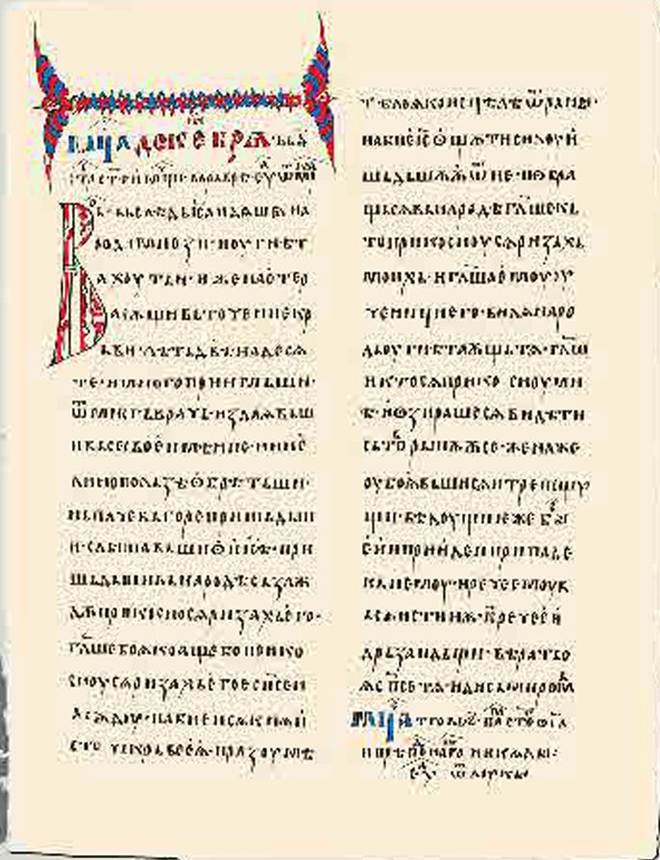
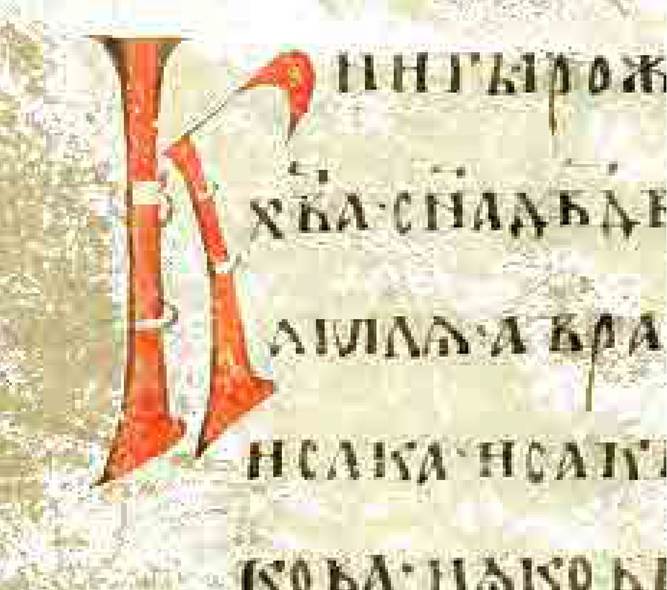
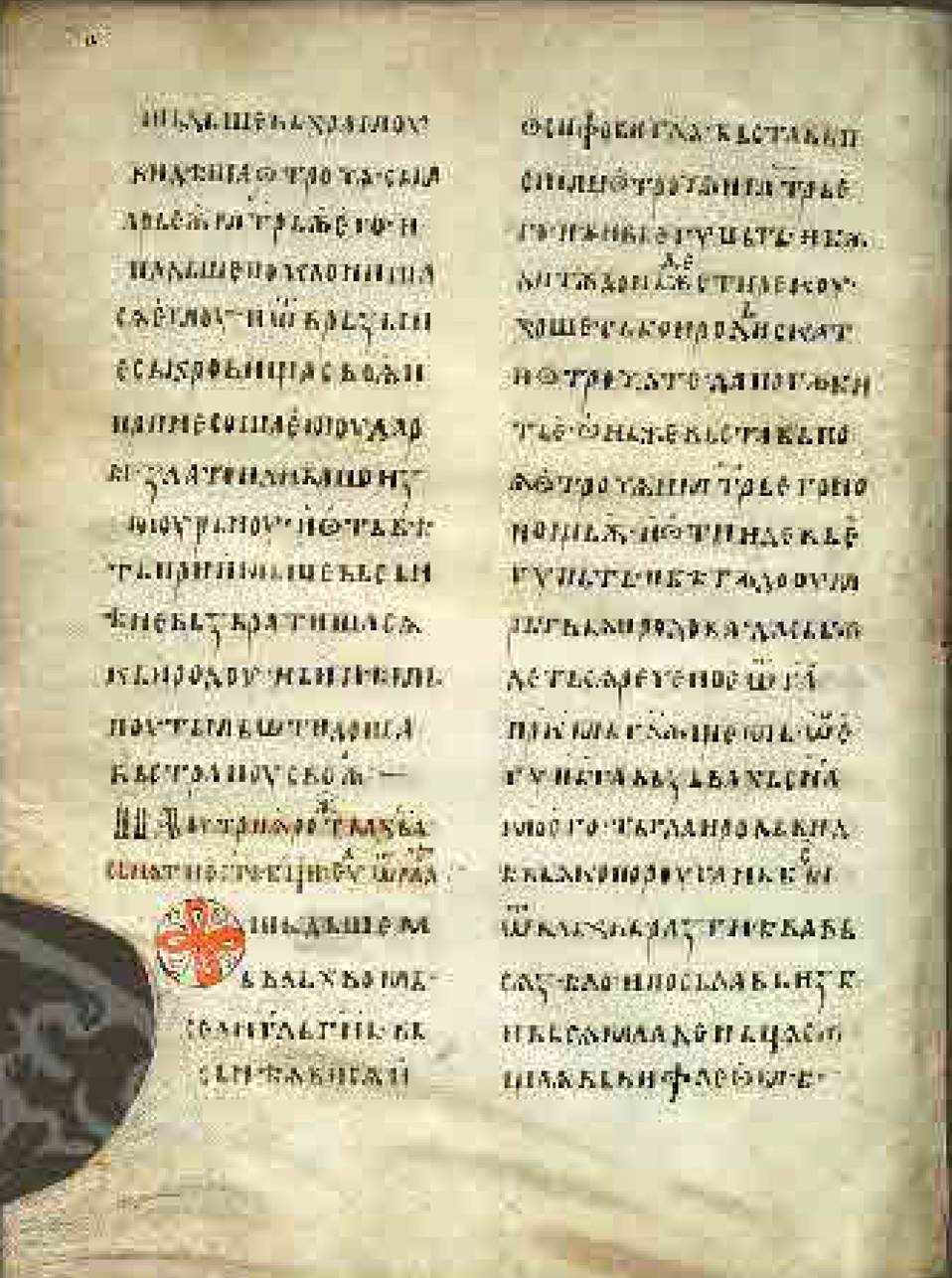
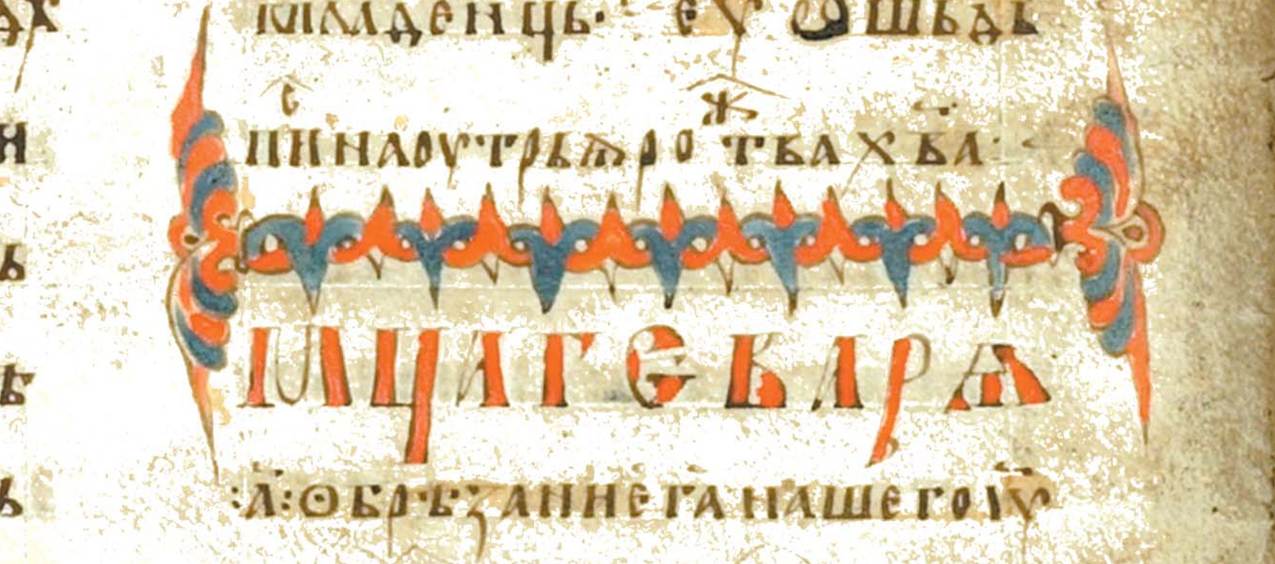
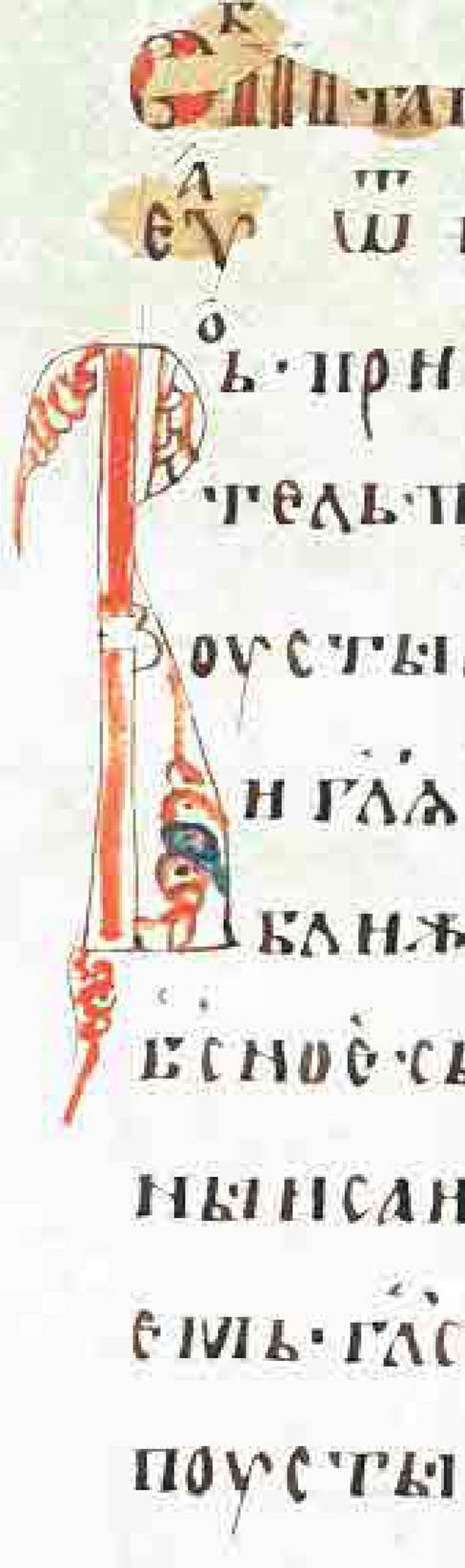
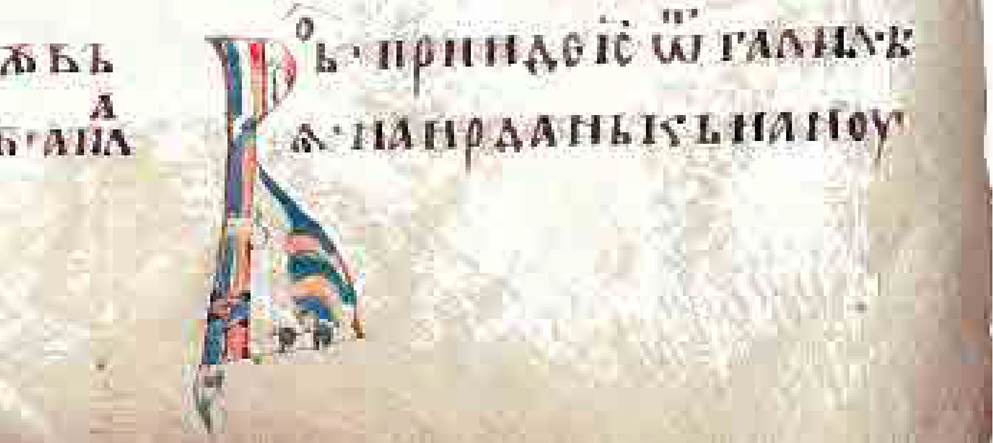
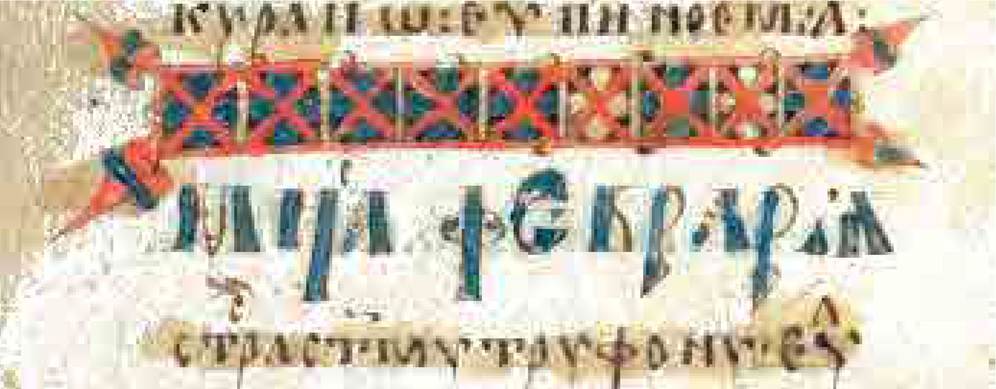
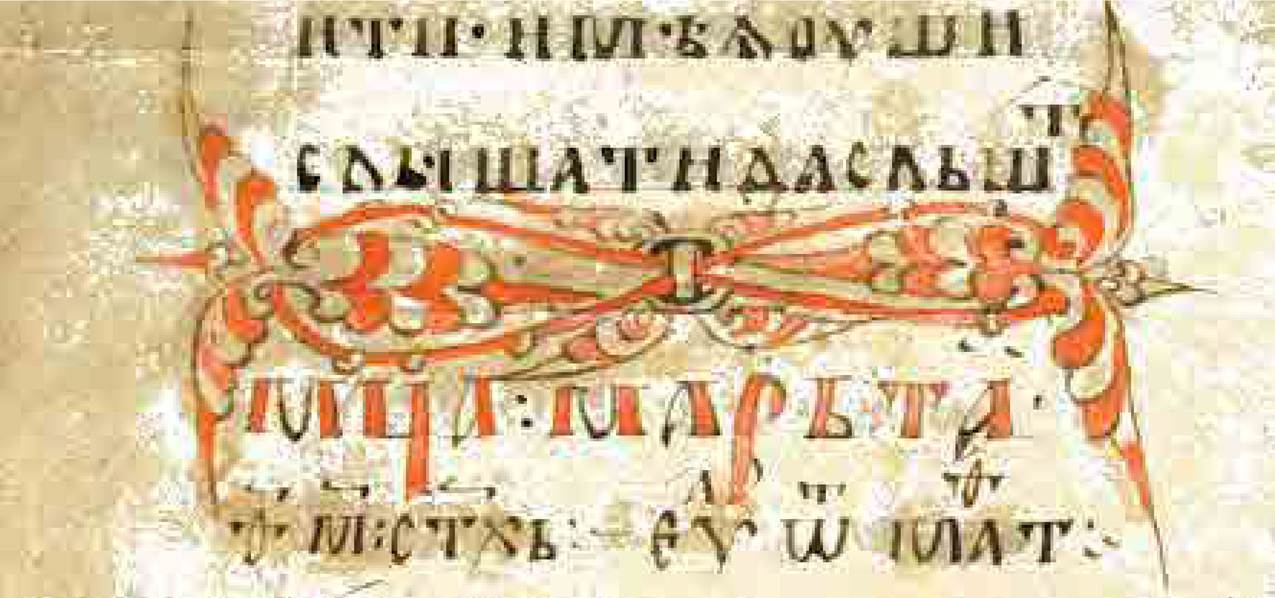
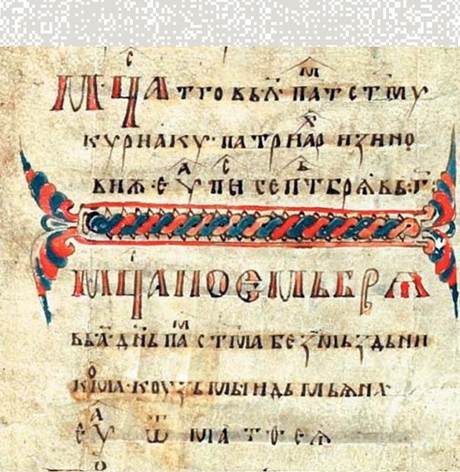
Мистецьке оздоблення фрагменту включає насамперед п'ять скромних кольорових заставок та двадцять три ініціали. Заставки відкривають читання кожного місяця. За мотивами три з них плетінчасті, одна геометрична та одна стилізована на основі рослинних елементів. Усі вони горизонтальні з відгалуженнями на кінцях, що симетрично розходяться обабіч. За-
ставки листопада, грудня та січня пропонують варіанти однієї схеми й різняться насамперед товщиною горизонтальної плетеної частини, її рисунком та співвідношенням використаних червоного й синього кольорів. Заставку лютого утворюють дев'ять невеликих квадратів з червоним перехрещенням на синьому тлі (два доповнені вкрапленнями незафарбованого тла), а з її країв відходять стилізовані бутони. Найбагатшою за добором орнаментальних мотивів виявилася вміщена на звороті останнього аркуша виконана червоною і жовтою фарбами заставка березня. Вона повторює схему попередніх, лише середина вирішена як перехоплена перстнем петля з декоративними доповненнями. Тільки в першій заставці вжито три кольори - жовтий, синій і червоний. Дві наступні виконані синьою та червоною фарбами. Усіх їх відзначає професійний артистичний малюнок. Він притаманний також ініціалам, серед яких дев'ятнадцять більших, що відповідають висоті п'яти, а навіть семи рядків тексту, та чотири менших - на висоту трьох-чотирьох рядків. Вони нарисовані чорнилом і згодом розмальовані. Їх розроблено на основі тих же мотивів, що й заставки, використано ті ж кольори. Ініціали здебільшого знаходяться всередині тексту й лише два виходять на нижнє поле. На звороті тринадцятого й чотирнадцятому аркуші їх залишено без розмалювання. Не закінчено також ініціал “В” на восьмому аркуші - червоною фарбою замальовано лише вертикальну його основу. Елементами оздоблення слугують також більші кольорові літери назв розділів та окремі початкові слова поодиноких частин тексту. Вони зіставлені з побільшених літер, виконаних подвійним контуром, окремі з них замальовані червоним кольором, на звороті першого та другому аркуші для них поряд з червоною вжито також синю фарбу, й лише на звороті одинадцятого та дванадцятому й на звороті п'ятнадцятого аркуша - тільки синю. На звороті тринадцятого й чотирнадцятому аркуші ці літери, як і відзначені ініціали, не отримали передбаченого розфарбування. До
них слід додати також не зафарбовані перше слово заголовку на звороті четвертого аркуша, одинокі слова заголовків, що вказують денні дати на звороті сьомого, восьмого, звороті дванадцятого та тринадцятому, звороті чотирнадцятого аркушів.
Назагал таких незавершених елементів виявляється немало, тому, видається, є підстави, виходячи з цієї особливості мистецького оздоблення, пропонувати висновок, що рукопис могли не закінчити. Така імовірність узгоджується з висновком Л. Жуковської про вірогідність якихось особливих обставин переписування поодиноких частин, заснованих на допуще-
Реймське Евангеліе. Форзац.
Evangeliaire slavon de Reims. Page de garde.
Reims Gospel. Endpapers.
них помилках та їх характері. Певної логічної системи розташування цих незавершених елементів вловити не вдається. Тому невідомо що може приховуватися за такою своєрідністю оздоблення. Послідовно витриманий єдиний принцип стосування декоративних елементів дозволяє закладати аналогічний підхід до укладу й втраченої частини Місяцеслову. Ця його особливість дає підстави здогадуватися, що сам кодекс, насамперед головна його частина з евангельськими текстами, мав належати до наділених багатшим оздобленням.
Зі збережених аркушів достатньо скромного, як на перше враження, найдавнішого
київського рукопису постає ситуація одного з найцікавіших періодів історії національної традиції, позначеного активним розробленням основ нової християнської культури. Окрім скромно зафіксованих й через те мало відомих початкових напрацювань часів святого Володимира Великого, винятово важлива роль у цьому процесі припала на часи правління його сина й наступника - князя Ярослава Мудрого. Перейнявши владу за умов міжусобної війни між братами після смерті батька, позначеної, зокрема, загибеллю причислених невдовзі до лику святих братів Гліба та Бориса, він потратив немало зусиль на власне утвердження. Щойно після смерті останнього брата Мстислава (1036), князь став єдиним спадкоємцем влади. Очевидно, для того кола людей, які формували обличчя тогочасної київської цивілізації, осягнуте єдиновладдя виступало важливою категорією свідомості. Не випадково митрополит Іларіон, звертаючись у заключній частині своєї повісті до святого Володимира Великого, послідовно наголошував, що він “'єдинодержцем був землі своєї”. Вочевидь, щойно ставши за прикладом батька “єдинодержцем”, князь Ярослав міг виступити тим мудрим правителем, образ якого утверджено на сторінках Слова. Таким йому судилося залишитись в історії. Саме на цей період припадає той розквіт його діяльності, який невдовзі дав підстави Іларіо- нові, майбутньому митрополитові Київському, потрактувати князя гідним продовжувачем справи батька-хрестителя.
Ораторський хист основоположника літературної історії вітчизняного красномовства немалою мірою спрямований на ствердження цієї спадкоємності. За традицією візантійського християнства, “повість” насамперед сягає біблейської історії, протиставляючи старозавітну традицію Мойсеєвого закону благодаті, отраманій через акт Воплочення й започатковане ним поширення християнства. Благодать, яка прийшла на зміну законові, утвердившись на ґрунті Києва, змінила обличчя Русі. При цьому автор розумів пізнє приєднання свого
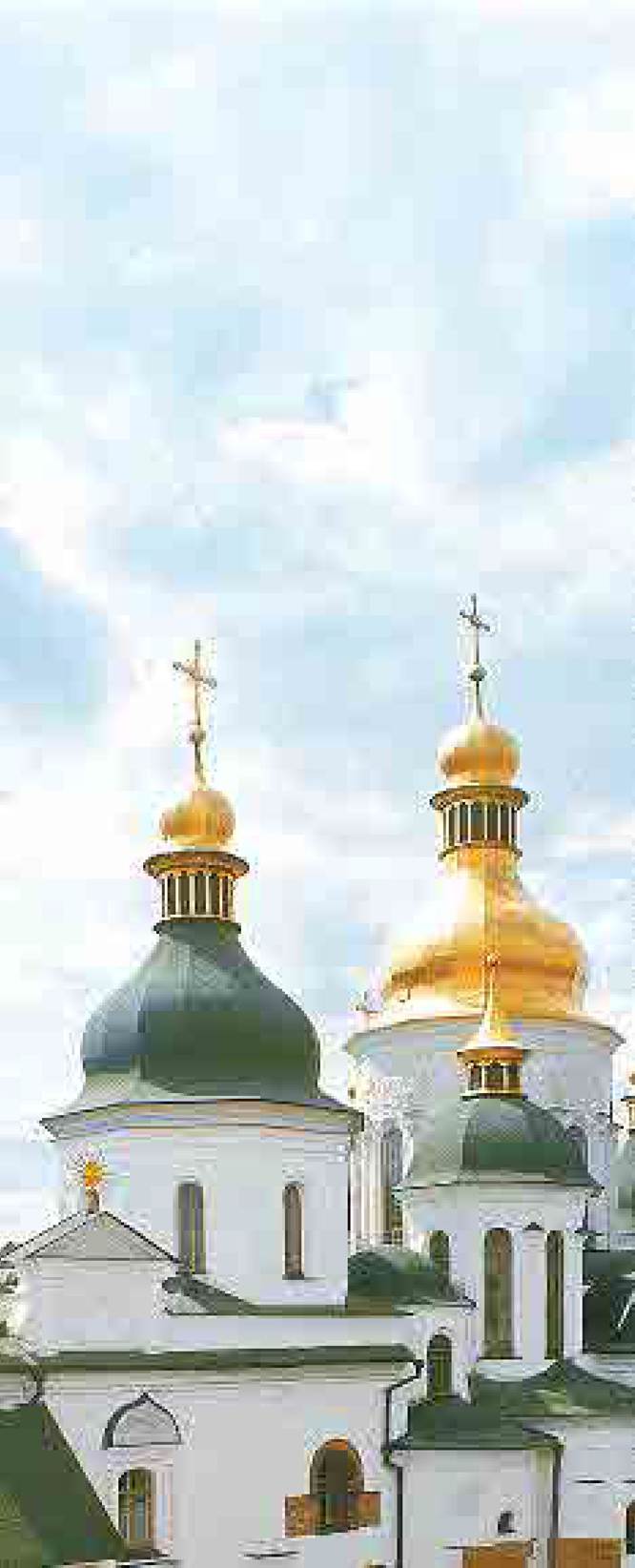
народу до християнської спільноти. Як наголошено в тексті, це сталося не за апостольських часів (київська місія святого Андрія Первозванного з'явиться серед аргументів місцевих книжників пізніше). Прирівняного до апостолів “учителя і наставника” Русь отримала в особі князя-хрестителя, “мужністю та хоробрістю уславленого в багатьох країнах”, “єди- нодержця” своєї землі, що “підпорядкував під себе навколишні сторони”. Маючи за приклад благовірну грецьку землю, де всі міста в молитві предстоять Богу, як у них діються, “сили, чуда і знамення”, князь, схилившись сам до християнства, привів до нього і свій народ. В ораторському піднесенні автор навіть ствердив: “і не було ні єдиного, хто б спротивився благочестивому його намірові” “і слово еван- гельське нашу землю осіяло”. Продовжуючи прирівнювати князя-хрестителя до апостолів, проповідник у зверненні до нього двічі застосував зворот “учителю наш”, подивляючи його навернення у зіставленні зі свідками Христа, які не увірували. Продовжувачем хрестителя Русі трактується князь Ярослав (у тексті виступає лише під християнським іменем Георгія; водночас із княжим титулом стосовно нього, як і батька, вживається також титул кагана), що завершує не закінчене батьком як Соломон після Давида. Першим серед перелічених діянь князя звернення до батька-хрестителя називає наступне: “дім Божий великий святої Його Премудрості створив на святість і освячення градові твоєму з усякою красою, прибрав і золотом, і сріблом і камінням дорогим і сосудами чесними - церква дивна і славна всім навколишнім країнам - іншої немає на всій земній півночі”. Собор стоїть донині й підтверджує, що ця характеристика - не витвір панегіриста, а констатація історичної реалії.
На тлі ”див” ранньохристиянського Києва на чолі з Софійським собором доступна нині в поодиноких її зразках найдавніша книжна культура столиці людей “людей, просвітлених Духом Святим”, звичайно, не виглядає так вражаюче. За самою природою це явище, призна-
чене для зовсім іншого як використання, так і сприйняття. Проте водночас за перейнятим каноном східнохристиянської традиції книга відіграла істотну роль у її утвердженні, прищепленні на старокиївському ґрунті усього того комплексу духовних надбань східнохристи- янського світу, які існували й функціонували значною мірою насамперед через книгу, зберігалися, передавалися й залишилися у віках найперше завдяки їй. Скромний перелік поодиноких автентичних свідчень цієї роботи, яка лежить в основі національної духовної традиції, відкривають лише пам'ятки другої половини XI ст. Усі вони різного часу й за різних обставин покинули терени України і вціліли переважно на території Росії. На їхньому тлі аркуші Реймського Евангелія Анни Ярославівни - одинокий виняток, що “загубився” у Европі, куди помандрував ще перед 1051 р. з київською княжною, якій судилося стати дружиною короля Франції.
Шлюбний зв'язок коронованої пари мав зовсім своєрідну передісторію, оскільки свого часу засновник французької династії Гуго Капет старався руки візантійської принцесси Анни для свого сина Роберта. Проте його “випередив” святий Володимир Великий, внаслідок чого Капетінги породичалися з візантійськими імператорами тільки в особі внука Гуго Капета, а сина Роберта - Генріха I (1031-1060) через внучку Анни - Анну Ярославівну. Генріх був набагато старшим, оскільки народився ще 1008 р., тоді як Анна - щойно на початку 1030-х років. Анна стала другою його дружиною - перша - Матильда, племінниця імператора Священної Римської імперії Генріха III, померла через рік після одруження у 1044 р. Як припускають, посольство за Анною до Києва мало місце ще в 1048-1049 роках. Шлюб відбувся у суботу, 19 травня 1051 р. в кафедральному соборі у Реймсі - тодішній столиці Франції. Подружжя прожило разом тільки дев'ять років: король помер 4 серпня 1060 р. Анна, очевидно, відігравала активну роль у житті королівства - її ім'я регулярно фігурувало в офіційних до-
кументах Генріха I. Їх старшого сина - Філіпа ще за життя батька, у 7-річному віці 1059 р. за усталеним звичаєм династії короновано й проголошено співправителем. У тридцятилітньої вдови невдовзі виник любовний роман з родичем її покійного чоловіка - Раулем де Перон, графом де Крепі і де Валуа. Граф оскаржив дружину Елеонору Брабантську в подружній зраді і влаштував викрадення королеви-вдови під час полювання, після чого за її наполяганням взяв із нею церковний шлюб. Покинута дружина звернулася зі скаргою до римської курії й шлюб визнали недійсним. Проте Анна жила з графом до його смерті 1074 р. Останній її підпис на документі датується наступним роком й на цьому сліди київської княжни у Франції губляться. Її син Філіп правив майже пів століття - до 1108 р. й немало спричинився до об’єднання земель майбутньої Франції.
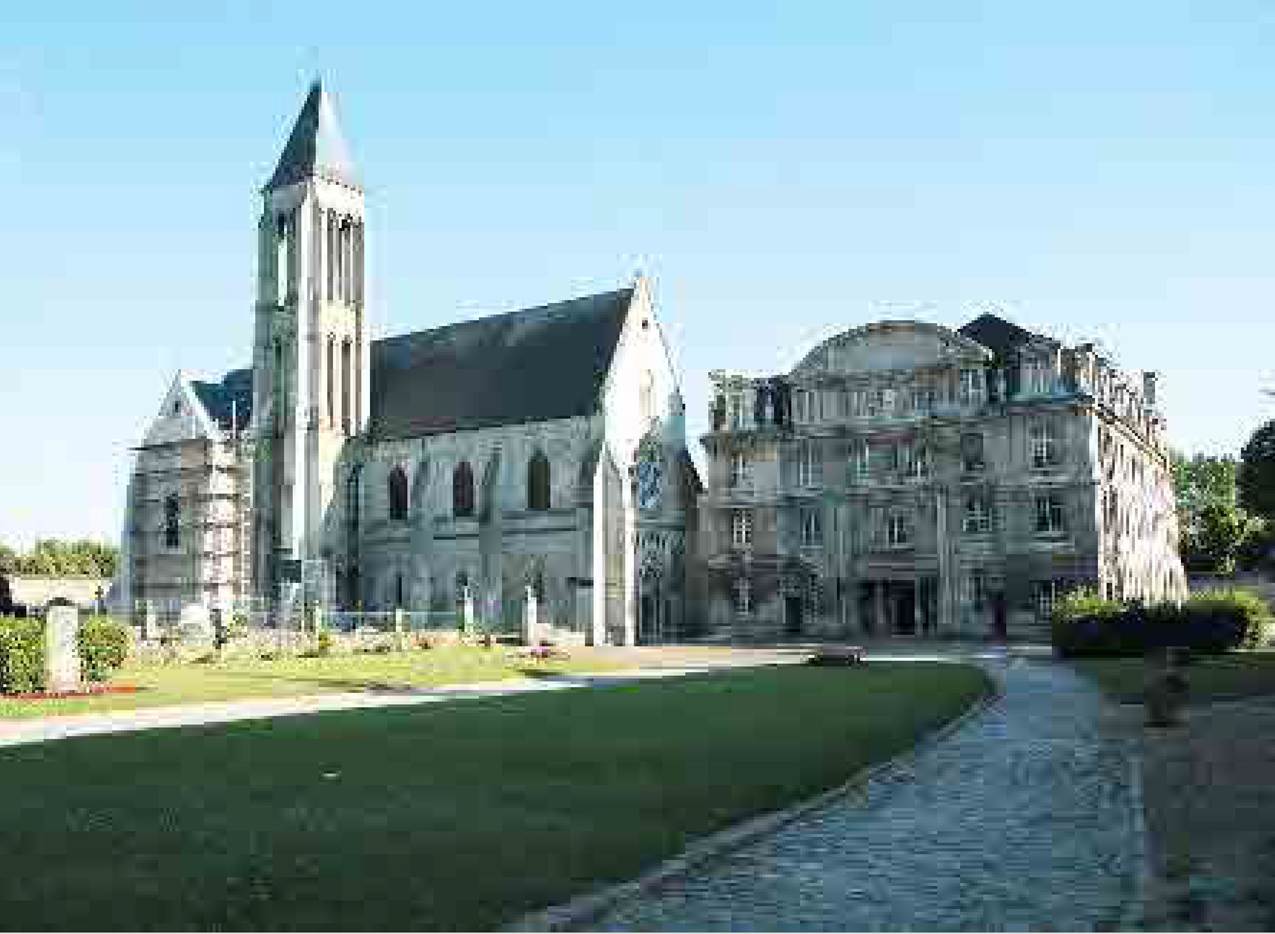
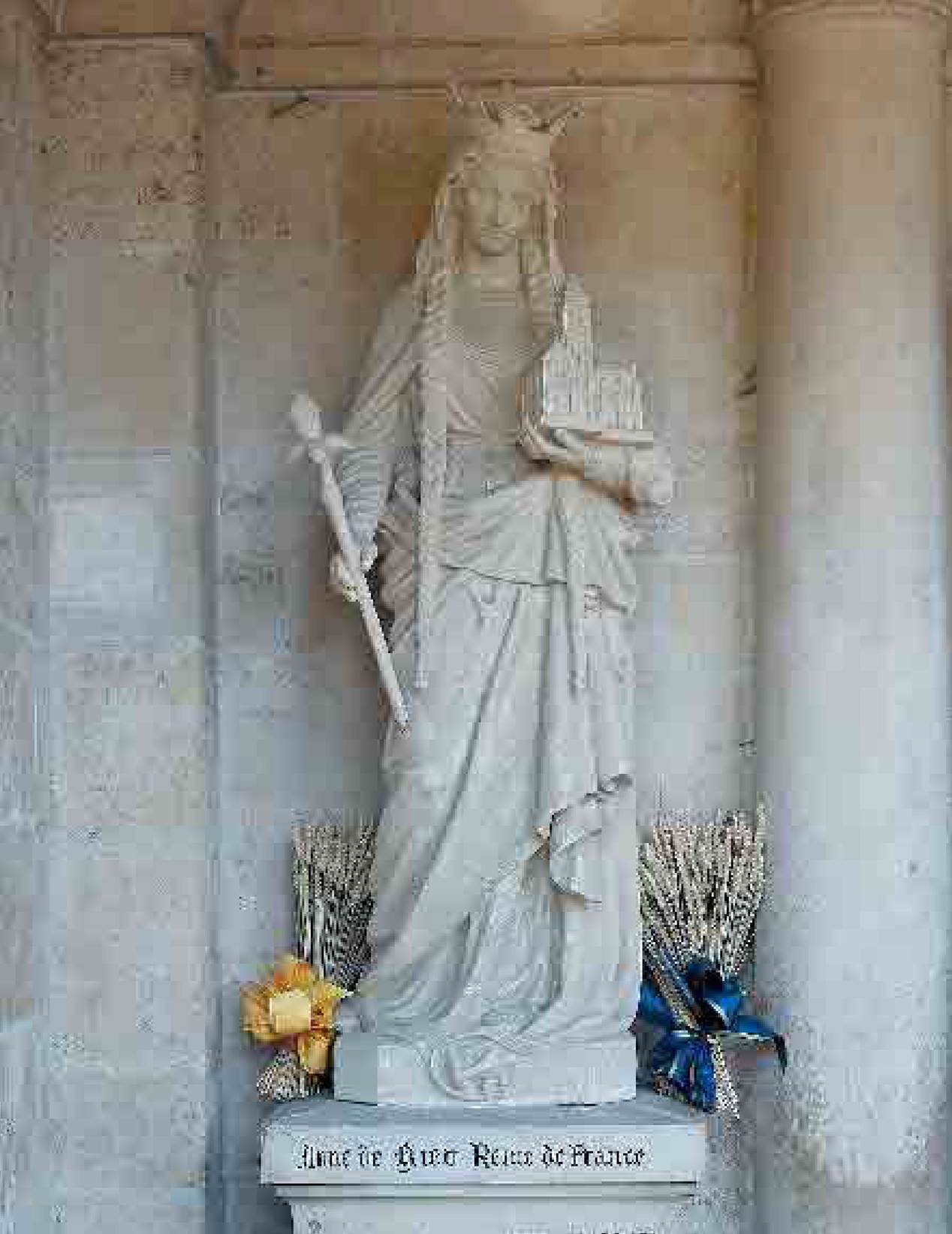
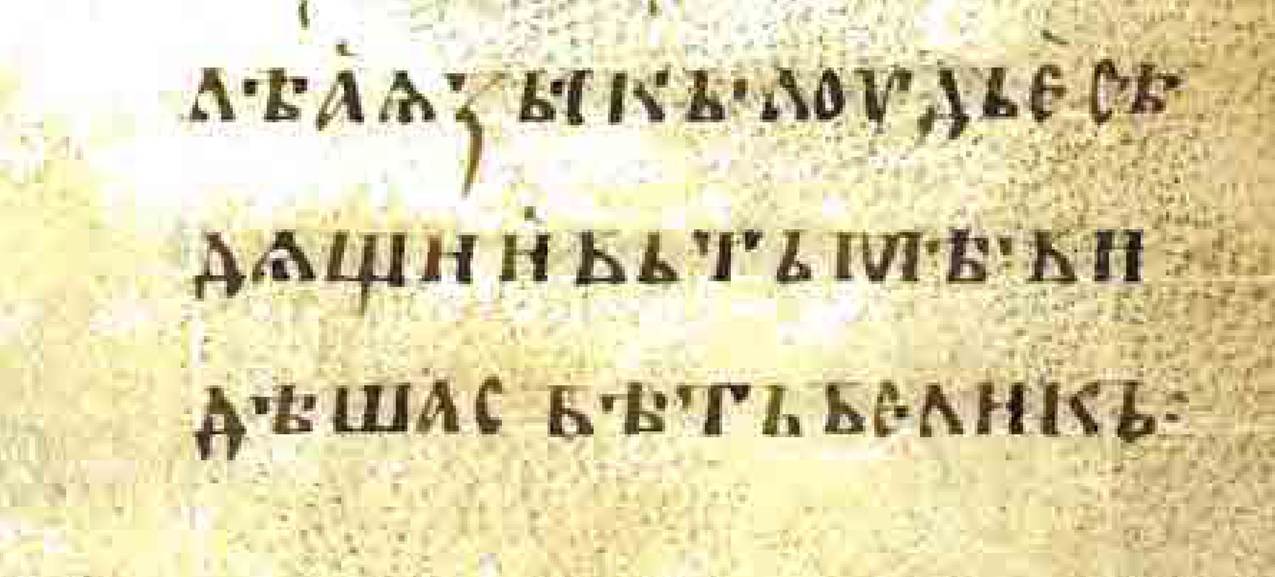
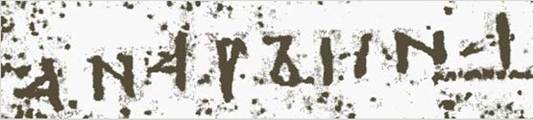
З французькими сторінками біографії Анни пов’язані декілька історичних реліквій, не всі з яких дійшли до нашого часу. За свідченням французьких джерел, посольство, відряджене до Києва за майбутньою королевою, привезло до собору в Реймсі частку реліквій святого Климента папи та його учня Феба14, які зберігалися у київській Десятинній церкві. Цей мало знаний факт належить до рідкісних свідчень найдавніших українсько-французьких контактів. За обітницею, даною перед народженням первістка Філіпа1052 р., Анна заснувала в Санлісі поблизу Парижу монастир святого Вінцентія. Монастир існує досі; у ньому збереглася тогочасна каплиця, біля входу до якої уже за новіших часів встановлено скульптуру королеви з написом “Анна з Києва, королева Франції” (Anne de Kiev Reine de France). На датованому 1063 р. акті королівського надання для монастиря святого Криспіна в Суассоні поряд із хрестом, який означав підпис малолітнього сина - короля Філіпа, Анна біля свого хреста власноручно вивела ще й підпис: “АНА ГЪИНА”, що не відповідає стосованим тоді нормам. Автограф зберігся на документі, сам текст якого королеви не згадує (на той час вона вже
20" class="lazyload" data-src="/files/uch_group74/uch_pgroup257/uch_uch7190/image/image020.jpg">
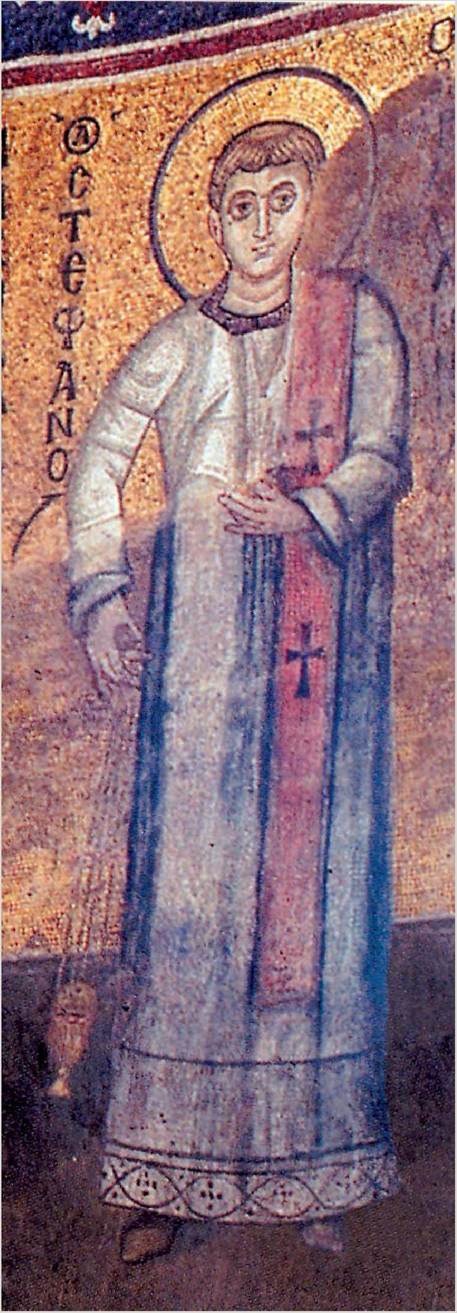
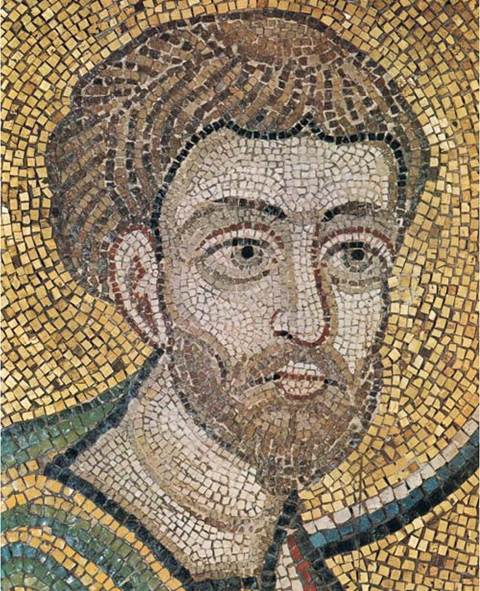
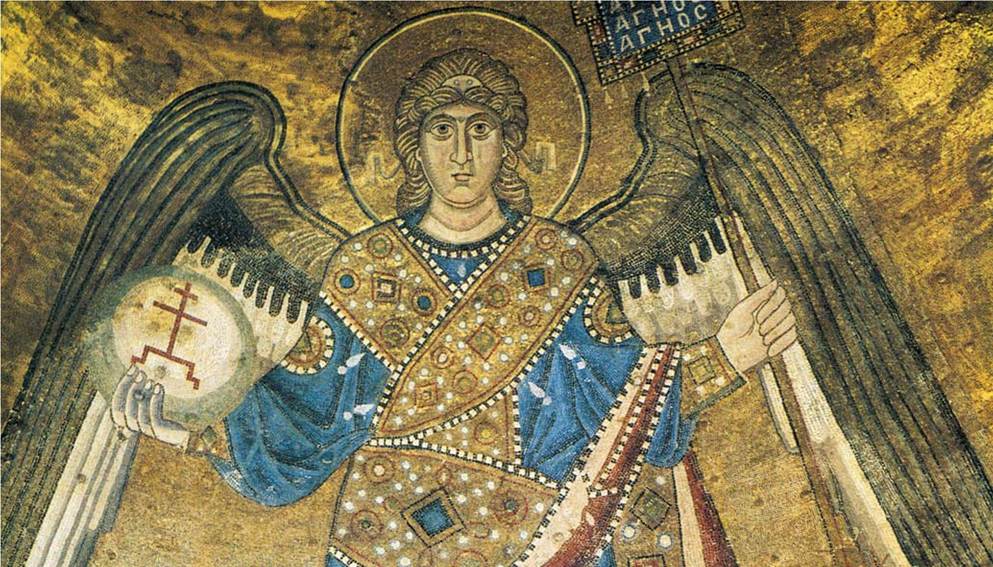
Д Св. Климент, Папа римський. Мозаїка у вівтарі Софійського собору. Фрагмент. д Saint Clement, Pape de Rome. Mosatque du sanctuaire de la cathedrale Sainte-Sophie. Fragment.
Д Pope Saint Clement of Rome. Mosaic in the sanctuary of the Cathedral of Saint Sophia. Fragment.
14 B. de Gaiffier, Odalric de Reims, ses manuscrits et les reliques de saint Clement a Cherson [b:] Etudes de Civilisation Medievale (IX-XII siecle). Melanges offerts a Edmond-Rene Laband, Poitiers 1974, p. 315-320.
була замужем за графом де Крепі). Тому незвичний підпис королеви схильні розглядати як її реакцію на таке упущення. Усі інші знані акти, які з'явилися за її участі, мають лише загальноприйнятий для тогочасних офіційних документів хрест у супроводі писарської нотатки, що стверджувала особистий підпис королеви. Таким чином, одинокий збережений французький автограф, який не вкладається у звичні норми тогочасної актової практики, Анна Ярославівна написала рідною мовою. Своє ім'я вона вивела за тією ж версією, яку вживає й запис при відкликанні до свята її покровительки - святої Анни в Місяцеслові Реймського Евангелія (на звороті другого аркушу) - так само з одиноким “н” (“зачатие стій ані”).
Серед пам'яток по французькій королеві з Києва одинока вціліла старокиївська реліквія - список Евангелія, знаний у новішій традиції під назвою Реймського, природно посідає особливе місце. Його визначили не так французькі аспекти побутування цього унікального рукопису, як насамперед його зовсім виняткова позиція серед спадщини найдавнішого періоду історії стародавнього Києва - часів утвердження українського християнства.
Попри бурхливу долю, внаслідок якої від давнього київського кодексу збереглося лише шістнадцять аркушів, цей скромний залишок дійшов до нас із сивої дивнини як найстарша українська книга та перша книжкова пам'ятка київського християнства. Забута в одній з регіональних французьких колекцій, вона лише тепер дочекалася видання, яке, можна сподіватися, зробить її загальнодоступною й сприятиме входженню до якнайширшого контексту української культурної спадщини.
З нинішнім виданням київські аркуші Реймського Евангелія повертаються на ту землю, де були створені і яку покинули ще в середині XI ст. Повертаються як одна з найцінніших історичних реліквій України.
Володимир Александрович
LES PAGES KIEVIENNES DE L'EVANGELIAIRE SLAVON DE REIMS
La premiere moitie du XIeme siecle fut l’une des periodes les plus importantes de Ihistoire de I’Ukraine pour la formation de sa tradition nationale dans son aspect le plus large. Le facteur determinant du processus historique de cette epoque fut le fameux acte de Volodymyr le Grand, qui adopta le christianisme de rite byzantin en 988, puis l’instaura comme religion d’Etat. Ceci donna naissance a une forme originale de la civilisation chretienne orientale et posa les fondements de toute l’evolution ulterieure de la vie nationale.
L’adoption du christianisme de rite byzantin - rite qui predominait sur le continent europeen a la fin du premier millenaire, - supposait naturelle- ment l’implantation dans le contexte ukrainien de l’ensemble des traits de la culture religieuse byzantine mais egalement des manifestations profanes de cette tradition. A cette epoque, le christianisme en Ukraine entretenait deja depuis des siecles des contacts avec Byzance et la Crimee. Les debuts de ces relations de voisinage ainsi que les origines de la chretiente en Ukraine sont bien anterieurs. Par- mi les faits historiques marquants, il faut mention- ner le bapteme des princes Askold et Dyr lors de la campagne de Constantinople en 860. Cet eve- nement n'a cependant pas depasse le cadre d’une ceremonie privee, limitee a ces deux seigneurs et a leur entourage proche.
Initialement, le christianisme en Ukraine coexista un certain temps avec les croyances paiennes. C’est ce dont temoignent clairement les chroniques qui decrivent la confirmation solen- nelle de la fidelite au traite avec Byzance en 945 : les paiens de l’armee du prince preterent serment dans un temple paien et les chretiens, dans la basi- lique du prophete Elie1. Le bapteme de la princesse Olga a Constantinople, en 9552, qui est le point de depart de la conversion au christianisme de
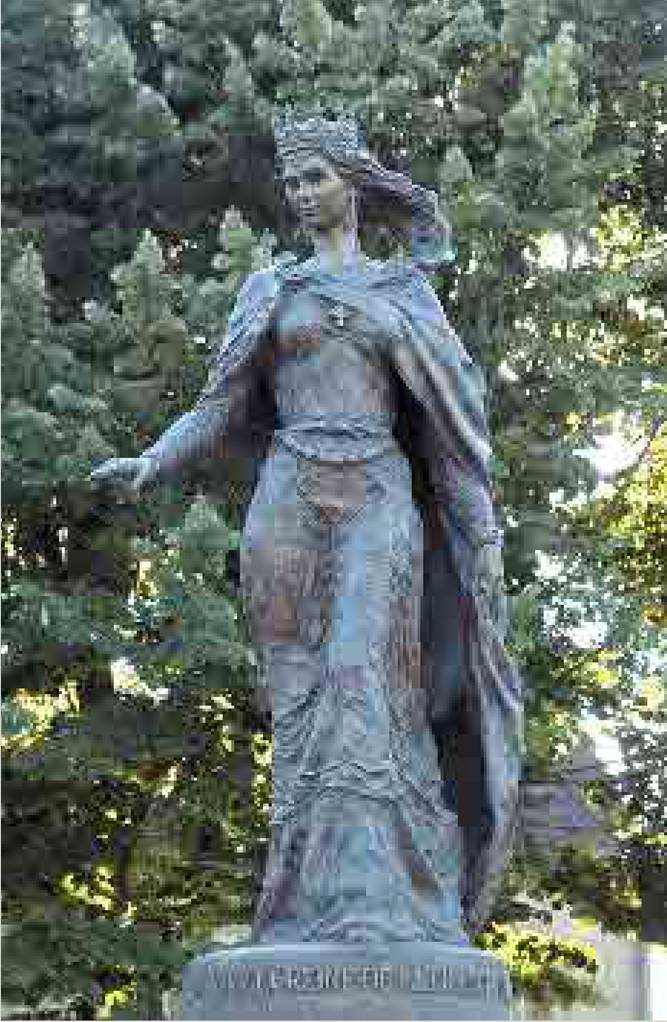
А Пам’ятник королеві Анні Ярославівні в Санлісі.
Скульптори Валентин та Микола Зноби. 2005. A Statue d’Anne, fille du Grand-Prince Yaroslav-le-Sage a Senlis. Sculpteurs : Valentyn et Mykola Znoba (2005).
A Statue of Anna Yaroslavivna in Senlis. Sculptors: Valentyn and Mykola Znoba (2005).
1 Chroniques d’Ipatius, in ffiuvres completes des chroni- ques russes. Moscou, 1962, tome I, p. 40.
2 Ibid. p. 49.
l’elite dirigeante, contribua a l’affermissement du christianisme a Kiev. Par ailleurs, deja au cours de cette periode, le christianisme de Kiev n’etait pas uniquement tourne vers Byzance. Il existait egale- ment, dans le domaine religieux, des contacts avec l’Allemagne. En 961, notamment, fut missionne a Kiev l’eveque Adalbert pour qui, l’annee suivante, une eglise rotonde fut construite sur le modele de la chapelle de Charlemagne a Aix-la-Chapelle[3]. Les vestiges de cette eglise, retrouves en 1970 et identifies un quart de siecle plus tard, sont consideres comme ceux de la plus ancienne eglise mise au jour en Ukraine jusqu’a present (hormis, evidem- ment, la Crimee qui, a l’epoque, appartenait a Byzance). Cependant, le moment decisif fut l’avene- ment du prince Volodymyr le Grand qui, aux dires du metropolite Hilarion, “ ordonna que, sur toute sa terre, on soit baptise ”, apres quoi, toujours selon le meme metropolite, “...toute notre terre rassem- blee glorifia le Christ ”[4]. Cette derniere affirmation est, bien sur, une exageration apologetique, mais elle revelait inevitablement un long processus his- torique.
Le christianisme de Kiev naquit de l’union de sa tradition historique propre, de son experience chretienne anterieure et de la culture religieuse byzantine. Ce qui constitue la particularite ukrai- nienne, c’est son fondement historique, issu de la communaute slave dans un contexte local, qui a conduit a une synthese finale originale, en reunis- sant deux tendances souvent opposees : l’element byzantin et une culture religieuse independante. Kiev acquit l’ensemble des traits distinctifs de la tradition religieuse en integrant l’experience du christianisme oriental byzantin et en conservant en meme temps sa propre identite historique. Deja l’epoque du prince Volodymyr le Grand, qui adopta le christianisme dans un contexte de guerre avec Byzance, en est un temoignage probant. Il en fut de meme par la suite. Il convient de rappeler ici la querelle d’interets religieux qui opposa Kiev a Byzance en 1043 (et qui ne fut pas relatee en detail dans les sources historiques), a la suite de laquelle fut nomme, en 1051, le premier metropolite issu du clerge de la Rous’ kievienne, a peine soixante- dix ans apres l’adoption officielle du christianisme. Ces faits montrent clairement que malgre une forte influence byzantine, le christianisme de Kiev et ses traditions en general ne se modelaient pas sur Byzance.
Le patrimoine culturel de Kiev a conserve d’ex- ceptionnels exemples de son identite propre. Men- tionnons, en premier lieu, le Dit sur la Loi et la Grace du metropolite Hilarion. Il est significatif que les muvres d’art du Kiev ancien aient leur identite propre, alors que la formation de l’art de la Rous' kievienne s’est faite sur le modele byzantin et que ses premieres manifestations naquirent de la main d’artistes etrangers. Cela apparait en particulier dans un ensemble pictural unique en son genre au regard de toute cette epoque : les fresques du “ cycle nuptial ” du prince Volodymyr le Grand et de son epouse Anne, issue de la lignee des empereurs byzantins, tous deux representes dans les tours de facade de la cathedrale Sainte-Sophie[5]. Comme il a ete etabli recemment, ces fresques representent la visite des ambassadeurs de Volodymyr le Grand a Constantinople et la ceremonie de son mariage a la cour imperiale. Tout aussi remarquable est le splendide portrait de la famille de Yaroslav le Sage a l’interieur de cette meme cathedrale (seu- les les parties laterales de cette composition se sont conservees). Le portrait de la famille du souverain, miniature datant de 1073 qui ouvre l’lzbornyk (le Recueil) du prince Sviatoslav, le fils de Yaroslav le Sage, est egalement une illustration d’un sujet ty- piquement kievien. Toutes ces muvres temoignent que, meme la ou l’influence byzantine devrait ap- paraitre le plus nettement, l’aspect autochtone etait le facteur determinant d’une culture propre.
Historiquement, le processus de la fondation de la tradition nationale au cours des premieres decennies du christianisme a Kiev est, helas, trop insuffisamment retrace dans les chroniques et les monuments authentiques. En particulier, la source principale qui evoque les evenements de cette epoque, la Chronique des annees anciennes, ne men- tionne, pour les annees 989-1013, que le deces de quelques membres de la famille princiere. La periode suivante - le regne du grand prince Yaroslav le Sage - n’est pas non plus tres detaillee. Le chef- dThuvrc absolu de cette epoque significative, non seulement pour l Ukraine, mais pour tout le monde chretien oriental, est la magnifique cathedrale Sain- te-Sophie avec son ensemble pictural unique, qui compte deux cent soixante metres carres de mosai- ques et environ trois mille metres carres de fresques. Cet ensemble de peintures du XIeme siecle n’a pas d’equivalent dans le monde. Ces rares temoignages subsistants appartiennent a differents domaines de la vie culturelle, revelant la diversite de recherches et de realisations de la jeune chretiente.
L’une des principales ambitions de ces “ hom- mes nouveaux, illumines par l’Esprit Saint ”, comme Nestor le Chroniqueur les appellera sous peu3 4 5 [6], etait de s’impregner de litterature chretienne. Ce n’est pas du tout un hasard si, parmi les trophees ramenes par Volodymyr le Grand de la bataille de Korsoun, la Chronique prete une attention speciale aux livres. “ Ces fleuves qui irriguent le monde ” sont non seulement le leitmotiv de l ’eloge du prince Yaroslav le Sage, mais en constituent aussi la ma- jeure partie. Selon la Chronique, le prince “ avait la passion des livres, il en lisait souvent, aussi bien le jour que la nuit. Et il reunit maints copistes, et ils traduisirent du grec en slavon les Saintes Ecritures et recopierent moult livres. Et il acquit des livres grace auxquels les gens s’instruisent... ”, “ il aimait les livres, et en ayant fait recopier plusieurs, il les placa dans la cathedrale Sainte-Sophie ”[7]. Ces brefs extraits devoilent un des traits majeurs de l’elabo- ration de la tradition spirituelle. Les specialistes les interpretent a juste titre comme le recit de la fon- dation de la premiere bibliotheque ukrainienne, etablie dans la cathedrale Sainte-Sophie. La pratique religieuse necessitait des livres, qui etaient un des moyens les plus importants de propagation de la religion chretienne, bien que sur le territoire de l’Etat de Kiev, on ne trouvat pas que des livres religieux. La litterature profane etait egalement repandue, y compris celle du monde antique : les sources historiques du XIIeme siecle mentionnent deja, par exemple, la presence a Kiev de connaisseurs d Homere. A partir de la fin du Xeme siecle, on elabora a Kiev les corpus des textes V Таблиця з написом на пам’ятнику королеві Анні Ярославівні в Санлісі. V Plaque avec I’inscription sur le monument dedie a la reine Anne a Senlis. V Inscription on the statue of Anna Yaroslavivna in Senlis. litteraires les plus importants, principalement du cycle liturgique, qui constituerent le fondement de la future culture litteraire ukrainienne. La Chro- nique insiste sur une contribution particuliere du prince Yaroslav le Sage dans ce travail. Aux dires du chroniqueur, “...ce grand prince Yaroslav, fils de Volodymyr, ensemenca par les paroles des livres les cmurs des croyants ”8. Aux yeux des contempo- rains, la portee d’une telle activite etait evidente : “ Car celui qui lit des livres parle avec Dieu et avec les saints. Lire les prophetes, les enseignements de l’Evangile et des apotres ainsi que la vie des saints peres sera tres profitable a l’ame ”9. Abstraction faite du ton dithyrambique de l’eloge du prince, inclus dans la Chronique vers 1037 comme une sorte de bilan de son activite, le texte de ce document original retrace de maniere remarquable les efforts systematiques menes par Yaroslav dans le but d’integrer la Rous’ a l’ensem- ble de la richissime tradition litteraire du christianisme oriental et d’absorber cette tradition dans le contexte local. Le metropolite Hilarion fit le point sur ce processus en devancant son apologie ulterieure dans la Chronique. Il avait surement de bonnes raisons pour definir ainsi l’adresse de son sermon, ou, comme il l’appelle, de son Dit : “ Ce n’est pas ecrit pour les ignorants, mais pour ceux qui se delectent des livres ”10. Il est difficile de deviner aujourd’hui tout ce que recouvrait cette adres- se. Pourtant c’est le Dit du metropolite de Kiev qui montre lui-meme qu’elle est bien plus qu’une simple figure de rhetorique solennelle. L’muvre des clercs kieviens de l’ epoque ne s’est conservee que dans des copies datant d’une periode plus tardive, aussi est-il impossible d’etudier concretement l’evolution de leur travail. Les premiers pas avaient ete faits deja du temps de Volodymyr le Grand. Comme les premiers temoignages conserves nous le demontrent, outre les sources litteraires proprement byzantines, les ouvrages des auteurs bulgares, dont le pays avait ete christianise plus tot, ont joue un role important dans ce processus. Les copistes de Yaroslav le Sage tra- vaillerent sur un terrain deja prepare en utilisant l’experience de leurs predecesseurs. Cependant, ce n’est qu’a partir du regne du prince bibliophile que la Chronique parle explicitement d’un vaste developpement independant de la litterature. Le temoignage le plus important en est la parution, precisement a cette epoque, de l’edition complete des Saintes Ecritures, mentionnee par la Chronique. Cet acquis determinant pour la tradition reli- gieuse et correlatif au regne de Yaroslav le Sage est du au merite d’un groupe de lettres que le prince avait reuni autour de lui et qu’il protegeait avec de- vouement et constance. Les expressions laconiques de l’eloge adresse a Yaroslav le Sage soulignent bien l’interet personnel que portait le prince a la culture litteraire. Elles caracterisent en meme temps, dans ses grandes lignes, le milieu des erudits, dont les efforts donnaient une toute nouvelle orientation a la jeune societe chretienne. A en juger par les propos du metropolite Hi- larion, et par le texte bien plus detaille de l’eloge fait par la Chronique, les contemporains conside- raient que la culture litteraire etait un facteur important de la position preponderante que la Rous' kievienne du temps de Yaroslav le Sage occupait en Europe. Les liens familiaux de l’illustre prince attestent de la place qu’occupait en Europe l’Etat des souverains kieviens recemment christianise. Par sa mere, Yaroslav etait cousin de l’empereur de Byzance, Constantin IX Monomaque. Sa deuxie- me epouse Ingigerde (Irene) etait la fille du roi de Suede, Olaf III. En mariant ses filles, le prince etablit des liens de parente avec plusieurs dynasties d’Europe. Sa fille ainee Anastasia epousa le roi Andre Ier de Hongrie ; Elisabeth epousa le roi de Norvege, Harald III dit le Severe, et, apres sa mort tragique, le roi du Danemark, Sven II Estridsen ; Anne epousa le roi de France, Henri Ier. Le prince maria egalement sa sraur Dobroniega au roi de Po- logne, Casimir Ier le Renovateur. Son fils Vsevolod epousa Marie, fille de Constantin IX Monomaque, et donc sa cousine. Gertrude, fille du roi de Polo- gne Mieszko II, etait l’epouse de son fils Iziaslav, et Sviatoslav se maria avec Kilikia, fille du comte allemand Etheler. Un autre de ses fils, Viatcheslav, epousa probablement Oda, fille du comte de Basse- ■d Реймське Евангеліє. Остання сторінка Місяцеслову та перша сторінка глаголичного тексту. ·< Evangeliaire slavon de Reims. Derniere page du calendrier liturgique et premiere page du texte glagolitique. Reims Gospel, last page of the Menologion and the first page of the Glagolitic text. 8 Chroniques d'lpatius, p. 140. 9 Ibid., passim. 10 А. М. Moldovan, Le Dit sur la Loi et la Grace, p. 79. Saxe, Leopold de Stade, et Igor epousa Cunegonde, fille du duc de Saxe, Otton. Ces liens dynastiques attestent que lEtat de Yaroslav le Sage etait tout a fait integre a la vaste communaute europeenne. Ils confirment les celebres paroles du metropoli- te Hilarion adressees a Volodymyr le Grand : “ Il ne regnait plus dans un pays pauvre et meconnu, mais sur la Rous’, reputee aux quatre coins du monde ”n. Le prince Yaroslav meritait aussi cette louange puisqu’il renforca les acquis precedents. Le destin voulut que le seul temoignage manifeste de ces contacts europeens, mais aussi du travail des milieux erudits kieviens, ait ete la copie du manuscrit de l’Evangeliaire qu’emmena en France la princesse Anne, fille de Yaroslav le Sage. Il n’en reste aujourdhui qu’un court fragment, conserve a la Bibliotheque Municipale de Reims, ville on les rois se faisaient sacrer. L’Evangeliaire slavon de Reims represente un cas original dans le patrimoine culturel ukrainien. La formation de la nouvelle tradition chretienne ap- parait de maniere assez succincte dans les sources et les temoignages ecrits, neanmoins il s'en degage quelques aspects particuliers. La culture litteraire ne pouvait faire exception a cette regle generale. A part quelques rares allusions, plutot que des renseignements concrets, il n'existe pas dans les chroniques de l'epoque de temoignages originaux synchrones. On retrouve surtout des traces dans la composition et dans l'ornementation des manus- crits kieviens plus anciens. Le premier manuscrit generalement connu est l'Evangeliaire d'Ostromyr, paru seulement en 1056-1057. Par la suite, deux Recueils, dates de 1073 et de 1076, furent composes pour le prince Sviatoslav II et sa cour. L'absen- ce de temoignages authentiques provenant de cette epoque ne dement pas tel ou tel fait historique, mais on est globalement oblige de les reconstituer d’apres des recits posterieurs, d’ailleurs assez im- precis, ou d'apres des informations eparses basees sur des suppositions. L'ensemble des temoignages concrets sur les debuts de la litterature kievienne est amorce par l’Evangeliaire recopie a Kiev pour Ostromyr, gouverneur de Novgorod. Pourtant, la partie cyrillique de l'Evangeliaire slavon de la ca- thedrale de Reims, conserve aujourdhui dans la Bibliotheque municipale de Reims, provient, elle aussi, de Kiev et est anterieure a l’Evangeliaire d’Ostromyr. Ce codex a ete identifie en 1717 par le tsar Pierre Ier qui, lors de son sejour en France, l’examina et le reconnut comme “russe”. Cet ouvrage a ete d’ailleurs mentionne plus d’une fois dans la litterature du XVIIIeme siecle. En 1835, il fut de nouveau sorti de l’ombre par Alexandre Tour- gieniev au cours du voyage qu'il entreprit a travers l’Europe pour rechercher des materiaux lies a lhis- toire de la Russie. Le manuscrit des feuillets sauvegardes de lEvan- geliaire slavon de Reims reste peu etudie ; ce document, qui presente une valeur exceptionnelle pour lhistoire du Kiev medieval, n’a toujours pas sus- cite l’interet scientifique qu’il devrait. Sa place dans la conscience culturelle ukrainienne est bien plus modeste encore. Cet evangeliaire n'occupe pas la place qu’il merite parmi les muvres du patrimoine culturel ukrainien, et il demeure en fait une muvre peu connue. Sans qu'on puisse les considerer comme totalement oublies, ces feuillets n habitent pas la memoire ukrainienne autant qu'ils le devraient, eux qui sont le document le plus ancien et constituent un temoignage exceptionnel non seulement sur les debuts du christianisme a Kiev, mais pour toute lhistoire de l Ukraine en general. Cette ac- ception large merite une attention particuliere, car le fragment de l'Evangeliaire slavon de Reims n'est pas seulement le plus ancien manuscrit original de Kiev, mais il doit etre aussi reconnu comme le plus ancien livre liturgique de l'Eglise de Kiev. De la partie cyrillique de cet Evangeliaire, seuls seize feuillets (32 pages) ont ete conserves. Ils ont ete annexes comme cahiers finaux (19 et 20) du manuscrit glagolitique illustre de l'Evangile et des Actes des Apotres, de trente et un feuillets (32 pages) ; on rapporte cette partie plus tardive du codex au XIVeme siecle. Un tel assemblage prouve qu'au moment de sa composition, ces deux parties etaient considerees comme deux composan- tes absolues d'un seul et meme codex et qu'elles furent reliees selon ce principe. En 1843, a Paris, le ministere des Finances russe fit lithographier le fragment cyrillique du manuscrit. A vrai dire, de nombreuses erreurs furent commises par le litho- graphe francais Jules Lundi qui ne comprenait ni le texte, ni meme le dessin de certaines lettres qu’il devait restituer. Ces alterations provoquerent, na- turellement, des interpretations erronees chez les chercheurs du milieu et de la fin du XIXeme siecle. Il n’est pas rare d’en voir les consequences jusque dans des publications recentes. Parut ensuite, en 1899, une edition fac-simile en heliogravure. Pourtant, meme apres cela, ce document precieux resta en marge des recher- ches, ne suscitant pas l’interet qui lui etait du. Au XXeme siecle, la litterature specialisee s’est meme moins souvent tournee vers ce manuscrit unique qu’au siecle precedent. Il se serait perdu en France, dans une collection regionale. Pour les scien- tifiques ukrainiens, l’Evangeliaire n’existe qu’a travers de breves allusions dans des magazines et des revues populaires. Les recherches systema- tiques sur l’ensemble des problemes rencontres lorsque l’on aborde cette piece exceptionnelle du patrimoine national ne sont pratiquement pas menees en Ukraine. La presentation de l’Evangeliaire lors d’une exposition a Moscou en 1975 ne changea pas non plus le destin nebuleux du manuscrit de Kiev. Aus- si etrange que cela puisse paraitre, le grand interet que la Russie portait au patrimoine de la Rous' kievienne en vue de se l’approprier peu a peu, ne donna pas non plus d’impulsion decisive pour etu- dier le manuscrit. Le seul fruit de cette exposition est un opuscule edite a faible tirage, en fait une modeste publication anterieure de Lydia Zhukov- skaia, celebre linguiste russe[11] [12]. L’auteure fit le point sur les differentes interpretations scientifiques du document de Reims ; elle le classa avec certitude comme provenant du patrimoine litteraire kievien de la premiere moitie du XIeme siecle ; elle signala les principales erreurs des interpretations prece- dentes, definit brievement les particularites lin- guistiques du manuscrit, presenta dans le detail sa composition, mentionna les erreurs du copiste et restitua, en annexe, le texte original du manuscrit. La chercheuse moscovite fut la premiere philolo- А Архидиякон Лаврентій і Св. Василій Великий. Мозаїка у вівтарі Софійського собору. ·< Archidiacre Laurent et Saint Basile le Grand. Mosatque dans le sanctuaire de la cathedrale Sainte-Sophie. Archdeacon Lawrence and Saint Basil the Great. Mosaic above the altar in the Cathedral of Saint Sophia. gue qualifiee a pouvoir etudier le manuscrit original, cependant la publication scientifique qui en a resulte s’est averee trop modeste. Le point le plus important de cette publication est la conclusion de l’auteure qui reprend le registre des evangeliaires anterieurs a l’Evangeliaire d’Ostromyr, proposant une version plus ancienne de la traduction des Evangiles canoniques. Par la suite, la philologue publia encore une note sur une etude textologique, mais tout aussi succincte, du fragment du codex de Kiev conserve a Reims. Dans son opuscule, elle annon^ait son intention d’analyser l’ecriture, la langue et le texte, mais elle ne mit jamais ce projet a execution. La partie la plus ancienne du manuscrit ne four- nit aucun renseignement sur son origine : il n’y a aucune note, car il ne nous est parvenu qu’un fragment isole qui ne pouvait pas, vu sa situation dans le codex, contenir de telles informations. Aussi, en considerant l’anciennete du texte, seules ses propres particularites linguistiques peuvent nous communiquer ces informations. De nos jours, l histone de ces feuillets ne peut etre reconstituee que d’une maniere hypothetique sur la base de ce que nous savons sur les relations entretenues entre Kiev et la France au milieu du XIeme siecle. Les feuillets de l’Evangeliaire slavon de Reims appartiennent a la partie finale du codex et sont une copie du calendrier liturgique de l’Evangile aprakos13, qui se trouvait apres les quatre Evangi- les canoniques. Les extraits des textes evangeliques sont donnes selon l’ordre dans lequel ils etaient lus pendant les liturgies tout au long de l’annee. Ces feuillets ne representent toutefois que le tiers du calendrier. Plus precisement, il s’agit de la periode s’etendant des derniers jours d’octobre jusqu’au debut du mois de mars. Le fragment conserve commence par le verset final (le debut etait au verso de la page precedente, qui a ete perdue) de l’Evangile selon Saint Matthieu du vingt-troisieme dimanche des temps ordinaires et relatant l’episo- de de la tempete apaisee (Mt 8, 26-27) : “ велика. ч(е)л(о)в(і)ци же чудишася гл(аголя)ще какось єст яко и вітри и море послоуша єго ”14. La premiere inscription conservee contenant une date se presente ainsi : “М(1)[С](Я)ЦА тго: зк: стр(а)- [с](т) с(вя)т(о)му нестероу. и капелине. еу(анг) [л](ие) ищи септ(ем)бря въ: в”[15]. Elle concerne la commcmoration des martyrs Nestor et Capitoline - selon le calendrier julien, elle tombe le 27 octobre, et le 9 novembre selon le calendrier grc- gorien - et renvoie a un texte de l’Evangile recopic plus tot, a la date du 2 septembre. La derniere date apparaissant dans la partie conservce du calendrier est l’Invention du Chef de Saint Jean-Baptiste, le 24 fcvrier. Le texte qui se trouve au verso de la derniere feuille conservce, en bas de la page, n ’indique aucune date. Il s’agit de la lecture de la parabole des ouvriers envoycs a la vigne dans l’Evangile selon Saint Matthieu (Mt 20, 1-8) ; elle s’interrompt au milieu d’un mot du verset 8 : “ гл(агол)а г(оспо)д(и)нъ винограда къ строи ”[16]. Le texte conserve est le plus ancien calendrier de l’Evangile aprakos de la tradition kicvienne, identique a celui de l’Evangcliaire d’Ostromyr. Il contient les lectures des Cvangiles selon Saint Matthieu (1, 1-25 ; 2, 1-23 ; 3, 1-6, 13-17 ; 4, 1-17, 26 ; 5, 1-12 ; 10, 1, 5-8 ; 11, 2-15, 27-30 ; 12, 15-21 ; 20, 1-8), Saint Luc (2, 1-52 ; 3, 1-18 ; 6, 17-23), Saint Marc (1, 1-41 ; 5, 24-34 ; 9, 33-41) et Saint Jean (1, 29-34). Cette variante du texte a CtC conservCe dans les plus anciens manuscrits kiCviens, a commencer par l’Evangcliaire d’Ostromyr de 1056-1057. En meme temps, comme le souligne L. Zhukovskaia, elle livre la version la plus ancienne, parmi les ra- res documents connus a ce jour, dont les particu- laritCs rCvelent l’absence d’une norme linguistique fixe et une irrcgularitc Cvidente de l’orthographe[17]. Ces traits peuvent indiquer une apparition tres prCcoce de l’original et de la copie. L’absence de traces de dialectes locaux tCmoigne de la tres probable origine kiCvienne du manuscrit et du copiste. Tout cela signifie non seulement que les fragments d’Ccrits cyrilliques se trouvant a Reims ont des origines tres anciennes, mais aussi qu’ils sont les seuls documents issus de la pcriode ou commencaient a se former a Kiev les canons de la littcrature chrc- tienne orientale ainsi que l’uniformisation normative de la langue du milieu littcraire concernc. Par conscquent, les feuillets du manuscrit de Reims ·< Архидиякон Стефан. Мозаїка у вівтарі Софійського собору. Archidiacre Etienne. Mosatque dans le sanctuaire de la cathedrale Sainte-Sophie. Archdeacon Stephen. Mosaic in the sanctuary of the Cathedral of Saint Sophia. sont a la fois une source unique pour l’etude de Ikistoire de la langue ukrainienne et un temoi- gnage sur cette etape de son existence, dont le seul exemple parait etre un alphabet enigmatique non traditionnel, decouvert au milieu des inscriptions recouvrant les murs de la cathedrale Sainte-Sophie. Etant donne que le codex devrait normale- ment provenir de l’atelier des copistes du prince, il convient de considerer le texte de cet Evangeliaire comme le produit de son activite. Il est vraisem- blable que les feuillets sont le resultat du travail de ces lettres qui servaient le prince Yaroslav le Sage et son entourage. Les conclusions tirees de cette analyse linguis- tique permettent d’affirmer que les deux cahiers conserves sont un modeste vestige de la partie finale du codex evangelique, copie a Kiev au cours de la premiere moitie du XIeme siecle. Au regard de sa genealogie francaise, le manuscrit est considere comme un reste de l’Evangeliaire, copie au plus tard vers la fin des annees 1040. On estime egale- ment que c’est Anne, fille du grand-prince Yaroslav le Sage et future epouse du roi de France Henri Ier, qui emporta le manuscrit en France. Quelle a ete lkistoire du plus ancien codex du prince kievien jusqu’au milieu du XIVeme siecle, on l’ignore. Il a pourtant vraisemblablement du, au cours de cette periode, subir un vrai cataclysme, a la suite duquel, de l’ensemble des quatre evangiles canoniques et du calendrier liturgique, seuls sont restes les seize feuillets connus aujourd’hui, c’est-a-dire deux ca- hiers issus de la partie calendaire. Les renseignements concrets ulterieurs sur la destinee du manuscrit ont ete conserves dans la partie finale glagolitique et ont trait a l’histoire du manuscrit dans sa composition actuelle. D’apres l’inscription qu’il contient, le roi de Boheme et empereur du Saint Empire romain germanique, Charles IV (1316-1378 - roi a partir de 1334 et empereur a partir de 1346) a offert l’ouvrage deja complete de sa partie glagolitique au monastere benedictin d’Emmaus fonde a Prague en 1347 (les liturgies y etaient celebrees en slavon). C’est parce que Charles IV avait ete eleve a la cour de France pendant sa jeunesse, que l’on estime que c’est jus- tement lui qui emporta ces documents anciens en cyrillique. Les annexes en glagolitique furent ajou- tees a Prague avant la remise du codex au monas- tere, a peu pres au moment de sa fondation, c’est- a-dire, tres vraisemblablement au milieu du XIVeme siecle. Au cours des guerres hussites de la premiere moitie du siecle suivant, le manuscrit disparut du monastere. Dans des circonstances mysterieuses, il reapparut chez le cardinal de Lorraine qui le remit a la cathedrale de Reims, ou il servit pour le sacre des rois de France. Le codex disparut de la ca- thedrale pendant la Revolution et fut depouille, a cette epoque, de sa monture precieuse qui s’envola sans laisser de traces. Pendant un certain temps, ce manuscrit unique en son genre fut meme considere comme perdu a tout jamais, jusqu’a ce qu’en 1835 Alexandre Tourgueniev l’identifie dans la bi- bliotheque municipale de Reims, ou il est conserve jusqu’a aujourd’hui. Une etude comparative prouve que les cahiers cyrilliques de l’Evangeliaire de Reims sont le vestige le plus ancien de la litterature kievienne et un des plus anciens specimens authentiques de la langue ukrainienne (de ce point de vue, il n’est devance que par les plus anciennes et rares inscriptions decouvertes sur les murs de la cathedrale Sainte- Sophie). Cependant l’importance du document de Reims ne se limite pas a cela. C’est aussi le plus vieux manuscrit de l’atelier des copistes du prince de la premiere moitie du XIeme siecle, et, d’ailleurs, le seul exemple authentique de son activite iden- tifie jusqu’a present. Grace a tous ces indices, le modeste fragment du manuscrit de Kiev se situe sur le meme plan que les chefs-d’muvre les plus eminents et universellement reconnus qui datent de cette phase d’affermissement du christianisme a Kiev, tels que la cathedrale Sainte-Sophie et le premier exemple de la litterature locale, Le Dit de la Loi et de la Grace du metropolite Hilarion. Meme si cette comparaison peut paraitre surprenante, vu la disproportion manifeste des objets consideres, les pages du calendrier liturgique de l’Evangeliaire slavon de Reims appartiennent a la serie des temoi- gnages les plus marquants du christianisme datant du regne de Yaroslav le Sage. L’ aspect artistique est evidemment l’un des aspects les plus importants du manuscrit. De ce point de vue, considere comme le plus vieux du patri- moine ukrainien, l’Evangeliaire slavon de Reims est egalement un document exceptionnel. Parmi les codex evangeliques les plus anciens connus de nos jours, il se distingue par ses dimensions relativement modestes : seulement 23 x 17,5 cm. L’Evangeliaire d’Ostromyr mesure quant a lui 35 x 30 cm, et le plus proche de lui, l’Evangeliaire de Mstyslav, qui date du debut du XIIeme siecle, fait 35,3 x 28,6 cm. Son contemporain, l’Evangeliaire de Youri mesure 31x 25 cm. Encore plus petit, le fragment de l’Evangeliaire de Tourov : 21,2 x 16,2 cm. Il est vrai que l’Evangeliaire suivant, ce- lui d’Arkhangelsk, date de 1092, ne fait que 20,5 x 16,6 cm. Date de 1144, l’Evangeliaire de Halytch - 23 x 16 cm, - et le premier Evangeliaire illustre de l Ukraine de l’Ouest, celui de Dobrylo, date de 1164, - 24,5 x 19,7 cm, - sont les plus proches de l’Evangeliaire de Reims par leurs dimensions. Les petites dimensions du livre et l’origine des deux cahiers conserves de la partie finale du codex expliquent l’absence d’une riche ornementa- tion, sans qu’on puisse cependant la qualifier de sobre. Le texte est ecrit sur deux colonnes avec un alignement a gauche que seules les lettrines et les premieres lettres des en-tetes depassent, de meme que les vignettes. La disposition du texte sur deux colonnes se retrouve dans les Evangeliaires d’Ostromyr, de Mstyslav, de Youri et de Dobrylo. Pourtant parmi les Evangeliaires les plus anciens, ce genre d’agencement n’est pas unique : les Evangeliaires d’Arkhangelsk, de Tourov et de Halytch n’ont qu’une colonne. Chacune des colonnes com- prend vingt lignes. Le texte des fragments evange- liques est calligraphie en caracteres droits et assez larges, de moyenne dimension, se distinguant par un net contraste entre les traits epais et les traits fins au graphisme acheve. Les elements des lettres qui depassent la ligne ainsi que les quelques let- tres portees au-dessus de la ligne sont generale- ment peu accentues et n’alterent pas la logique de construction des lignes. L’ensemble est remarqua- ble par sa structure bien pensee et par sa composition proportionnee. Les notes pratiques et celles qui concernent le calendrier sont tracees en carac- teres plus petits, et les lignes qu’elles forment sont coloriees en jaune. Cela permet de differencier les extraits des Evangiles des indications pour les offices, et de distinguer les differentes parties, plus precisement la on il n y a pas le texte des Evangiles, mais seulement des notes calendaires et des references aux textes copies plus tot. Cet agencement soigne de la page temoigne du professionnalisme du scribe. Elle revele aussi l’univers traditionnel de l’atelier de copistes kievien, l’elaboration des procedes de mise en page. Malgre la qualification professionnelle incon- testablement elevee du copiste, celui-ci a commis de nombreuses erreurs de toutes sortes, surtout dans le texte se rapportant au 2 fevrier. Apres les avoir analysees, L. Zhukovskaia est arrivee a la conclusion que ce fragment du texte avait ete copie dans des conditions “inhabituelles”, selon son expression. En meme temps, la chercheuse cite des exemples d’autres endroits ou les memes mots furent transcrits correctement. Les erreurs des copistes n’etaient pas rares, et il etait assez frequent que figure a la fin des manuscrits l’imploration specifi- que de ne pas maudire les copistes pour les fautes commises. Dans le texte, il y a aussi des erreurs relevees et corrigees, surtout des lettres isolees, in- scrites par-dessus celles qui avaient ete effacees. L’ornementation du document est constituee avant tout de cinq en-tetes en couleur et de vingt- trois lettrines. Les en-tetes ouvrent les lectures de chaque mois. Trois motifs sont tresses, un autre est geometrique et le dernier represente des elements vegetaux stylises. Ils sont tous horizontaux et se terminent par des ramifications symetriques des deux cotes. Les en-tetes des mois de novembre, decembre et janvier proposent des variantes differentes d’un meme schema et se differencient d’abord par l’epaisseur de la partie tressee horizontale, par son dessin et par la proportion entre les couleurs rouge et bleue. La vignette de fevrier est formee de neuf petits carres avec un entrelacs rouge sur fond bleu (deux d’entre eux sont completes par des vides sans couleur), et de ses bords partent des boutons floraux stylises. Au verso du dernier feuillet, l’en- tete du mois de mars, de couleur rouge et jaune, est le plus riche en motifs ornementaux. Il repete le schema des vignettes precedentes, mais son centre est ouvrage en forme de nmud passant par un anneau, avec des elements decoratifs supplemen- taires. Seul le premier en-tete est execute avec trois couleurs : le jaune, le bleu et le rouge. Les deux sui- vants utilisent le bleu et le rouge. Ils se distinguent tous par leur dessin acheve. On peut dire la meme chose des lettrines, dont dix-neuf, de taille supe- rieure, occupent l’espace de cinq ou meme sept li- gnes, et quatre, plus petites, trois a quatre hauteurs de ligne. Elles sont dessinees a 1’encre et ensuite coloriees. Les lettrines presentent les memes motifs et les memes couleurs que les vignettes. Elles se trouvent a l’interieur du texte et deux d’entre elles seulement rognent sur la marge du pied de page. Au verso des feuillets treize et quatorze, les lettrines ne sont pas coloriees. La lettrine “ B ” situee dans le feuillet huit n’a pas ete terminee non plus : seule sa base verticale a ete coloriee en rouge. Il y a aussi les grandes lettrines ornant les titres de chapitre, plus coloriees, et quelques mots ornes au debut de certaines parties du texte. Ces mots ont des lettres plus grandes, dessinees avec un double contour et pour certaines, coloriees en rouge ; au verso du premier et du deuxieme feuillet, en plus du rouge, il y a du bleu ; au verso des feuillets onze, douze et quinze, il n’y a que du bleu. Au verso des feuillets treize et quatorze, ces lettres, ainsi que les lettrines, n’ont pas ete coloriees, comme c’etait prevu. Le premier mot du titre au verso du quatri- eme feuillet, certains mots des titres indiquant les dates au verso des feuillets sept, huit, douze, treize et quatorze, n’ont pas ete colories non plus. D’une maniere generale, on decouvre nombre d’elements inacheves. Par consequent, si nous pre- nons en consideration ces particularites de l’orne- mentation, il y a de bonnes raisons pour affirmer que le manuscrit peut ne pas avoir ete termine. Cette supposition concorde avec l’idee de L. Zhukov- skaia selon laquelle certaines parties auraient ete copiees dans des conditions particulieres, vu les erreurs d’ecriture. Aucun systeme logique dans la disposition de ces elements inacheves ne peut etre elabore. On ignore donc ce que peut receler cette ornementation quelque peu particuliere. En sui- vant le meme principe systematique d’ornementa- tion, on peut poser les fondements d’une methode analogue de composition pour la partie perdue du calendrier liturgique. Cette caracteristique permet de deviner que le codex lui-meme, surtout dans sa partie principale contenant les textes evangeliques, devait etre plus richement ornemente. Les pages conservees du plus ancien manuscrit de Kiev, bien qu’assez modestes au premier abord, laissent entrevoir une des periodes les plus interes- А Іоан Златоуст і Григорій Ніський. Мозаїка у вівтарі Софійського собору. A Saint Jean Chrysostome et Saint Gregoire de Nysse. Mosatque dans le sanctuaire de la cathedrale Sainte-Sophie. A Saints John Chrysostom and Gregory of Nyssa. Mosaic in the sanctuary of the Cathedral of Saint Sophia. А Князь Воломимир (?) Ярославович, старший брат королеви Анни Ярославівни. Фреска Софійського собору. Фрагмент. Le Prince Volodymyr (?), fils du grand-prince Yaroslav le Sage, frere atne de la reine Anne. Fresque a la cathedrale Sainte-Sophie. Fragment. ■< Prince Volodymyr (?) Yaroslavovych, Anna Yaroslavivna’s older brother. Fresco in the Cathedral of Saint Sophia. Fragment. santes de Ihistoire de la tradition nationale, marquee par une elaboration active des fondements d’une nouvelle culture chretienne. Les premiers ouvrages concus a l’epoque du prince Volodymyr le Grand ne furent rapportes que modestement et, par consequent, sont restes meconnus. C’est l’epoque du regne de son fils et successeur, Yaroslav le Sage, qui jouera un role tres important dans ce processus. A la mort de son pere, ayant herite du pouvoir dans les conditions des guerres intestines entre freres de sang - au cours desquelles perirent ses deux freres Boris et Hlib qui furent tres tot canonises, - il deploya beaucoup d’efforts pour affirmer son autorite. Ce n’est qu’apres la mort de son dernier frere Mstyslav, en 1036, que Yaroslav devint le seul heritier du trone. Evidemment, ceux qui constituaient alors le visage de la civilisation kievienne etaient conscients de l’importance que representait le pouvoir absolu. Ce n’est pas par hasard si le metropolite Hilarion, en s’adressant a Volodymyr le Grand dans la partie finale de son Dit, soulignait qu’il “ etait le souverain absolu de son pays ”. Il est evident que ce n’est qu’une fois devenu, comme son pere, “ souverain absolu ”, que Yaroslav put se faire reconnaitre comme un monarque sage, dont la personnalite fut immor- talisee dans les pages du Dit. Et tel il reste inscrit dans l’histoire. C’est d’ailleurs a ce moment-la que s’epanouit son activite, ce qui permit par la suite a Hilarion, futur metropolite de Kiev, de le designer comme le digne continuateur de la cause de son pere, prince et baptiseur. Le talent d’orateur du fondateur de l’eloquence nationale est, dans une certaine mesure, utilise pour affirmer cette heredite. Selon la tradition du christianisme byzantin, le Dit renvoie avant tout a lhistoire biblique, en opposant la Loi de Moise de l’Ancien Testament a la Grace recue a travers l’Incarnation et la propagation du christianisme. La Grace, qui remplaca la Loi et s’etablit en terre kievienne, changea le visage de la Rous’. L’auteur evoque ainsi l’entree tardive de son peuple dans la communaute chretienne. Comme il le souligne dans son texte, cela ne se passa pas a l’epoque des Apotres (la mission kievienne de saint Andre le Premier appele ne fut argumentee que plus tard par les lettres locaux). La Rous' recut son “ maitre et precepteur ” en la personne du prince baptiseur, “ egal aux apotres ”, glorifie pour “ son courage et son audace dans maints pays ”, “ souverain abso- lu ” de son pays, qui avait “ soumis les contrees environnantes ”. Prenant pour exemple la pieuse terre grecque, ou toutes les villes adorent Dieu, et ou se revelent “ la force, les miracles et les signes ”, le prince se laissa convaincre par le christianisme et y amena son peuple. Avec une certaine empha- se rhetorique, l’auteur affirme meme : “...et il n’y eut personne qui s’opposat a sa pieuse intention ”, “ et la Parole de l’Evangile illumina notre pays ”. Tout en continuant a comparer le prince baptiseur aux Apotres, l’orateur emploie deux fois l’expres- sion “ notre maitre ”, en comparant sa conversion a celle des temoins du Christ qui ne crurent pas. Le grand-prince Yaroslav est considere comme le successeur du baptiseur de la Rous' (dans le texte il n’est nomme que par son nom de bapteme, Georges ; comme son pere, il porte egalement le titre de prince et de khagan18), qui termina ce que son pere n’avait pas acheve, comme Salomon le fit apres son pere David. La premiere action du prince fut ca- racterisee ainsi par l’auteur dans son eloge du pere fondateur : “ Il edifia la grande Maison de la Sa- gesse Divine, pour la beaute de ta cite et la consa- cra, la decora d’or, d’argent, de pierres precieuses et de vases sacres. L’Eglise est admiree et glorifiee par tous les pays environnants et n’a pas son egale dans tout le nord de la Rous' ”. La cathedrale est la, aujourdhui encore, pour confirmer que cette description n’est pas l’muvre d’un panegyriste, mais la constatation d’une realite historique. ce christianisme, qui existait et fonctionnait prin- cipalement a travers les livres et qui etait conser- vee, transmise de siecle en siecle avant tout grace a eux. Les rares temoignages authentiques sur ce travail qui est a la base de la tradition spirituelle nationale ne sont connus que par des ecrits de la seconde moitie du XIeme siecle. Tous ces ecrits quitterent l Ukraine a differentes epoques et dans des circonstances diverses, et la plupart furent conserves sur le territoire russe. L’Evangeliaire slavon de Reims emporte par Anne, fille de Yaroslav, reste une exception : il s’est “ egare ” en Europe ou il a “ voyage ” des 1051 avec la princesse de Kiev, qui etait destinee a devenir l’epouse du roi de France. Dans cette comparaison avec les “ merveilles ” du Kiev paleochretien, telle la cathedrale Sainte- Sophie, la litterature des “ gens eclaires par l’Esprit Saint ”, accessible aujourd’hui sous forme de ma- nuscrits uniquement, ne parait pas si remarquable. De par sa nature meme, ce phenomene est destine a une tout autre fin et perception. Pourtant, les livres ont aussi joue un role essentiel dans l’affer- missement des traditions du christianisme oriental et dans l’assimilation par Kiev de la spiritualite de 18 Terme d'origine khazare. t> Монастир святого Вінкентіяу Санлісі, який заснувала королева Анна Ярославівна в 1060 р. > Monastere Saint-Vincent a Senlis fonde par la Reine Anne en 1060. Saint Vincent Monastery in Senlis, founded by Anna Yaroslavivna in 1060. Le mariage du couple royal a eu des antecedents tout a fait singuliers. Hugues Capet, fonda- teur de la dynastie des Capetiens, avait cherche, en son temps, a obtenir la main d’Anne, princesse de Byzance, pour son fils Robert. Il fut cependant devance en cela par Volodymyr le Grand. Les Ca- petiens n’etablirent ensuite un lien familial avec les empereurs de Byzance que par le mariage du petit- fils d’Hugues Capet et fils de Robert II, Henri Ier (1031-1060), avec la petite-fille d’Anne de Byzance, la princesse Anne, fille du grand-prince Yaroslav le Sage. Henri etait de beaucoup son aine, car il naquit en 1008, alors qu’Anne naquit au debut des annees 1030. Anne devint sa deuxieme epouse. La premiere, Mathilde, niece de l’empereur du Saint Empire romain germanique Henri III, mourut un an apres son mariage avec Henri Ier, en 1044. On suppose que les ambassadeurs francais arriverent a Kiev dans les annees 1048-1049. Le mariage fut celebre le samedi 19 mai 1051 en la cathedrale de Reims. Ils vecurent neuf ans ensemble : le roi mourut le 4 aout 1060. Il semble qu’Anne ait joue un role actif dans la vie du royaume : son nom figurait sur les documents officiels d’Henri Ier. En 1059, leur fils aine Philippe, a l’age de sept ans et du vivant de son pere, fut sacre roi et proclame coregent, selon la tradition de la dynastie. La jeune veuve trente- naire eut bientot une idylle avec un parent de son defunt mari, Raoul de Peronne, comte de Crepy et de Valois. Le comte accusa sa femme, Eleonore de Brabant, d’adultere et organisa l’enlevement de la reine au cours d’une chasse. Apres cela, sur l’insistance d’Anne, il se maria avec elle a l’eglise. La femme repudiee adressa une plainte a la curie romaine qui invalida ce mariage. Anne vecut ce- pendant avec le comte jusqu’a la mort de celui-ci, en 1074. Sa derniere signature sur un document est datee de l’annee suivante, puis toute trace de la princesse de Kiev disparait en France. Son fils Philippe Ier regna jusqu’en 1108, soit presque un demi-siecle, et contribua largement a l’unification des terres du royaume. Quelques reliques historiques sont liees aux pages francaises de la vie d’Anne, mais elles ne sont pas toutes parvenues jusqu’a nous. Selon des temoi- gnages de source francaise, les ambassadeurs dele- gues a Kiev pour en ramener la future reine, rapporterent a la cathedrale de Reims une petite relique du pape Clement et de son disciple Phrnbus jusqu’alors conservees dans l’eglise de la Dime a Kiev[19]. Ce fait peu connu releve des rares temoignages sur les contacts entre la France et F’Ctat kievien les plus an- ciens. D’apres le vrnu qu’elle fit avant la naissance, en 1052, de son premier-ne, Philippe, Anne fonda a Senlis, pres de Paris, le monastere Saint-Vincent. Ce monastere existe encore. On peut y voir une cha- pelle datant de l’epoque de sa fondation, a l’entree de laquelle se trouve une statue en platre de la reine avec l’inscription Anne de Kiev, Reine de France. Sur un acte date de 1063 et etablissant un octroi royal au monastere Saint-Crepin a Soissons, a cote de la signature en forme de croix de son fils mineur, le roi Philippe, Anne mit une croix et signa de sa main “AHA r'EHHA'·', ce qui ne correspond pas aux usages de l’epoque. La signature a ete apposee sur un document dont le texte ne mentionnait pas qu’elle etait reine (a cette epoque Anne etait deja mariee au comte de Crepy). Aussi pense-t-on que c’est par reaction a cette omission que la reine mit cette singuliere signature. Tous les autres actes pa- raphes de sa main qui nous sont connus ne portent que le signe convenu pour les documents officiels de l’epoque : une croix accompagnee de la note d’un scribe certifiant qu’il s’agit bien de la signature per- sonnelle de la reine. Anne, fille de Yaroslav le Sage, a ainsi ecrit dans sa langue maternelle, contrairement a la pratique alors en vigueur pour les actes officiels, son seul autographe conserve en France. Elle a ecrit son nom comme il apparaissait dans le calen- drier de l’Evangeliaire slavon de Reims (au verso du deuxieme feuillet) pour la fete de sa patronne, sainte Anne : avec un seul “ н ” (“ зачатие стій ані,,n). Parmi les souvenirs laisses par cette reine fran- eaise venue de Kiev, il ne subsiste qu’un seul document du Kiev ancien - la copie de lT.vangile, connu plus tard sous le nom d’Evangeliaire slavon de Reims, dit Texte du sacre et qui occupe tout na- turellement une place a part, non pas parce qu’il est l’unique manuscrit de ce genre sur le territoire francais, mais par son importance pour le patri- moine historique de la periode la plus ancienne de Ibistoire de l’Etat kievien, periode de l’affermisse- ment du christianisme en Ukraine. Malgre son destin tumultueux, en raison du- quel seuls subsistent seize feuillets de cet ancien manuscrit, ce petit vestige nous est parvenu de la nuit des temps comme le livre ukrainien le plus ancien temoignant du christianisme a Kiev. Oublie dans une collection regionale francaise, ce livre a du attendre jusqu’a aujourd’hui sa publication, qui, esperons-le, le rendra accessible au plus grand nombre et contribuera plus largement a son insertion dans le patrimoine culturel ukrainien. Grace a la presente edition, les feuillets kieviens de l’Evangeliaire de Reims regagnent la terre sur la- quelle ils ont ete ecrits et qu’ils quitterent au milieu du XIeme siecle. Ils y reviennent comme l’une des plus precieuses reliques historiques de l Ukraine. Volodymyr Aleksandrovych THE KYIVAN PAGES OF THE REIMS GOSPEL The early 11th century is a significant period in Ukrainian history as it is during this time national traditions, both in a broad sense and in their specific properties, had their beginnings. The key factor in the historical process of that time was the adoption of Christianity from Byzantium by Saint Volodymyr the Great and the establishment of Christianity as the official religion of the state. It evolved into a unique Ukrainian version of Eastern Christianity which became the foundation of national life. At the end of the first millennium Christianity in its Byzantine version dominated on the European continent. Adopting this form of Christianity meant bringing a whole complex of Byzantine religious culture, as well as some individual secular traditions, to the native land. This was not a sudden phenomenon in Ukraine as there had already been century-long contacts with Byzantium which at that time had an outpost in Crimea. However, these early contacts as well as the Christian experience were lost over the centuries. A specific example of Christian inroads during this time is the christening of Princes Askold and Dir during their campaign against Constantinople in 860. This act, however, was no more than a private affair of the rulers and their immediate environment. For a period oftime early Ukrainian Christianity co-existed with pagan beliefs. This is illustrated by a description in the chronicle of dual swearing of allegiance to the Byzantine Treaty in 945, whereby pagans from the princes' army took their oath in a heathen temple and Christians took theirs in the Prophet Elias's Cathedral1. The christening of Princess Olha2 in Constantinople strengthened the position of Christianity in Kyiv and influenced its acceptance by the ruling elite. Nonetheless, even during these early times, Kyivan Christianity did not solely follow the Byzantine example. There were contacts with Germany. In 961 a missionary bishop, Adalbert, came to Kyiv from Germany. A V Христос Вседержитель і архангели. Мозаїка головної бані Софійського собору. V Le Christ Pantocrator et les archanges. Mosatque du dome principal de la cathedrale Sainte-Sophie. V Christ Pantocrator and archangels. Mosaic in the main dome of the Cathedral of Saint Sophia. 1 Ипатьевская летопись [в:] Полное собрание русских летописей, Москва 1962, т. 2, стб. 40. 2 Там же, стб. 49. year later, a rotunda church - a copy of Charlemagne’s chapel in Aachen - was built especially for him[14]. It was established that this church was the first Christian temple in Ukraine (excluding the Crimea which at the time belonged to Byzantium) when its ruins were discovered in 1970 and identified 25 years later. The co-existence of paganism and Kyivan Christianity during the reign of Saint Olha did not incite any opposition. According to the chronicle, the forces of Prince Sviatoslav, who remained with the old religion, did not oppose those who favoured Christianity. These Christians were simply mocked. The turning point came during the rule of Saint Volodymyr the Great who, according to Metropolitan Illarion “bequeathed all his land to baptize”. After that the same metropolitan reported: “at once all our land started to glorify Christ”[15]. The last statement is certainly an apologetic hyperbole behind which stands a long-lasting historical process. Objectively speaking Kyivan Christianity developed from the historical traditions of the times and the early experiences with Christianity. Subsequently Byzantine religious culture was added to the mix. The peculiarities of the Ukrainian synthesis lay in its distinct historical foundations stemming from a locally-matured Slavic society. This, in turn, gave the process a unique result. The process combined two tendencies which sometimes appear to be contradictory in their manifestation: one being the basic Byzantine component; the other - an independent creation, a variant of the religious culture but in combination with the former. Firstly, Kyiv was introduced to a framework - a set of determining factors - designating religious tradition. It faced accession to the Byzantine, the Eastern Christian experience and yet, simultaneously managed to preserve the broadest scope of its historically induced identity. This could be clearly seen during the rule of Saint Volodymyr the Great who adopted Christianity against the background of the military conflict with Byzantium. Similar examples abounded further on. It is worth mentioning the Kyiv-Byzantium military clash of 1043 and the religious controversy, vaguely reflected in written sources, which resulted. It was not until 1051, the seventh decade of official Christianity, that a metropolitan from among the Rus clergy was appointed. All these facts vividly indicate that despite a significant Byzantine influence on the early Kyivan Christianity, historical tradition generally did not submit to Byzantium. Vivid examples of a separate and conscious existence have been preserved in the cultural heritage of Old Kyiv. Here we can cite the Sermon on Law and Grace by Metropolitan Illarion. Significantly, despite the recent establishment of art culture based mainly on the Byzantine model and which at first was created by foreign artists, there is ample evidence of this separate and conscious existence in its artistic legacy. On the facade of the towers of Saint Sofia Cathedral5, there is a unique secular painting, an ensemble - frescoes depicting the “marriage cycle” of Saint Volodymyr the Great and his wife, Anna, who came from the house of the Byzantine emperors. The frescoes portray the embassy of Saint Volodymyr the Great in Constantinople and the marriage ceremonies at the emperor’s court. Just as impressive is the magnificent portrait of the family of Prince Yaroslav the Wise located in the interior of the cathedral. (Only side parts of the composition were preserved). A replica, characteristic of the Kyivan motive - a group portrait of the family of the ruler - is presented in a miniature found in the Collection of Prince Sviatoslav Yaroslavovych in 1073. This shows that even when the obvious dependence on the Byzantine model should have most clearly prevailed, the indigenous stream of creativity surfaced as a defining factor in the inherent cultural expression. Saint Nestor, the chronicler was to describe them, was the desire to be included in the extensive heritage of Christian writings. It certainly did not happen by chance that among the trophies of Saint Volodymyr the Great, the chronicler gives special mention to books. They “are the rivers that fill the entire world.” And likewise it is not by chance that “they” became the leitmotif in the rather short eulogy of Prince Yaroslav the Wise. In the chronicle it says that “the Prince had a fondness for books; he could be found reading day and night. He gathered numerous scribes and they translated the Scriptures from Greek into Slavic, and they wrote many books. And he procured many books through which people could learn...” “he loved books and According to history, the first decades of Kyivan Christianity were crucial in laying the foundations of national culture, yet there is very little written evidence and authentic sources to that effect. The main source depicting the events between 989 and 1013, The Tale of Bygone Years, gives only brief statements on the deaths of the ruling Kyiv family members. It also describes the period of rule by Prince Yaroslav the Wise, but with even less detail. The only item of significance during that time was Saint Sofia Cathedral. It was exceptional not only for Ukraine but for the entire Eastern Christian world. With its 260 square meters of mosaics and about three thousand square meters of frescoes, it was unique. There is no other comparable visual art complex preserved from the 11th century in the world today. These few concrete pieces of evidence belong to different aspects of cultural life. They demonstrate the multifaceted nature of the interests and achievements of “young” Kyivan Christianity. 5 Н. Н. Никитенко, Княжеский групповой портрет в Софии Киевской и время создания собора [в:] Памятники культуры: Новые открытия. Ежегодник 1986, Ленинград 1987, с. 237-244. One of the determining factors in consolidating the “new people, enlightened by the Holy Spirit” as upon writing many, he laid them in Saint Sofia”. And in this scant evidence one finds the essence of spiritual tradition. One of the determining factors in consolidating the “new people, enlightened by the Holy Spirit” as Saint Nestor[16], the chronicler was to describe them, was the desire to be included in the extensive heritage of Christian writings. It certainly did not happen by chance that among the trophies of Saint Volodymyr the Great, the chronicler gives special mention to books. They “are the rivers that fill the entire world”. And likewise it is not by chance that “they” became the leitmotif in the rather short eulogy of Prince Yaroslav the Wise. In the chronicle it says that “the Prince had a fondness for books; he could be found reading day and night. He gathered numerous scribes and they translated the Scriptures from Greek into Slavic, and they wrote many books. And he procured many books through which people could learn...”, “he loved books and upon writing many, he laid them in Saint Sofia”[17]. And in this scant evidence one finds the essence of spiritual tradition. Researchers justly consider the above quote as testimony to the establishing of the first library in Ukraine in Saint Sofia Cathedral. Books were an important means to spreading Christianity. However, secular books were concurrently gaining in popularity in Kyiv. For example, ancient literary sources of the 12 th century mention Kyivan connoisseurs of Homer. Toward the end of the 10th century, work was being done on important literary texts. Most of these works were of a liturgical nature and they formed the historical foundation for future Ukrainian literature. The chronicle emphasizes the significant role Prince Yaroslav the Wise played in this venture. It states: “.this great Prince Yaroslav, son of Volodymyr, sowed literary words into the hearts of the faithful”[18]. The significance of this historical act was obvious to its contemporaries. Metropolitan Illarion expressed it in the following words: “For when one reads books, one converses with God and the saints. By reading the discourses of the prophets, evangelical and apostolic teachings and hagiography, one finds great benefit for the soul”[19]. Despite the panegyric tone of the entry in the chronicle in 1037, praising the singularity of the Prince and his activities, it paints a picture of systematic, goal-oriented efforts to cultivate the whole complex of the exceptionally rich Eastern Christian book learning tradition so that it could be accepted and understood on home ground. Metropolitan Illarion made his own conclusions about this process surpassing the apologia which later appeared in the chronicle. He, of course, had adequate reasons to conconfirm the characteristic of the epoch, obtained through the efforts of his predecessors, his original testimonial in his excellent sermon or as he himself deemed it - a “narrative”. “It is addressed not to the “ignorant”, but to those overflowing with the sweetness of book learning”10. Today we can only guess what he meant exactly by this definition. Yet the text of the Metropolitan’s sermon convinces us that this characteristic is more than a mere figure of speech. The laconic praise of Prince Yaroslav the Wise, as expressed by the chronicle and during whose rule the Kyivan State experienced its first rise, vividly depicts the personal absorption of the prince with book learning and book culture, yet at the same time describing in very general terms, the scholars that surrounded him. It was the efforts of these scholars that were giving the tradition of this young Christian society a new direction. Judging by the articulate attestation of Metropolitan Illarion, as well as the more exact expression of praise by the chronicle, contemporaries regarded book learning an important condition of the high position that the Kyiv of Yaroslav the Wise held in Europe at that time. The family ties of this illustrious prince indicated that this recently Christianized state of Kyivan rulers was considered special. On his mother’s side, he was a first cousin to the Byzantine emperor, Constantine IX Monoma- chus. His second wife, Inhiherda (Iryna) was the daughter of the Swedish king, Olaf III. Through his daughters the Prince became related to many of the ruling dynasties of Europe. His eldest daughter, Anastasia, was married to the Hungarian king, Endre I Elizabeth became the wife of the Norwegian king, Harald III the Stern One and after his death, the wife of the Danish king, Sven II Estrid- sen. Anna was married to the French king, Henri I. The Prince gave his sister, Dobronoha, in marriage to the Polish prince, Casimir I the Restorer. His son, Vsevolod, married Maria, the daughter of the Byzantine emperor, Constantine IX Monomachus, who was his third cousin. Gertrude, the daughter of the Polish king, Mieshko II, became the wife of Iziaslav. His son, Sviatoslav, married Kylykia, the daughter of the German count, Eteler. It seems that his son, Viacheslav, married Oda, the daughter of Count Lippold of Shtaden of Lower Saxony and his son, Ihor married Kunehunda, the daughter of Margrave Otton of Saxony. The family connections with the dynasties of Europe attest to the wide acceptance of the state of Prince Yaroslav the Wise into the European community. These family ties vouch for the excellent expression used by Metropolitan Illarion in his laudations of Saint Volodymyr the Great. Referring to Yaroslav the Wise he said: he was ‘V.no longer ruler in a poor, unrecognized state, but in 10 A. M. MongoBaH, “Ghobo..”., c. 79. Rus', recognized and known in all four corners of the world”[20]. Prince Yaroslav, whom “God created as a successor, to follow his rule” (Metropolitan Illarion), was responsible for this glory, contributing much to the achievements of the preceding age. The only authentic evidence attesting to these European contacts and to the book learning goals of the Kyiv cultural milieu is a short fragment of a Gospel script which must have come to France with Anna, the daughter of Yaroslav the Wise. Today, after many misadventures, this short fragment has come to rest in the municipal library of the one-time capital of France - Reims. The Old Kyivan Reims Gospel holds quite a unusual position in the cultural heritage of Ukraine. The creation of a new - for Kyiv - Christian cultural tradition is somewhat modestly annotated in written sources and authentic relics. This naturally is applicable to its individual aspects. Book culture could not be the exception to this general rule. Aside from skimpy, what could really be called implications rather than concrete facts in the chronicle, there is no original evidence from that epoch. Only traces have been preserved both in the content and the construction and in the ornament of the oldest Kyivan manuscripts. The first widely known of these is the Ostromyr Gospel of 1056-1057. Next come two Collections (Izbornyk) of 1073 and 1076. The lack of concrete contemporary evidence does not deny the real historical processes; however, these processes must be reconstructed using evidence from a later time - mostly narrations, bits of disconnected information, and conjecture. Concrete evidence as to early Kyivan book learning generally begins with the Gospel rewritten in Kyiv for the governor of Novhorod. Yet the cyrillic section of the aforementioned Reims Gospel, which today can be found in the Reims municipal library, has its origins in Kyiv and even precedes the Ostromyr Gospel. Knowledge of the Reims Gospel goes back to 1717 when it was viewed by the Russian Tzar Peter I during his stay in France, who deemed it to come ■d Скульптура королеви Анни Ярославівни в монастирі святого Вінкентіяу Санлісі. ·< Statue de la Reine Anne au monastere Saint-Vincent a Senlis. Statue of Anna Yaroslavivna in Saint Vincent Monastery in Senlis. from “Rus’”. In literature it is said to date back to 1818. In 1885 it was rediscovered by Alexander Turgeniev during his trip to Europe in search of materials for the history of Russia. The manuscript, a part of which are the pages of the Reims Gospel, although known among scholars, has not been researched very much. As a relic, it is of exceptional significance to the Old Kyivan tradition. Actually, it still remains outside the main sphere of scholarly pursuits. And its presence in the Ukrainian cultural consciousness has, up till now, been reserved to say the least. The Kyiv Reims Gospel has not found its rightful place among Ukrainian cultural achievements and, in fact, still remains fairly unknown. Although it does not seem right to render it forgotten, Ukrainian memory of the Reims pages as its oldest source is hardly comparable to its position both against the background of early Kyivan Christianity and of overall Ukrainian historical tradition. This last broader significance is worth particular attention in light of the fact that the Reims fragment is not only Kyiv's oldest original manuscript but it is also the oldest liturgical book of the Kyivan Church. The preserved Cyrillic part of the Reims Gospel consists of sixteen sheets (32 pages) attached as the final sections, 19 and 20, to the Hlaholithic illustrated manuscript of the Gospel and Apostle which totals thirty-one sheets (32 pages). The latter part of the manuscript dates back to the 14th century. Presenting the two as one shows that at the time of compilation the two sections were considered as full-fledged parts of the code and were combined in the same way. In 1843 the Cyrillic fragment was published lithographically in Paris by the Russian government. However, it contained numerous errors since the French lithographer did not understand the text nor the inscription of individual letters which he was to reproduce. The errors naturally led to misinterpretations by researchers in the middle and end of the 19th century. Occasionally they appear in later publications. Next, in 1899, a facsimile was produced by heliogravure. After this, there was only rare mention of the document and it remained on the fringes of scholarly interest. During the 20th century there was even less reference to the unique manuscript than previously. It seemed to have been lost in the regional French collection. As far as Ukrainian scholarly interests went, there were only occasional brief mentions of the Old Kyivan Reims Gospel in reviews and popular literature. In fact, no systematic studies of issues related to the uniqueness of its national heritage are being carried out in Ukraine. Nothing changed the bewildering destiny of the unique Old Kyivan manuscript even after the exhibition of the Gospel in Moscow in 1975. It was surprising, knowing Russia's interest in Old Kyivan heritage, which it openly revealed by constant appropriation, that even this did nothing to incite substantial interest in studying the manuscript. Perhaps the only academic result of the Moscow showing was a booklet with a small circulation, a previous publication by a Russian linguist, Lidia Zhukovskaya[21] [22]. She presented a short summary of existing scholarly interpretations of the Reims relic linking it to the Kyivan book learning heritage of the first half of the 11th century. She pointed out the most significant errors in previous interpretations, provided a brief characteristic of its linguistic features, corrected its content, and included the text in the appendix. This researcher became the first expert linguist to study the original Reims pages; however, the published scientific paper she produced was too weak to make an impression. The most important accomplishment of the publication was its conclusion that the text contains references to editions of gospel books preceding The Ostromyr Gospel, offering an earlier translation of the canonized gospels. Later the researcher published another short thesis a study of the text preserved in the Reims fragment of the Old Kyivan code. In her first booklet L. Zhukovskaya promised an independent study of the script, language and text, but she never realized her intention. The earliest part of the manuscript gives no indication of its origin. No records are available since only chance fragments survived to date. These fragments do not include such information. The most important evidence in the manuscript are its linguistic peculiarities which can be dated by the genealogy. Therefore, the history of these sheets today can only be reconstructed hypothetically by contrasting the known facts about the contacts between Kyiv and the France of the middle 11th century. The Reims pages belong to the part of the manuscript that represents the menology of the Aprakos Gospel13, which was normally placed after the four canonized gospels. Extracts of the evangelical texts are organized in the order they are read during liturgical services throughout the year. However, only a part of the menology was preserved. These are readings, following the church calendar, from the last days of October to the beginning of March. The survived fragment begins with the last line (the beginning was on the back of the previous lost page) of the reading from the Gospel according to Matthew, for the twenty-third Sunday after the Pentecost, with the narration on the calming of the storm at sea (Mt 8, 26-27): “велика. челвеци жє чу- дишася глаще какось ест яко и вітри и море послоуша его” ([...and there was a great calm]. Everyone was amazed. “What kind of man is this?” they said. “Even the winds and the waves obey him!”). The first preserved dated record is as follows: “М[С]ЦА тго ж: стр[с] стму не- стероу. и капелине. еу[а] ищи септебр въ: в:” (the same month: passions of Saints Nestor and Capitolina. The Gospel refers to September, second [day]). It deals with the commemoration of the holy martyrs, Nestor and Capitolina. In the church calendar this day is October 27 (November 9 in the modern calendar) and refers to the Gospel text written earlier, under September 2. The last dated record of the preserved part of the menology is the finding of the head of John the Baptist, which occurs on February 24. The final text on the back of the last preserved page does not bear a date. It provides the read ing from the Gospel according to Matthew with the narration about the workers in the vineyard (Mt 20 1-8), and stops in the middle of the word in verse eight: “гла гднъ винограда къ строи” (the owner told his fore[man]). The preserved text is the oldest menology of the Aprakos Gospel of Kyivan Christianity together with the corresponding part of The Ostromyr Gospel. It includes readings from the Gospel according to Matthew (1 1-25; 2 1-23; 3 1-6, 13-17; 4 1-17, 26; 5 1-12, 10 1, 5-8; 11 2-15, 27-30; 12 15-21; 20 1-8), according to Luke (2 1-52; 3 1-18; 6 17-23), according to Mark (1 1-41; 5 24-34; 9 33-41) and according to John (1 29-34). ogy of the scribe himself. All this serves as an argument in favour of the oldest roots of the Reims Cyrillic fragments. It is not only a book testimonial of the period, when Kyiv was only starting to develop its own corpus of the Eastern Christian book canon, but also its linguistic version, at a time when the literary language was being unified. Thus, the Reims pages of the Old Kyivan manuscript are not just a unique source of the history of the Ukrainian language, but they also mark the period of its existence. They, for example, could be used to decipher a mysterious non-traditional alphabet revealed among the inscriptions on the walls of Saint Sofia Cathedral in Kyiv. Since the The wording of the text is preserved in the text of the oldest manuscripts of Kyivan Christianity starting with The Ostromyr Gospel of 1056-1057. At the same time, according to L. Zhukovskaya, it reflects the oldest known version of the text revealed in individual records of the time. Its specific characteristics indicate a lack of a final linguistic norm and obvious inconsistencies in spelling14. These characteristics may be evidence of the very early emergence of a protolanguage and its specific script against the backdrop of the tradition. The lack of traces of local dialects of the Old Rus' language point to the probable Kyivan origin of the manuscript and the Kyivan geneal- manuscript would naturally have come from the princely scriptorium, the Reims text should probably be studied in terms of its activity. Most likely the Reims pages are the original specific evidence of the work of scribes serving Prince Yaroslav the Wise and his immediate surroundings. The above-mentioned findings of the linguistic analysis allow us to state that the two preserved sections are only a small remnant of the final part of the evangelical code rewritten in Kyiv in the first half of the 11th century. The French lineage of the manuscript proves it to be a remnant of the Gospel written no later than in the 1040s. The manuscript is thought to have been brought to France by Anna, a daughter of Prince Yaroslav the Wise, when she married the French king Henry I. The further whereabouts of the oldest Kyivan princely manuscript is unknown up to the middle 14th century. During this time it must have survived a certain cataclysm which resulted in the loss of the greater part of the four canonized gospels and the menology. Only the 32 pages presently known to us remained and the two sections of the latter. Further facts about the history of the manuscript are maintained in the last section of its Hlalolithic part. They deal with the history of the manuscript in its present form. According to the record found in the manuscript, it was presented, including the attached Hlaholitic part, to the Emmaus Benedictine Monastery by the Czech King and Emperor of the Holy Roman Empire, Charles IV (1316-1378; king from 1334, emperor from 1346). The Emmaus Benedictine Monastery was established in Prague in 1347 and liturgies were served there in Slavic. Since Charles IV spent his young years in France, he is thought to have taken the older Cyrillic pages away, and then the Hlaholitic appendix was compiled in Prague before the manuscript was transferred to the monastery. This was to have occurred close to the founding of the monastery in the mid 14th century. During the Hussite wars in the first half of the 15 th century the manuscript disappeared from the monastery. Under mysterious circumstances it reappeared in Reims where it served as the Coronation Gospel for the French kings. Then it vanished from the cathedral during the French Revolution toward the end of the 18th century. Its precious binding was torn off. It was deemed lost until 1835 when A. Turgeniev identified it in the Reims municipal library. There it has remained to the present. Comparative analysis proves that the Cyrillic section of the Reims Gospel is the oldest testimony of the Kyivan literary culture and one of the oldest authentic samples of the Ukrainian language. With regard to this, it is preceded only by specific ancient inscriptions on the walls of Saint Sofia Cathedral. -< Абрагам ван Вестерфельд. Софійський собор у Києві. Вигляд зі сходу. 1651. Фрагмент. ·< Abraham Van Westerfeld. Cathedrale Sainte-Sophie a Kiev. Vue du cote est, 1651. Fragment. Abraham Van Westerfeld. Cathedral of Saint Sophia in Kyiv. View from the east, 1651. Fragment. V Сини князя Ярослава Мудрого. Фреска Софійського собору. V Les fils du Grand-Prince Yaroslav-le-Sage. Fresque a la cathedrale Sainte-Sophie. V Sons of Prince Yaroslav the Wise. Fresco in the Cathedral of Saint Sophia. 14 Л. П. Жуковская, Реймсселе евангелие..., с. 17. However, the significance of the Reims fragment is not limited to the above facts. It is in fact the oldest manuscript from the princely scriptorium of the first half of the 11th century, and so far, the only identified authentic sample of its writings. This modest fragment of the Old Kyivan manuscript is now ranked as an equal to the other relics of early Kyivan Christianity, such as Saint Sofia Cathedral, and the first original example of local literature - The Sermon on Law and Grace by Metropolitan Illarion. Despite the seemingly surprising possibilities of comparing these seemingly incomparable objects, the pages of the menology from the Reims Gospel can be admitted into the exclusive circle of the most significant relics of Kyivan Christianity during the rule of Prince Yaroslav the Wise. One of the most significant features of the manuscript is its artistic decor. Being among the oldest Ukrainian relics, the decor of The Reims Gospel deserves particular attention. Compared to other known gospels, it stands apart in its relatively small size. It measures only 23 x 17.5 cm. whereas The Ostromyr Gospel measures 35 x 30 cm., and The Mstyslav Gospel of the early 12th century - 35.5 x 28.6 cm. And so it goes: its contemporary - The Yuriev Gospel - measures 31 x 25 cm.; even smaller is the fragment of the Turov Gospel - 21.2 x 16.2 cm; The Archangel Gospel dated 1092 - 20.5 x 16.6 cm. The closest to The Reims Gospel are The Halych Gospel of 1144 being 23 x 16 cm in size, and the first illustrated gospel coming from Western Ukraine - The Dobrylo Gospel of 1164, measuring 24.5 x 19.7 cm. The small size of the book and the origin of the two preserved sections from the final part of the manuscript explain the obvious lack of lavish decoration. Yet, it cannot be called unpretentious either. The text is re-written in two columns with the aligned left side crossed only by the initials and first letters. Illuminations, of course, also go beyond the left line. The text arrangement corresponds to the Ostro myr, Mstyslav, Yuriev and Dobrylo Gospels. But this is not the only arrangement found in the the oldest evangelical manuscripts of the Old Kyivan tradition. For example, the Archangelsk, Turov and Halych Gospels have only one column. Each column contains twenty lines. The text of the gospel fragments is written in middle-sized ustav using broad letters and drawn in a professional manner with confident, contrasting wide and narrow, strokes. Letter elements that go beyond the line are generally less accentuated and they don't disturb the clear constructive logic of single lines, just as the individual letters written above the line. On the whole, the text is characterized by a well thought out structure and a harmonious correlation of components. Calendar information and practical instructions was given in a smaller size and painted yellow. This allowed the gospel fragments to be contrasted with auxiliary instructions. It introduced an essential arrangement of the individual parts, most obvious in sections with no gospel text but only calendar notes and references to the earlier written texts. The consistent organization of the pages reflected more than the mere professionalism of the scribe. It represented the entire tradition of scriptwriting of the times, the level of skill it had reached, the environment that had worked out these prescribed approaches to page organization, and a broader pool of sources of the oldest Kyivan book learning culture. Despite the obviously high professionalism of the scribe he, nonetheless, made many mistakes, particularly in the reading text for February 2. After analyzing the mistakes, L. Zhukovskaya concluded that there must have been some “extraordinary”, as she describes them, circumstances under which the mentioned fragment was written. She also pointed out examples of the same words written correctly in other places. Mistakes made by the scribes were common and from this a tradition emerged whereby a special note was added at the end asking the reader not to curse the scribes for the mistakes they had made. In the text there are also some noticed and corrected mistakes. These are single letters written over the erased incorrect ones. The artistic decor starts off with five simple, colourful illuminations and twenty-three initials. Illuminations open the readings for each month. Their motifs vary: three are plaited, one geometrical and one floral. They are all horizontal, branching out symmetrically at the ends. Illuminations for November, December and January offer different variations of the same design and differ only by the thickness of the horizontal plaited part, its drawing, and the interchange of red and blue. The illumination for February is made up of nine small squares with red crosses on a blue background (two are decorated with a non-coloured background), and on the sides there is a stem with А Ангели з “Богоявлення”. Фреска Софійського собору. A Les anges sur la fresque de I’Epiphanie a la cathedrale Sainte-Sophie. A Angels. Fresco of the Epiphany in the Cathedral of Saint Sophia. stylized buds. The richest ornamental motif is the illumination for March found on the back of the last page, done in red and yellow. It repeats the design of the previous ones, except in the middle, where it has a loop fastened with a ring and some decorations. The first illumination uses three colours - yellow, blue and red. The next two are done in blue and red. All of them are professionally drawn as are the initials. There are nineteen large initials, extending through five or even seven lines of text, and four smaller ones, three to four lines in height. They are drawn in ink and later painted. They are designed with the same motifs as illuminations, and they use the same colours. Most of the initials are placed within the text, and only two of them go below into the lower margin. Those on the back of pages thirteen and fourteen were left unpainted. The initial “B” on page eight was also left unfinished. Only its vertical part was painted in red. The larger colourful letters in the titles of chapters, and individual words at the beginning of the text were also decorated. The letters have been enlarged and have a double outline. Some of them are also painted in red. On the back of pages one and two, the red is used together with blue, and on the back of page fifteen, only blue is used. On the back of pages thirteen and fourteen, these letters, as well as the mentioned initials, were not painted as planned. Likewise the first word in the title on the back of page four went unpainted; some words in the titles of dates on the back of pages seven and eight and on the back of pages twelve, thirteen and fourteen were also left unpainted. Overall there are several unfinished elements of this kind, and judging by the state of the artistic decoration, we can conclude that the manuscript may not have been finished. L. Zhukovskaya agrees with this premise. Based on the nature of the mistakes made, it is safe to surmise that there must have been some special circumstances during the rewriting of these certain parts. However, it is impossible to derive a logical system for the layout of these unfinished elements. So we don't know what could have been behind these irregularities in the decoration. The consistency of the principle used in the decor can allow us to presume that the same principle was used in the lost part of the menology as well. On the basis of the nature of the artistic decorations we can presuppose that the entire manuscript, whose main section consists primarily of scriptural texts, can be classified as belonging to the category of those richly decorated. From the preserved pages of the oldest Kyivan manuscript, which appears quite unpretentious at first glance, we can observe the state of affairs in one of the most interesting periods in the history of the national tradition marked by the development of a new Christian culture. Except for the sparsely recorded and thus little known first endeavours of Saint Volodymyr the Great, the most important developments occurred during the rule of his son and heir - Prince Yaroslav the Wise. After his father's death and a particularly deadly war among the brothers, Prince Yaroslav usurped the power and spent a lot of effort on consolidating it. This war saw the death of Borys and Hlib who were later canonized. It wasn't until the death of his last brother, Mstyslav in 1036, that the Prince remained the sole heir to the throne. It goes without saying that for the circle of people who at that time were influential in the development of Kyivan civilization, the establishment of absolute rule was of paramount importance. That is why Metropolitan Illarion when addressing Saint Volodymyr the Great in the final part of his sermon, repeatedly referred to him as “the absolute ruler of his entire land”. Only after following in his father's footsteps and becoming “the absolute ruler” could Prince Yaroslav the Wise truly turn into a wise leader, one whose image was confirmed in Metropolitan Illarion’s Sermon. And this is the image that was destined to stay with him throughout history. This period of time was the golden age of growth and activity. This is the basis which led Illarion, the future metropolitan of Kyiv, to regard the Prince as a worthy successor of his father’s cause. The oratory talent of the founder of the literary history of Ukrainian rhetoric is in many ways directed at affirming this succession. According to Byzantine Christianity, a sermon first begins with a Bible story, contrasting the Old Testament tradition of Moses’ Law with the grace received through the act of Incarnation and through it, the spread of Christianity. The grace which came to replace the Law, asserted itself in Kyiv, and changed the face of Rus’. In fact, the author was well aware that his people were latecomers to the Christian community. As the text stresses, this did not happen during Apostolic times (the Kyiv mission of Saint Andrew the Apostle does not appear in the writings of the local scribes until later). Rus’ received a “teacher and a mentor” - the equivalent to an Apostle, in the person of the Prince-the-Baptizer, whose “bravery and courage was known in many countries”, an “absolute ruler” of his land, and one who “subjugate the surrounding lands”. Taking for his example the reverential Greek lands where all the cities bow to God in prayer, where “power, miracles and remarkable acts” take place, the Prince himself was drawn to Christianity and later, drew his people into it. In his eloquent elation the author states: “there was no one who would protest to his devout intention” and “the gospel word was sown throughout our land”. Continuing with the comparison of the Prince-the-Baptizer with the Apostles, the preacher used the phrase “our teacher” twice expressing his amazement at the Prince’s conversion, in comparison with the witnesses to Christ who did not believe. Prince Yaroslav (in the text he appeared only under his Christian name Georgiy; together with his princely title, he used the title “kahan” as did his father) is considered to be the successor of the baptizer of Rus’. It was up to him to finish the cause started by his father, as Solomon did after his father, David. Among the deeds of the Prince, the first and foremost was the following: “the house of God named after His Holy Wisdom he created for the piety and blessing of your city with all its splendor, decorated with gold, and silver, and precious stones, and rich vessels - a church so wonderful and glorious in the eyes of all its neighbours - there is no other like it in the entire northern lands”. The cathedral still stands today as proof that this description is not just a panegyric metaphor, but a true historical fact. Against the “wonders” of the Old Christian Kyiv, with Saint Sofia in the forefront and other examples that can be seen today, the culture of book learning in the capital with its “people enlightened by the Holy Spirit”, does not appear so impressive. By its very nature this phenomenon was meant to be perceived and used in an absolutely different way. Nonetheless, at the time of the adoption of the canon of the Eastern Christian tradition, the “book” played an essential part in the acceptance and in the inoculation of the whole complex of spiritual achievements of the Eastern Christian world, which existed and functioned to a great extent through book learning, into the Old Kyivan one. For the most part, this canon of the Eastern Christian tradition was preserved, passed on and maintained throughout the centuries through books and book learning. It is only in the second half of the 11th century that a short list of true evidence, which was the basis for the development of the national spiritual tradition, is revealed. All this evidence, at different times and under different circumstances, left the territory of Ukraine and survived mostly in the territory of Russia. It appears that the pages of the Reims Gospel of Anna Yaroslavivna is the only exception that “got lost” in Europe. It travelled with the Kyivan princess, who was destined to become the wife of the king of France. Originally the founder of the French dynasty, Hugo Capet wanted his son, Robert, to marry the Byzantine princess, Anna. However, Saint Volodymyr the Great beat him to it. As a result the Ca- petings did not become related to the Byzantine emperor until Robert's son - Henry I married Anna's granddaughter - Anna Yaroslavivna. Henry was much older than Anna Yaroslavivna. He was born in 1008 while Anna was born in the early 1030s. Anna was his second wife. His first wife, Mathilde, a niece to the emperor of the Holy Roman Empire, Henry III, died in 1044, a year after their marriage. It is presumed that the delegation to Kyiv for Anna's hand in marriage took place in 1048-1049. The marriage took place on Saturday, May 19, 1051 in the cathedral of Reims, then the capital of France. The couple lived together for only nine years. The king died on August 4, 1060. Anna must have taken an active role in the life of the kingdom as her name constantly appeared in the official documents of Henry I. Their oldest son, Philip, was crowned and pronounced coruler in 1059 while his father was still alive. The thirty-year-old widow soon became romantically involved with her late husband's relative - Raul de Peron, Count de Crepis and de Valois. The Count charged his wife, Eleanor of Brabant, with conjugal infidelity, and then arranged the kidnapping of the widowed Queen during the hunt. Afterward, upon her insistence, he wed her in church. The abandoned wife appealed to the Roman Curia and the marriage was annulled. Nevertheless, Anna lived with the Count until his death in 1074. The last document with her signature on it is dated a year later. Here the traces of the Kyivan princess in France are lost. Her son, Philip, ruled until 1108 - almost half a century - and made a considerable contribution in uniting the territories of the future France. There were some historical relics connected with the French pages of Anna's biography. Only some of them have survived until now. According to French sources, the emmissaries sent to Kyiv for the future queen, brought back to the Reims Cathedral reliquaries of Saint Clement the Pope and his disciple, Phoebes15, which had been kept in the Desiatynna Church in Kyiv. This little known fact is one of the oldest Ukrainian-French contacts in history. Anna kept the promise she made before the birth of her first son, Philip, and in 1052 founded St. Vincent Monastery in Senlise outside of Paris. There stands a statue of the Queen at the entrance to an old chapel in this monastery. It bears the inscription: “Anna of Kiev Queen of France” (Anne de Kiev Reine de France). An autograph of the Queen is preserved on the Act of a royal grant to Saint-Crepin Monastery in Soissons dated 1063. Next to the cross that stood for the signature of her underage son, King Philip, is Anna's cross with her signature. It reads: “AHA rBHHA” (Ana the Queen) which does not follow the spelling norms of the times. The autograph has been preserved on the document. The text, however, does not mention the Queen who, by that time, had already married Count de Crepis. That is why the unusual signature of the Queen might be regarded as her reaction to this omission. All other known Acts in which she participated, bear only the cross, the accepted way of signing official documents of that time, accompanied by the scribe's note certifying that it is the queen's personal signature. So the single French autograph that made it to this day, signed in an unconventional way, was written by Anna Yaroslavivna in her native language. She wrote her name in the same way it is recorded in the Menology of the Reims Gospel (on the back of page two) when referring to the feast of her protectress: with a single “n”. Among the relics left by the French queen from Kyiv, there is one that holds a special place. It is an Old Kyivan relic, the Gospel script that has survived to the present, and is known as the Reims Gospel. This manuscript is defined not so much by its place in French history as by its unique origin in the historical period of ancient Kyiv, a period marked by the acceptance Christianity. In spite of the stormy existence of this ancient manuscript of which only sixteen pages survived, this meager remnant, which has come to us from our long-forgotten past, is the oldest Ukrainian book and the first written attestation of Kyivan Christianity. Abandoned in one of the regional collections in France, it only now has come to be published. Being accessible, it can now take its rightful place in the general context of Ukrainian cultural heritage. With this publication the Kyivan pages of the Reims Gospel, one of the most treasured historical relics of Ukraine, are returning to the land of their origin, a land they left behind in the middle of the 11th century. Volodymyr Aleksandrovysh 15 B. de Gaiffier, Odalric de Reims, ses manuscrits et les reliques de saint Clement a Cherson [in:] Etudes de Civilisation Medievale (IX-XII siecle). Melanges offerts a Edmond-Rene Laband, Poitiers 1974, p. 315-320. велика; люди же чудувалися, кажучи: як це є, що і вітри і море слухаються його. Місяця того: 27: страждання святого Нестора і Капітоліни; евангеліє шукай у вересні в 2 дні. Місяця того в 30: пам'ять святого Киріака патріярха і Зиновія; евангеліє писано у вересні 3 дні. МІСЯЦЯ ЛИСТОПАДА (=НОЕМБРЯ) в 1 день пам'ять святих безмездників Козми і Дам'яна; евангеліє від Матея. В тому часі: прикликав Ісус своїх учнів, і дам їм владу над нечистими духами, щоб їх виганяли і лікували всяку недугу і всяку хворобу. Цих він післав і Ісус заповів їм, кажучи: по дорозі поган не ходіть, і в місто самарянське не входіть. Ідіть же радше до погиблих овець дому Ізраїльського. Ідучи ж проповідуйте, кажучи: що наблизилося небесне царство. Хворих оздоровляйте, мертвих воскрешайте, прокажених очищайте, бісів виганяйте; даром одержали, даром же давайте. Потрібно же знати, що коли і припаде неділя, передше шостого дня листопада (=ноембря) місяця, то читається grand calme. Ces hommes furent saisis d’etonnement : Quel est celui-ci, disaient- ils, a qui obeissent meme les vents et la mer ? Ce MOIS le 27 : passion de saint Nestor et Capitoline, cherche levangile de septembre le 2eme jour. Ce MOIS le 30eme jour : memoire du saint patriarche Kiriak et Zenobe ; evangile ecrit en septembre le 3eme jour. MOIS DE NOVEMBRE le 1er jour, memoire des saints anargyres Come et Damien ; evangile selon Matthieu. EN ce temps-la : Jesus, ayant appele ses disciples, il leur donna le pouvoir de chasser les esprits impurs, et de guerir toute maladie et toute infirmite. Jesus envoya ceux-ci, apres leur avoir donne les instructions suivantes : N’allez pas vers les paiens, et nentrez pas dans les villes des Samaritains ; allez plutot vers les brebis perdues de la maison d’Israel. Allez, prechez, et dites : Le royaume des cieux est proche. Guerissez les malades, ressuscitez les morts, purifiez les lepreux, chassez les demons. Vous avez requ gratuitement, donnez gratuitement. IL faut savoir que si c’est dimanche, avant le sixieme jour du mois de novembre, on lit... was a calm; and filled with awe they were asking: Who is this that commandeth even the winds and waters and they obey him. This MONTH (October), the 27-th day: The Holy Martyr Nestor. Gospel as on 2-nd September. This MONTH, the 30-th day: the Holy Patriarch Kyriacos and Saint Zenovia; Gospel as on 3-rd September. The MONTH of NOVEMBER, the 1-st day - the commemorations of the Holy Unmercenaries Cosmas and Damian. Gospel ftom St. Matthew. When Jesus had called unto Him His twelve disciples, He gave them power against unclean spirits, to cast them out, and to heal all manner of sickness and all manner of disease. These twelve Jesus sent forth, and commanded them, saying, Go not into the way of the Gentiles, and into any city of the Samaritans enter ye not: But go rather to the lost sheep of the house of Israel. And as ye go, preach, saying, The kingdom of heaven is at hand. Heal the sick, cleanse the lepers, raise the dead, cast out devils: freely ye have received, freely give. One is to know that if a Sunday occurs before the sixth day of November, then the євангеліє про багатого і Лазаря. Місяця того в 6 день: пам'ять святого отця Павла ісповід- ника; євангеліє від Луки: Сказав Господь своїм учням: кожний, хто визнає... пам'ять писана місяця жовтня (=октембр) в 25 дні, від половини. Місяця того Собор святих ангелів Михаїла і Гаври- їла; евангеліє писане від Луки жовтня (=октембря) в 18 дні. Місяця того в 11 дні: страс- томученика Мини, евангеліє шукай в суботу 3 по Пасці: Це заповіт... Місяця того в 13 день: пам'ять святого Івана Золотоустого; евангеліє від Івана: Сказав Господь, промовляючи: Я є двері... писаний вересня (=септембря) в 3 день. Місяця того в 14 день: пам'ять святого апостола Филипа; евангеліє написане [в] 1 неділю посту. Місяця того 15 дня страстому- чеників, ісповідників Самона, Гурія, Явива; евангеліє написане в 1 неділю від Матея. Місяця того в 16 день: пам'ять святого апостола Матея; еванге- ліє від Матея: В тому часі, проходячи, Ісус, побачив... шукай в суботу, що 5, від Матея. Місяця того в 17 дні: святого Григорія Чудотворця; евангеліє писане цього місяця, 1 дня. Місяця того в 20 дні: пам'ять святих отців Прокла, Максима, Анатолія і Генадія; евангеліє писане жовтня (=октембря) в 11 день. Місяця того в 21 дні: внесення Святої Богородиці до Храму; служба вересня (=септебря) в (13 [день])? Місяця того в 25 день: пам'ять святого Климента Римського і Петра Олександрійського і страждання святого мученика Меркурія і святої Катерини; евангеліє від Івана; субота 3 від Пасхи: Цю заповідь... Місяця того в 30 день: пам'ять святого апостола Андрія; евангеліє від Івана. В тому часі, як стояв Іван і з учнів... шукай серед святого тижня. levangile de 1’homme riche et Lazare. Ce MOIS le 6eme jour : memoire du saint pere Paul le Confesseur ; evangile selon Luc : Le Seigneur a dit a ses disciples : quiconque me confessera... memoire ecrite le mois d’octobre le 25eme jour : du milieu. Ce MOIS Synaxe des saints anges Michel et Gabriel ; evangile ecrit selon Luc en octobre le 18eme jour. Ce MOIS le 11eme jour : grand martyr Menas, cherche levangile du 3eme samedi apres Paques : Ceci je vous commande. Ce MOIS le 13eme jour : memoire de saint Jean Chrysostome ; evangile selon Jean : IL leur dit encore : Je suis la porte. ecriture de septembre le 3eme jour. Ce MOIS le 14eme jour : memoire du saint apdtre Philippe ; evangile ecrit le 1er dimanche de careme. Ce MOIS le 15eme jour : Martyrs, confesseurs Samonas, Gourias et Habib ; evangile ecrit le 1er dimanche selon Matthieu. Ce MOIS le 16eme jour ; memoire du saint apdtre Matthieu ; evangile selon Matthieu : EN ce temps-la, etant alle plus loin, Jesus vit... cherche le samedi, le 5eme jour, selon Matthieu. Ce MOIS le 17eme jour : saint Gregoire le Thaumaturge ; evangile ecrit en ce mois, le 1er jour. Ce MOIS le 20eme jour : memoire des saints peres Proclus, Maxime, Anatole, et Genadie ; evangile ecrit en octobre, le 11eme jour. Ce MOIS le 21eme jour : lentree au temple de la Mere de Dieu ; service de septembre pour la Mere de Dieu. Ce MOIS le 25eme jour : memoire de saint Clement de Rome et Pierre d’Alexandrie et souffrance du saint martyr Mercure et de sainte Catherine ; evangile selon Jean ; 3eme samedi apres Paques : Ceci je vous commande. Ce MOIS le 30eme jour ; memoire du saint apdtre Andre ; evangile selon Jean ; En ce temps-la, quand Jean etait la, avec ses disciples. cherche pendant la Semaine sainte. Gospel about the rich man and Lazarus is read. This MONTH, the 6-th day: commemoration of Saint Paul the Confessor. Gospel as on 25-th October. Gospel of St. Luke: And the Lord said: He who acknowledges me... This MONTH, the 8-th day, the Synaxis of the Holy Archangels Michael and Gabriel. Gospel of St. Luke as on 18-th October. This MONTH, the 11-th day: the martyr Menas. Gospel as on the third Saturday after Pascha. ThisMONTH, the 13-th day: commemoration of Saint John Chrysostom. Gospel as on 3-rd September. I am the door... ThisMONTH, the14-th day: the Holy Apostle Philip. Gospel as on the First Sunday of Great Lent. This MONTH, the 15-th day: the Holy Martyrs and Confessors Sampson, Gurias, and Habib. Gospel as on the first Sunday of St. Matthew. This MONTH, the 16-th day: commemoration of the Holy Apostle Matthew. Gospel as on the fifth Saturday of St. Matthew. This MONTH, the 17-th day: Saint Gregory the Wonderworker. Gospel as on 1-st November. ThisMONTH, the 20-th day: commemoration of the Holy Fathers Proclus, Maximos, Anatole, and Gennadios. Gospel as on 11-th October. This MONTH, the 21-th day: the Entry of the Lady Theotokos into the Temple ThisMONTH, the 25-th day: commemoration of Saint Clement of Rome and Saint Peter of Alexandria and the martyrdom of the Holy Martyr Mercurius and Saint Catherine. Gospel of St. John, the third Saturday after Pascha. ThisMONTH, the 30-th day: commemoration of Saint Andrew the Apostle. Gospel from St. John, to be found during Holy Week. МІСЯЦЯ ГРУДНЯ (=ДЕКЕМБРЯ) в 4 дні страсть святої мучениці Варвари; евангеліє від Марка: В тому часі, вслід за Ісусом пішли великі юрби, і натискали вони на нього. І жінка етера мала витікання крові рік дванадцятий, і батато натерпівшись (=пріемше) від багатьох лікарів, видавши все своє майно і ніякої користі не знайшовши, але радше до гіршого дійшовши, почувши про Ісуса, прийшовши серед юрби зізаду, доторкнулася до його одежі, говорила бо, якщо лише бо доторкнуся до його одежі, спасенною буду, і одразу висох тік крови її, і зрозуміло тіло, що виздоровіло від рани. І зразу Ісус відчув, що сила вийшла з нього. І повернувшись в юрбі, говорив: хто доторкнувся до моєї одежі. І говорили йому його учні: бачачи юрбу, що натискає на тебе, говориш: хто доторкнувся до мене? І оглядався, щоб побачити ту, що це зробила. Жінка же, налякавшись і трясучись, знаючи, що було з нею, і прийшла і припала до нього і сказала йому всю правду. Ісус сказав їй: бадьорися, дочко, віра твоя спасла тебе, іди з миром. Місяця того в 6 день: пам'ять святого отця і преподобного Никули; евангеліє від Луки: MOIS DE DECEMBRE le 4eme jour du mois : le martyr de la sainte martyre Barbara ; evangile selon Marc : EN ce temps-la, une grande foule suivait Jesus et le pressait. Or, il y avait une femme atteinte d’une perte de sang depuis douze ans. Elle avait beaucoup souffert entre les mains de plusieurs medecins, elle avait depense tout ce quelle possedait, et elle navait eprouve aucun soulagement, mais allait plutot de mal en pis. Ayant entendu parler de Jesus, elle vint par derriere dans la foule, et toucha son vetement. Car elle disait : Si je puis seulement toucher ses vetements, je serai guerie. Au meme instant la perte de sang s’arreta, et elle sentit dans son corps qu'elle etait guerie de son mal. Aussitot Jesus eut conscience de la force qui etait sortie de lui ; et, se retournant au milieu de la foule, il dit : Qui a touche mes vetements ? Ses disciples lui dirent : Tu vois la foule qui te presse, et tu demandes : Qui m’a touche ? Et il regardait autour de lui pour voir celle qui avait fait cela. La femme, effrayee et tremblante, sachant ce qui setait passe en elle, vint se jeter a ses pieds, et lui dit toute la verite. Mais Jesus lui dit : Ma fille, ta foi t’a sauvee ; va en paix. Ce MOIS le 6eme jour : memoire de notre pere dans les saints, le venerable Nicolas ; evangile selon Luc : The MONTH of DECEMBER, the 4-th day: the martyr the Holy Martyr Barbara. Gospel of St. Mark. At that time many people followed Jesus, and thronged Him. And a certain woman, which had an issue of blood twelve years, and had suffered many things of many physicians, and had spent all that she had, and was nothing bettered, but rather grew worse, when she had heard of Jesus, she came in the press behind, and touched His garment. For she said, if i may touch but His clothes, i shall be whole. And straightway the fountain of her blood was dried up; and she felt in her body that she was healed of that plague. And Jesus, immediately knowing in Himself that virtue had gone out of Him, turned Him about in the press, and said, Who touched My clothes? And His disciples said unto Him, Thou seest the multitude thronging Thee, and sayest Thou, Who touched Me? And He looked round about to see her that had done this thing. But the woman fearing and trembling, knowing what was done in her, came and fell down before Him, and told Him all the truth. And He said unto her, Daughter, thy faith hath made thee whole; go in peace. This MONTH, the 6-th day: Saint Nicholas the Wonderworker of Myra in Lycia. Gospel from St. Luke: В тому часі, Ісус стоячи на рівному місці, і юрба його учнів і велике множество народу з усієї юдеї Єрусалиму і помор'я Тирського і Сидонського, які прийшли послухати слово, і оздоровитися від своїх недуг, і ті, що терпіли від нечистих духів, і оздоровлялися. І вся юрба намагалася доторкнутися до нього, бо сила, що його, виходила і оздоровляла всіх. І він, підвівши свої очі на своїх учнів, говорив: Блаженні бідні, бо вашим є боже царство. Блаженні голодні нині, бо вони наситяться. Блаженні ви, що плачете нині, бо засмієтеся. Блаженні будете, коли зневажатимуть вас люди, коли відлучать і упокорять, і рознесуть ім'я ваше, як зло, задля людського сина. Зрадійте в тому дні і розвеселіться, бо ось ваша винагорода є велика на небесах. Місяця того в 9 день: зачаття святої Анни; евангеліє шукай у вересні (=септембря) в 9 дні. Місяця того в 14 день: страждання святого Фирса, і пам'ять землетрусу; евангеліє писане в жовтні (=октомбря) в 26 дні. Місяця того EN ce temps-la, Jesus s’arreta sur un plateau ou se trouvaient un groupe nombreux de ses disciples et une foule immense de gens de toute la Judee, de Jerusalem et du lirrotral de Tyr et de Sidon. Ils etaient venus pour l’entendre, et pour etre gueris de leurs maladies. Ceux qui etaient tourmentes par des esprits impurs etaient gueris. Et toute cette foule cherchait a le toucher, parce qu’une force sortait de lui et les guerissait tous. Alors Jesus, levant les yeux sur ses disciples, dit : Heureux vous qui etes pauvres, car le royaume de Dieu est a vous ! Heureux vous qui avez faim maintenant, car vous serez rassasies ! Heureux vous qui pleurez maintenant, car vous rirez ! Heureux serez- vous, lorsque les hommes vous hairont, lorsqu’ils vous frapperont dexclusion, qu’ils vous insulteront et proscriront votre nom comme infame, a cause du Fils de l’homme ! Rejouissez-vous en ce jour-la et tressaillez d’allegresse, car voici que votre recompense sera grande dans le ciel. Ce MOIS le 9‘’'"e' jour : conception de sainte Anne ; cherche l’evangile de septembre le 9®mejour. Ce MOIS le 14®me jour : passion de saint Thyrse, et memoire du tremblement de terre ; evangile ecrit en octobre le 26®me jour. Ce MOIS At that time Jesus came down with them, and stood in the plain, and the company of his disciples, and a great multitude of people out of all Judaea and Jerusalem, and from the sea coast of Tyre and Sidon, which came to hear him, and to be healed of their diseases; And they that were vexed with unclean spirits: and they were healed. And the whole multitude sought to touch him: for there went virtue out of him, and healed them all. And he lifted up his eyes on his disciples, and said, Blessed be ye poor: for yours is the kingdom of God. Blessed are ye that hunger now: for ye shall be filled. Blessed are ye that weep now: for ye shall laugh. Blessed are ye, when men shall hate you, and when they shall separate you from their company, and shall reproach you, and cast out your name as evil, for the Son of man’s sake. Rejoice ye in that day, and leap for joy: for, behold, your reward is great in heaven. This MONTH, the 9-th day: the Conception of Saint Anne - Gospel as on 9-th September. This MONTH, the 14-th day: the martyrdom of Saint Thyrsus and the memory of the earthquake - Gospel as on 26-th October. This MONTH, в 17 день: пам'ять святих юнаків Ананії, Азарії, Мисаїла і Даниїла, пророка; євангеліє писане в неділю 1 від Матея. Неділя 1 перед Різдвом Христовим; пам'ять святих праотців; евангеліє від Луки: Сказав Господь оцю притчу: чоловік якийсь зробив вечерю... шукай в неділю 11; від Луки. Місяця того в 20 день; страждання святого Ігнатія Богоносця; евангеліє від Марка: В тому часі, прийшов Ісус і його учні до Капернауму, і в хаті він питав: що в дорозі в собі думали ви? Вони ж мовчали. Один бо до одного говорили в дорозі: хто є більший? І, сівши, Він покликав дванадцятьох і сказав їм: Хто хоче бути більшим, хай буде менший від усіх, і всім слугою. І взявши дитину, поклав її посеред них, і взявши її сказав їм: Хто лиш приймає одне з таких дітей в моє ім'я, мене приймає. Хто мене прийме, не мене приймає, але того, що послав мене. І відповів йому Іван кажучи: Учителю, ми бачили когось, що твоїм іменем виганяв бісів, що не ходить за нами, і ми заборонили йому, бо не ходить за нами. Ісус же сказав: немає нікого, що зробив чудо в моєму le 17eme jour : memoire des jeunes saints Ananias, Azarias, Misael et Daniel, prophete ; evangile ecrit le 1er dimanche selon Matthieu. DIMANCHE avant la Nativite du Christ ; memoire des ancetres ; evangile selon Luc : JESUS repondit : Un homme donna un grand souper... cherche levangile le 11eme dimanche ; selon Luc. Ce MOIS le 20eme jour ; passion de saint Ignace le Theophore ; evangile selon Marc : EN ce temps-la, Jesus et ses disciples arriverent a Capharnaum. Lorsqu’il fut dans la maison, Jesus leur demanda : De quoi discutiez-vous en chemin ? Mais ils garderent le silence, car en chemin ils ■■ the 17-th day: the memory of the Holy Youths Ananias, Azarias, and Misael; the Holy Prophet Daniel. Gospel as on the First Sunday of St. Matthew. The Sunday before the Nativity of Christ; the memory of the Holy Forefathers; Gospel from Saint Luke, as on the Eleventh Sunday of St. Luke. The Lord offered the parable: A man prepared a great dinner... avaient discute entre eux qui etait le plus grand. Alors il s’assit, appela les douze, et leur dit : Si quelqu’un veut etre le premier, il sera le dernier de tous et le serviteur de tous. Et il prit un petit enfant, le placa. au milieu deux, et l’ayant pris dans ses bras, il leur dit : Quiconque accueille en mon nom un de ces petits enfants c’est moi qu’il accueille ; et quiconque m’accueille, ce nest pas moi qu’il accueille, mais celui qui m’a envoye. Jean lui dit : Maitre, nous avons vu un homme qui chasse des demons en ton nom ; et nous l’en avons empeche, parce qu’il ne nous suit pas. Ne l’en empechez pas, repondit Jesus, car il n’est personne qui puisse faire un miracle en mon - - ■ ThisMONTH,the20-thday: themartyrdom of Saint Ignatius the God-Bearer; Gospel from St. Mark: At that time, Jesus and His Disciples came to Capernaum: and being in the house he asked them, What was it that ye disputed among yourselves by the way? But they held their peace: for by the way they had disputed among themselves, who should be the greatest. And he sat down, and called the twelve, and saith unto them, If any man desire to be first, the same shall be last of all, and servant of all. And he took a child, and set him in the midst of them: and when he had taken him in his arms, he said unto them, Whosoever shall receive one of such children in my name, receiveth me: and whosoever shall receive me, receiveth not me, but him that sent me. And John answered him, saying, Master, we saw one casting out devils in thy name, and he followeth not us: and we forbad him, because he followeth not us. But Jesus said, Forbid him not: for there is no man which shall do a miracle in my імені і зможе скоро злословити мене. Бо хто не є проти вас, за вами є. Бо хто лиш напоїть вас чашею води в моє ім'я, бо ви є христовими, амінь, кажу вам, не втратить своєї нагороди. Місяця того в 22 день: страждання святої Анас- тазії, служба писана цього місяця 4 дня; субота перед Різдвом Христовим, евангеліє від Луки: Сказав Господь притчу оцю: Подібне царство небесне до зерна гір... Неділя перед Різдвом Христовим; пам'ять святих отців; евангеліє від Матея: Книги родоводу Ісуса Христа сина Давидового, сина Аврамо- вого. Аврам породив Ісака, Ісак породив Якова. Яків же породив Юду і братів його. Юда же породив Фареса і Зара від Тамари. Фарес же породив Єзрома, Єзром же породив Арама, Арам же породив Аминадава, Аминадав же породив Наасона. Наасон же породив Соломона, Соломон же породив Вооза від Рахави. Вооз же породив Овида від Рути, Овид же породив Єссея. Єссей же породив Давида царя. Давид же цар породив Соломона від жінки Урії. Соломон же породив Ровоама, Ровоам же породив Авію, Авія же породив Асу. Аса же породив Йосафата, Йосафат же породив Йорама, Йорам же породив Озію, Озія nom et sitot apres parler mal de moi. Qui nest pas contre nous est pour nous. Et quiconque vous donnera a boire un verre d’eau en mon nom, parce que vous appartenez au Christ, je vous le dis en verite, il ne perdra point sa recompense. Ce MOIS le 22eme jour : passion de sainte Anastasie, office ecrit ce mois le 4eme jour ; samedi avant la nativite du Christ, evangile selon Luc : LE SEIGNEUR a dit cette parabole : Le royaume de Dieu est semblable a un grain de seneve... DIMANCHE avant la nativite du Christ ; memoire des ancetres ; evangile selon Matthieu : GENEALOGIE de Jesus-Christ, fils de David, fils d’Abraham. Abraham engendra Isaac ; Isaac engendra Jacob ; Jacob engendra Judas et ses freres ; Judas engendra Phares et Zara de Thamar ; Phares engendra Esrom ; Esrom engendra Aram ; Aram engendra Aminadab ; Aminadab engendra Naasson ; Naasson engendra Salmon ; Salmon engendra Boaz de Rahab ; Boaz engendra Obed de Ruth ; Obed engendra Isai ; Isai engendra David. Le roi David engendra Salomon de la femme d’Urie ; Salomon engendra Roboam ; Roboam engendra Abia ; Abia engendra Asa ; Asa engendra Josaphat ; Josaphat engendra Joram ; Joram engendra Ozias ; Ozias name that can lightly speak evil of me. For he that is not against us is on our part. For whosoever shall give you a cup of water to drink in my name, because ye belong to Christ, verily I say unto you, he shall not lose his reward. This MONTH, the 22-rd day: the martyrdom of Saint Anastasia, service as on 4-th December; Saturday before the nativity of Christ, Gospel from St. Luke: The Lord told this parable: Unto what is the kingdom of God like? It is like a grain of mustard seed. Sunday before the Nativity of Christ, the memory of the Holy Fathers, the Gospel from Matthew: The book of the generation of Jesus Christ, the son of David, the son of Abraham. Abraham begat Isaac; and Isaac begat Jacob; and Jacob begat Judas and his brethren; And Judas begat Phares and Zara of Thamar; and Phares begat Esrom; and Esrom begat Aram; And Aram begat Aminadab; and Aminadab begat Naasson; and Naasson begat Salmon; And Salmon begat Booz of Rachab; and Booz begat Obed of Ruth; and Obed begat Jesse; And Jesse begat David the king; and David the king begat Solomon of her that had been the wife of Urias; And Solomon begat Roboam; and Roboam begat Abia; and Abia begat Asa; And Asa begat Josaphat; and Josaphat begat Joram; and Joram begat Ozias; and Ozias же породив Йоаттама. Йоаттам же породив Ахаза, Ахаз же породив Єзекію, Єзекія же породив Манасію. Манасія же породив Амоса, Амос же породив Йосію, Йосія же породив Єхонію і братів його в переселення вавилонське. Після переселення ж вавилонського Єхонія породив Салатиїла, Салатиїл же породив Зоровавеля, Зорова- вель же породив Авиюда, Авиюд же породив Еліякима, Еліяким породив Азора, Азор же породив Садока, Садок же породив Ахима. Ахим же породив Еліюда, Еліюд же породив Елеазара, Елеазар же породив Маттана, Маттан же породив Якова, Яків же породив Йосифа чоловіка Марії, від якої народився Ісус, прозваний Христом. Всіх же родів від Аврама до Давида 14 родів, і від Давида до переселення ваилонського 14 родів, і від переселення вавилонського до Христа 14 родів. Ісуса Христа ж народження так було: коли обрученою бо була матір його Марія з Йосифом, раніше ніж зійшлися вони, виявилося було, що мала в лоні від Святого Духа. Йосиф же її муж, праведний в усьому, і не бажаючи engendra Joatham ; Joatham engendra Achaz ; Achaz engendra Ezechias ; Ezechias engendra Manasse ; Manasse engendra Amon ; Amon engendra Josias ; Josias engendra Jechonias et ses freres, au temps de la deportation a Babylone. Apres la deportation a Babylone, Jechonias engendra Salathiel ; Salathiel engendra Zorobabel ; ZorobabelengendraAbiud;Abiudengendra Eliakim ; Eliakim engendra Azor ; Azor engendra Sadok ; Sadok engendra Achim ; Achim engendra Eliud ; Eliud engendra Eleazar ; Eleazar engendra Matthan ; Matthan engendra Jacob ; Jacob engendra Joseph, lepoux de Marie, de laquelle est ne Jesus, qui est appele Christ. Il y a donc en tout quatorze generations depuis Abraham jusqua David, quatorze generations depuis David jusqu’a la deportation a Babylone, et quatorze generations depuis la deportation a Babylone jusqu’au Christ. VOICI dequellemanierearrivalanaissance de Jesus-Christ. Marie, sa mere, ayant ete fiancee a Joseph, se trouva enceinte, par la vertu du Saint-Esprit, avant qu’ils eussent mene vie commune. Joseph, son epoux, qui etait un homme droit et qui ne voulait pas begat Joatham; and Joatham begat Achaz; and Achaz begat Ezekias; And Ezekias begat Manasses; and Manasses begat Amon; and Amon begat Josias; And Josias begat Jechonias and his brethren, about the time they were carried away to Babylon: And after they were brought to Babylon, Jechonias begat Salathiel; and Salathiel begat Zorobabel; And Zorobabel begat Abiud; and Abiud begat Eliakim; and Eliakim begat Azor; And Azor begat Sadoc; and Sadoc begat Achim; and Achim begat Eliud; And Eliud begat Eleazar; and Eleazar begat Matthan; and Matthan begat Jacob; And Jacob begat Joseph the husband of Mary, of whom was born Jesus, who is called Christ. So all the generations from Abraham to David are fourteen generations; and from David until the carrying away into Babylon are fourteen generations; and from the carrying away into Babylon unto Christ are fourteen generations. Now the birth of Jesus Christ was on this wise: When as his mother Mary was espoused to Joseph, before they came together, she was found with child of the Holy Ghost. Then Joseph her husband, being a just man, and not willing оскаржити її, забажав потайки відпустити її. Це ж коли він задумав, ось господній ангел у сні з'явився йому, кажучи: Йосифе, Давидовий сину, не бійся прийняти Марію, твою жону, бо те, що народилося в ній, є від Святого Духа. Вона ж народить сина і назвеш йому імя Ісус, бо той спасе своїх людей від гріхів їхніх. Це ж все сталося, щоб збулося сказане від Господа пророком, що говорить: Ось діва прийняла в лоні і народить сина і назвуть йому ім'я Ель- мануіль, що в перекладі значить, з нами Бог. Вставши же Йосиф зі сну, зробив так як наказав йому господній ангел, і взяв свою жінку і не знав її, доки же вона не народила свого первородного сина і назвав його ім'ям Ісус. В НАВЕЧІР'Я народження Христового, евангеліє від Луки: В ті дні вийшов наказ від кесаря Августа списати всю землю. Цей перепис найперше був, коли панував Сирією Кири- ній, і йшли всі, кожний, записатися до свого міста. Пішов же Йосиф з Галилеї, з міста Назарет до Юдеї la diffamer, se proposa de rompre secretement avec elle. Comme il y pensait, voici qu’un ange du Seigneur lui apparut en songe, et dit : Joseph, fils de David, ne crains pas de prendre chez toi Marie, ta femme, car l’enfant quelle a conqu vient du Saint-Esprit ; elle enfantera un fils, et tu lui donneras le nom de Jesus ; c’est lui qui sauvera son peuple de ses peches. Tout cela arriva afin que s’accomplit ce que le Seigneur avait annonce par le prophete : Voici que la vierge sera enceinte, elle enfantera un fils, et on lui donnera le nom d’Emmanuel, ce qui signifie Dieu avec nous. Joseph setant reveille fit ce que l’ange du Seigneur lui avait ordonne, et il prit chez lui son epouse. Mais il ne la connut point jusqu’a ce quelle eut enfante un fils, auquel il donna le nom de Jesus. COMPLIES de la nativite du Christ, l’evangile selon Luc : EN ce temps-la parut un edit de Cesar Auguste, ordonnant un recensement de toute la terre. Ce premier recensement eut lieu pendant que Quirinius etait gouverneur de Syrie. Tous allaient se faire inscrire, chacun dans sa ville. Joseph aussi monta de la Galilee, de la ville de Nazareth, pour se rendre en Judee, to make her a publick example, was minded to put her away privily. But while he thought on these things, behold, the angel of the Lord appeared unto him in a dream, saying, Joseph, thou son of David, fear not to take unto thee Mary thy wife: for that which is conceived in her is of the Holy Ghost. And she shall bring forth a son, and thou shalt call his name JESUS: for he shall save his people from their sins. Now all this was done, that it might be fulfilled which was spoken of the Lord by the prophet, saying, Behold, a virgin shall be with child, and shall bring forth a son, and they shall call his name Emmanuel, which being interpreted is, God with us. Then Joseph being raised from sleep did as the angel of the Lord had bidden him, and took unto him his wife: And knew her not till she had brought forth her firstborn son: and he called his name JESUS. ON THE EVE of the Nativity of Christ, the Gospel according to St. Luke: And it came to pass in those days, that there went out a decree from Caesar Augustus, that all the world should be taxed. And this taxing was first made when Cyrenius was governor of Syria. And all went to be taxed, every one into his own city. And Joseph also went up from Galilee, out of the city of Nazareth, into Judaea, до міста Давидового, яке називається Вифлеєм, тому що був з Давидового дому і роду, записатися з Марією зарученою йому жінкою, що була вагітною. Сталося же, коли були вони там, виповнилися дні народити їй, і народила свого первородного сина, і сповила його і поклала в яслах, тому що не було їм місця в будинку. І були пастухи в тій же околиці, які чували, стережучи нічну сторожу над своїм стадом. І ось Господній ангел став серед них, і Господня слава осіяла їх, і перелякалися великим страхом. І сказав їм ангел: не бійтеся, ось бо благовіствую вам велику радість, яка буде всім людям, бо вам народився Спаситель, який є Христос Господь, в місті Давидовім. І ось вам знак: знайдете дитину повиту, що лежить у яслах. І було з ангелом безліч воє- нів небесних, які хвалили Бога і говорили: Слава на висотах Богові, і на землі мир, в людях добра воля. І сталося, що коли dans la ville de David, appelee Bethlehem, parce qu’il etait de la maison et de la famille de David, afin de s’y faire inscrire avec Marie, sa fiancee, qui etait enceinte. Pendant qu’ils etaient la, le temps ou Marie devait accoucher arriva, et elle enfanta son fils premier-ne. Elle lemmaillota, et le coucha dans une creche, parce qu’il n’y avait pas de place pour eux dans l’hotellerie. Il y avait, dans cette meme contree, des bergers qui passaient dans les champs les veilles de la nuit pour garder leurs troupeaux. Et voici qu’un ange du Seigneur leur apparut, et la gloire du Seigneur resplendit autour d’eux. Ils furent saisis d’une grande frayeur. Mais l’ange leur dit : Ne craignez point ; car je vous annonce une bonne nouvelle, qui sera pour tout le peuple le sujet d’une grande joie : c’est qu’aujourd’hui, dans la ville de David, il vous est ne un Sauveur, qui est le Christ, le Seigneur. Et voici a quel signe vous le reconnaitrez : vous trouverez un enfant emmaillote et couche dans une creche. Et soudain il se joignit a l’ange une multitude de l’armee celeste, louant Dieu et disant : Gloire a Dieu au plus haut des cieux, et paix sur la terre parmi les hommes qu’il aime ! Lorsque unto the city of David, which is called Bethlehem; because he was of the house and lineage of David, to be taxed with Mary his espoused wife, being great with child. And so it was, that, while they were there, the days were accomplished that she should be delivered. And she brought forth her firstborn son, and wrapped him in swaddling clothes, and laid him in a manger; because there was no room for them in the inn. And there were in the same country shepherds abiding in the field, keeping watch over their flock by night. And, lo, the angel of the Lord came upon them, and the glory of the Lord shone round about them: and they were sore afraid. And the angel said unto them, Fear not: for, behold, I bring you good tidings of great joy, which shall be to all people. For unto you is born this day in the city of David a Saviour, which is Christ the Lord. And this shall be a sign unto you; Ye shall find the babe wrapped in swaddling clothes, lying in a manger. And suddenly there was with the angel a multitude of the heavenly host praising God, and saying, Glory to God in the highest, and on earth peace, good will toward men. And it came to pass, as the відійшли ангели від них на небо, чоловіки пастухи сказали один до одного: Ходім отже до Вифлеему, і погляньмо на голос, що стався, який Господь сказав нам, і прийшли, рушивши, і знайшли Марію же і Йосифа і дитину, що лежала в яслах. Побачивши ж розповіли про слово, сказане їм про цю дитину. І всі, що чули, дивувалися сказаним пастухами до них. Марія же зберігала всі ці слова, складаючи у своєму серці. І пастухи вернулися, прославляючи і хвалячи Бога за все, що почули і побачили, так як було сказано до них. Кінець. І коли сповнилися сім днів і щоб його обрізали, назвали імя його Ісус, назване ангелом, раніше ніж зачався у лоні. Початок. І коли виповнили йому дні очищення їх за Мойсеєвим законом, принесли його до Єрусалиму, щоб поставити перед Господом, так як є написано в законі Господньому, що кожна дитина чоловічого роду, що відкриває лоно, Святому Господеві буде посвяченою, і дати жертву, les anges les eurent quittes pour retourner au ciel, les bergers se dirent entre eux : Allons jusqu’a Bethlehem, et voyons ce qui est arrive, ce que le Seigneur nous a fait connaitre. Ils y allerent en hate, et ils trouverent Marie et Joseph, et le petit enfant couche dans la creche. Apres l’avoir vu, ils raconterent ce qui leur avait ete dit au sujet de ce petit enfant. Tous ceux qui les entendirent furent dans letonnement de ce que leur disaient les bergers. Marie gardait toutes ces choses, et les repassait dans son coeur. Et les bergers sen retournerent, glorifiant et louant Dieu pour tout ce qu’ils avaient entendu et vu, et qui etait conforme a ce qui leur avait ete annonce. Fin. LE huitieme jour, auquel lenfant devait etre circoncis, etant arrive, on lui donna le nom de Jesus, nom qu’avait indique l’ange avant qu’il fut con^u dans le sein de sa mere. Debut. ET, quand les jours de leur purification furent accomplis, selon la loi de Moise, Joseph et Marie le porterent a Jerusalem, pour le presenter au Seigneur, suivant ce qui est ecrit dans la loi du Seigneur : Tout male premier-ne sera consacre au Seigneur, et pour offrir en sacrifice angels were gone away from them into heaven, the shepherds said one to another, Let us now go even unto Bethlehem, and see this thing which is come to pass, which the Lord hath made known unto us. And they came with haste, and found Mary, and Joseph, and the babe lying in a manger. And when they had seen it, they made known abroad the saying which was told them concerning this child. And all they that heard it wondered at those things which were told them by the shepherds. But Mary kept all these things, and pondered them in her heart. And the shepherds returned, glorifying and praising God for all the things that they had heard and seen, as it was told unto them. End. And when seven days were accomplished for the circumcising of the child, his name was called JESUS, which was so named of the angel before he was conceived in the womb. Begin. And when the days of their purification according to the law of Moses were accomplished, they brought him to Jerusalem, to present him to the Lord; As it is written in the law of the Lord, Every male that openeth the womb shall be called holy to the Lord; And to offer a sacrifice за сказаним в законі Господньому: дві горлиці, або два пташенята голубині. Початок. І був чоловік в Єрусалимі, якому ім'я Симеон, і чоловік цей праведний і чесний, який очікував ізраїльської потіхи, і Святий Дух був у ньому. І йому було обіцяно Святим Духом, що не побачить смерти раніше, ніж побачить Господнього Христа. І він прийшов духом до церкви, коли батьки привели дитя Ісуса, щоб зробити їм за законним звичаєм відносно нього. І він взяв його на свої руки, і поблагословив Симеон Бога і сказав: Нині відпустиш твого раба, Владико, за твоїм словом з миром, бо мої очі побачили твоє спасіння, яке ти приготовив перед лицем усього народу, світло на об’явлення для поган, і на славу твого народу Ізраїля. І його батько і мати дивувалися сказаним про нього. І Симеон поблагословив і сказав до Марії, його матері: Ось цей лежить на падіння і на піднесення для численних в Ізраїлі, і на знак противенства. І тобі самій душу прошиє зброя, щоб відкрилися багатьох deux tourterelles ou deux jeunes colombes, comme cela est prescrit dans la loi du Seigneur. Debut. OR, il y avait a Jerusalem un homme appele Simeon. Cet homme etait juste et pieux, il attendait la consolation d’Israel, et l’Esprit Saint etait sur lui. Il avait ete divinement averti par le Saint-Esprit qu’il ne mourrait point avant d’avoir vu le Christ du Seigneur. Il vint au temple, pousse par l’Esprit. Et, comme les parents apportaient le petit enfant Jesus pour accomplir a son egard ce quordonnait la loi, il le recut dans ses bras, benit Dieu, et dit : Maintenant, Seigneur, tu laisses ton serviteur s’en aller en paix, selon ta parole ; car mes yeux ont vu ton salut, salut que tu as prepare devant tous les peuples, lumiere pour eclairer les nations et gloire d’Israel, ton peuple. Son pere et sa mere etaient dans l’admiration des choses qu’on disait de lui. Simeon les benit et dit a Marie, sa mere : Voici, cet enfant est destine a amener la chute et le relevement de plusieurs en Israel, et a devenir un signe qui provoquera la contradiction, et a toi- meme une epee te transpercera lame, afin que les pensees de beaucoup according to that which is said in the law of the Lord, A pair of turtledoves, or two young pigeons. Begin. And, behold, there was a man in Jerusalem, whose name was Simeon; and the same man was just and devout, waiting for the consolation of Israel: and the Holy Ghost was upon him. And it was revealed unto him by the Holy Ghost, that he should not see death, before he had seen the Lord’s Christ. And he came by the Spirit into the temple: and when the parents brought in the child Jesus, to do for him after the custom of the law, 'Then took he him up in his arms, and blessed God, and said, Lord, now lettest thou thy servant depart in peace, according to thy word: For mine eyes have seen thy salvation, Which thou hast prepared before the face of all people; A light to lighten the Gentiles, and the glory of thy people Israel. And Joseph and his mother marvelled at those things which were spoken of him. And Simeon blessed them, and said unto Mary his mother, Behold, this child is set for the fall and rising again of many in Israel; and for a sign which shall be spoken against; Yea, a sword shall pierce through thy own soul also, сердець думки. І була пророчиця Ана, дочка Фаноїлева, з Асурового племені, вона постарілася в багатьох днях, поживши з чоловіком 7 літ від свого дівоцтва, і вона вдова до вісімдесять і 4 літ, яка не відходила від храму, служачи постом і молитвами день і ніч, вона в той час, приступивши, визнавалася Гос- подеві, говорила про нього всім, що очікували визволення в Єрусалимі. І коли завершилося все за господнім законом, вони повернулися до Галилеї, до свого міста Назарет. Дитина же росла і кріпилася духом, наповняючись мудрістю, і благодать Божа була на ньому. НА Утрені Різдва Христового, евангеліє від Матея: Народження Ісуса Христа так було: як обруч... написане в неділю святих отців перед Різдвом Христовим, від половини. НА літургії евангеліє від Матея: ЯК Ісус народився у Вифлеємі юдейському в днях царя Ірода, ось мудреці прийшли зі сходу, з Єрусалиму, кажучи: Де є той, що народився, цар юдейський, бо ми побачили його звізду на сході і прийшли покло de coeurs soient devoilees. Il y avait aussi une prophetesse, Anne, fille de Phanuel, de la tribu d’Aser. Elle etait fort avancee en age, et elle avait vecu sept ans avec son mari depuis sa virginite. Restee veuve, et agee de quatre-vingt-quatre ans, elle ne quittait pas le temple, et elle servait Dieu nuit et jour dans le jeune et dans la priere. Etant survenue, elle aussi, a cette meme heure, elle louait Dieu, et elle parlait de Jesus a tous ceux qui attendaient la delivrance de Jerusalem. Lorsqu’ils eurent accompli tout ce quordonnait la loi du Seigneur, Joseph et Marie retournerent en Galilee, a Nazareth, leur ville. Or, l’enfant croissait et se fortifiait. Il etait rempli de sagesse, et la grace de Dieu etait sur lui. MATINES de la nativite du Christ, evangile selon Matthieu : Voici de quelle maniere arriva la naissance de Jesus-Christ : le fiance... ecrit le dimanche des saints ancetres avant la nativite du Christ, du milieu. A la liturgie evangile selon Matthieu : JESUS etant ne a Bethlehem en Judee, au temps du roi Herode, voici que des mages d’Orient arriverent a Jerusalem, et dirent : Ou est le roi des Juifs qui vient de naitre ? Car nous avons vu son etoile en Orient, et nous sommes venus pour l’adorer. that the thoughts of many hearts may be revealed. And there was one Anna, a prophetess, the daughter of Phanuel, of the tribe of Aser: she was of great age, and had lived with a husband seven years from her virginity; And she was a widow of about fourscore and four years, which departed not from the temple, but served God with fastings and prayers night and day. And she coming in that instant gave thanks likewise unto the Lord, and spoke of him to all them that looked for redemption in Jerusalem. And when they had performed all things according to the law of the Lord, they returned into Galilee, to their own city Nazareth. And the child grew, and waxed strong in spirit, filled with wisdom: and the grace of God was upon him. At ORTHROS of the Nativity of Christ, the Gospel from St. Matthew: Now the birth of Jesus Christ was on this wise: When as his mother Mary was espoused to Joseph,. Prescribed for the Sunday of the Holy Fathers, before the Nativity of Christ, from the mid-point. At the Divine Liturgy, the Gospel from Matthew: Now when Jesus was born in Bethlehem of Judaea in the days of Herod the king, behold, there came wise men from the east to Jerusalem, Saying, Where is he that is born King of the Jews? For we have seen his star in the east, and are come to worship him. нитися йому. Почувши же цар Ірод жахнувся і весь Єрусалим з ним. І він зібрав усіх архиєреїв і книжників народних, допитував їх де Христос народжується. Вони сказали: У Вифле- ємі юдейськім, бо так написано пророком: І ти Вифлеєме, земле юдейська, нічим меншою не є між володарями юдейськими, бо з тебе вийде старшина, який пастиме мій нарід Ізраїль. Тоді Ірод потайки прикликавши мудреців, випитав у них про час звізди, яка появилася, і пославши їх до Вифле- єма, сказав: Пішовши, пильно випитайте про дитину, коли ж знайдете, сповістіть мені, щоб і я пішовши, поклонився йому. Вони ж послухавши царя, пішли. І ось звізда на сході, яку бачили, йшла перед ними, доки прийшовши не стала зверху, де була дитина. І побачивши звізду, зраділи радістю великою, і Le roi Herode, ayant appris cela, fut trouble, et tout Jerusalem avec lui. Il assembla tous les grands pretres et les scribes du peuple, et il s’informa aupres deux ou devait naitre le Christ. Ils lui dirent : A Bethlehem en Judee ; car voici ce qui a ete ecrit par le prophete : Et toi, Bethlehem, terre de Judas, tu nes certes pas la moindre entre les principales villes de Judas, car de toi sortira un chef qui paitra Israel, mon peuple. Alors Herode fit appeler en secret les mages, et senquit soigneusement aupres deux depuis combien de temps letoile brillait. Puis il les envoya a Bethlehem, en disant : Allez, et prenez des informations exactes sur le petit enfant ; quand vous l’aurez trouve, faites-le-moi savoir, afin que j’aille aussi moi-meme l’adorer. Apres avoir entendu le roi, ils partirent. Et voici que letoile qu’ils avaient vue en Orient marchait devant eux jusqua ce quetant arrivee au-dessus du lieu ou etait le petit enfant, elle s’arreta. Quand ils aper^urent letoile, ils furent saisis d’une tres grande joie. When Herod the king had heard these things, he was troubled, and all Jerusalem with him. And when he had gathered all the chief priests and scribes of the people together, he demanded of them where Christ should be born. And they said unto him, In Bethlehem of Judaea: for thus it is written by the prophet, And thou Bethlehem, in the land of Juda, art not the least among the princes of Juda: for out of thee shall come a Governor, that shall rule my people Israel. Then Herod, when he had privily called the wise men, inquired of them diligently what time the star appeared. And he sent them to Bethlehem, and said, Go and search diligently for the young child; and when ye have found him, bring me word again, that I may come and worship him also. When they had heard the king, they departed; and, lo, the star, which they saw in the east, went before them, till it came and stood over where the young child was. When they saw the star, they rejoiced with exceeding great joy. ввійшовши до світлиці побачили дитину з Марією його матір'ю, і впавши, поклонилися йому. І відкривши свої скарби і принесли йому дари: золото і ливан і смирну. І одержавши відповідь у сні не повернулися до Ірода, але іншою дорогою відійшли до свого краю. НА другий день по Різдві Христовому; собор святій Богородиці: евангеліє від Матея: Як відійшли мудреці, ось Господній ангел у сні з'явився Йосифові, кажучи: Вставши, візьми дитину і його матір і втечи до Єгипту, і будь там, доки тобі не скажу, бо Ірод хоче шукати дитя, щоб його погубити. Він же, вставши, взяв дитину і його матір ніччю, і відійшов до Єгипту, і був там до смерті Ірода, щоб збулося сказане від Господа прококом, який говорить: З Єгипту я покликав мого сина. Тоді Ірод побачивши, що висміяний був мудрецями, розгнівавшись дуже і піславши, вибив всіх дітей, що були у Вифлеємі, Ils entrerent dans la maison, virent le petit enfant avec Marie, sa mere, se prosternerent et l’adorerent ; ils ouvrirent ensuite leurs tresors, et lui offrirent en present de lor, de lencens et de la myrrhe. Puis, divinement avertis en songe de ne pas retourner chez Herode, ils regagnerent leur pays par un autre chemin. Le lendemain apres la nativite du Christ ; synaxe de la Theotokos : evangile selon Matthieu : LORSQU’ILS furent partis, voici qu’un ange du Seigneur apparut en songe a Joseph, et dit : Leve-toi, prends le petit enfant et sa mere, fuis en Egypte, et restes-y jusqu’a ce que je te parle ; car Herode cherchera le petit enfant pour le faire perir. Joseph se leva, prit de nuit lenfant et sa mere, et se retira en Egypte. Il y resta jusqu’a la mort d’Herode, afin que s’accomplit ce que le Seigneur avait annonce par le prophete : J’ai appele mon fils hors d’Egypte. Alors Herode, voyant qu’il avait ete joue par les mages, se mit dans une grande colere et envoya tuer tous les enfants de deux ans et au-dessous qui etaient a Bethlehem And when they were come into the house, they saw the young child with Mary his mother, and fell down, and worshipped him: and when they had opened their treasures, they presented unto him gifts; gold, and frankincense, and myrrh. And being warned of God in a dream that they should not return to Herod, they departed into their own country another way. On the Second Day of the Nativity, the Synaxis of the Holy Theotokos, the Gospel according to St. Matthew: And when they were departed, behold, the angel of the Lord appeareth to Joseph in a dream, saying, Arise, and take the young child and his mother, and flee into Egypt, and be thou there until I bring thee word: for Herod will seek the young child to destroy him. When he arose, he took the young child and his mother by night, and departed into Egypt: And was there until the death of Herod: that it might be fulfilled which was spoken of the Lord by the prophet, saying, Out of Egypt have I called my son. Then Herod, when he saw that he was mocked of the wise men, was exceeding wroth, and sent forth, and slew all the children that were in Bethlehem, г і в усіх його околицях, і від двох літ і нижче за часом, який випитав у мудреців. Тоді збулося сказане пророком Єремієм, який говорить: Голос чути було у Рамі, плач і ридання і великий крик, Рахиль, що оплакує своїх дітей, і не бажала бути потішеною, бо їх немає. Як помер Ірод, ось господній ангел з'явився Йосифові в Єгипті, кажучи: Вставши, візьми дитину і його матір, і йди до ізраїльської землі. Почувши ж, що Архелай царює в Юдеї, замість Ірода, свого батька, і побоявшись туди іти, вістку ж одержавши у сні, відійшов до галилейської околиці. І прийшовши, поселився у місті Назарет, щоб збулося сказане пророком, що назарянином назветься. Місяця того в 27 день: пам'ять святого первомученика Стефана; евангеліє писане в неділю 13, від Матея. СУБОта по Різдві Христовому, евангеліє від Матея: В тому часі, вслід за Ісусом пішло багато людей, і він оздоровив їх усіх, і заборонив їм, щоб не виявляли його, щоб збулося сказане et dans toute la region, selon la date dont il setait soigneusement enquis aupres des mages. Alors s’accomplit ce qui avait ete annonce par Jeremie, le prophete : On a entendu des cris a Rama, des pleurs et de grandes lamentations : Rachel pleure ses enfants, et n’a pas voulu etre consolee, parce qu’ils ne sont plus. Quand Herode fut mort, un ange du Seigneur apparut en songe a Joseph, en Egypte, et dit : Leve-toi, prends le petit enfant et sa mere, et va dans le pays d’Israel, car ceux qui en voulaient a la vie du petit sont morts. Joseph se leva, prit l’enfant et sa mere, et alla dans le pays d’Israel. Mais, ayant appris qu’Archelaus regnait sur la Judee a la place d’Herode, son pere, il craignit de s’y rendre ; et, divinement averti en songe, il se retira dans le territoire de la Galilee, et vint setablir dans une ville appelee Nazareth, afin que s’accomplit ce qui avait ete annonce par les prophetes : Il sera appele Nazareen. Ce MOIS le 27eme jour : memoire du saint premier-martyr Etienne ; evangile ecrit le 13eme dimanche, selon Matthieu. SAMEDI apres la Nativite du Christ, evangile selon Matthieu : EN ce temps-la, une grande foule suivit Jesus. Il guerit tous les malades, et il leur recommanda severement de ne pas le faire connaitre, afin que s’accomplit ce qui avait ete annonce and in all the coasts thereof, from two years old and under, according to the time which he had diligently inquired of the wise men. Then was fulfilled that which was spoken by Jeremy the prophet, saying, In Rama was there a voice heard, lamentation, and weeping, and great mourning, Rachel weeping for her children, and would not be comforted, because they are not. But when Herod was dead, behold, an angel of the Lord appeareth in a dream to Joseph in Egypt, Saying, Arise, and take the young child and his mother, and go into the land of Israel: for they are dead which sought the young child’s life. And he arose, and took the young child and his mother, and came into the land of Israel. But when he heard that Archelaus did reign in Judaea in the room of his father Herod, he was afraid to go thither: notwithstanding, being warned of God in a dream, he turned aside into the parts of Galilee: And he came and by the prophets, He shall be called a Nazarene. At that time This MONTH, the 27-th day: the memory of the Holy Protomartyr Stephen. Gospel from St. Matthew, as on the Thirteenth Sunday. Saturday after the Nativity of Christ. Gospel from Matthew: At that time great multitudes followed Jesus, and he healed them all; And charged them that they should not make him known: That it might be fulfilled which was spoken пророком Ісаєю, що говорить: Ось мій слуга, якого я забажав, мій улюблений, якого вподобала моя душа. Покладу мого духа і на нього, і сповістить суд поганам, не заперечить ані не закричить, і ніхто не почує на роздоріжжях його голос. Надломану тростину не переломить і не загасить льон, що загорівся, доки не виведе суд до побіди, і на його ім'я погани надіються. НЕДІЛЯ після Христового Різдва; евангеліє від Матея: Як відійшли муд..., писане на другий день по Різдві. МІСЯЦЯ того в 29 день: пам'ять святих дітей, евангеліє: Як відійшли., писане на другий день по Різдві Христовому. МІСЯЦЯ СІЧНЯ (=ГЕВАРЯ) 1 день: Обрізання Господа нашого Ісуса Христа, і пам'ять святого отця нашого Василя; евангеліє від Луки: В тому часі, повернулися пастухи, прославляючи і хвалячи Бога за все, що побачили і почули, так як сказано було до них. І коли виповнилися вісім днів, щоб обрізати par Esaie, le prophete : Voici mon serviteur que j'ai choisi, mon bien-aime en qui mon ame a pris plaisir. Je mettrai mon Esprit sur lui, et il annoncera la justice aux nations. Il ne contestera point, il ne criera point, et personne nentendra sa voix dans les rues. Il ne brisera point le roseau casse, et il neteindra point le lumignon qui fume, jusqu’a ce qu’il ait fait triompher la justice. Et les nations espereront en son nom. DIMANCHE apres la Nativite du Christ ; evangile selon Matthieu : Lorsqu’ils furent partis..., ecrit le lendemain de la Nativite du Christ. Ce MOIS le 28eme jour : memoire des saints Innocents ; evangile : lorsqu’ils furent partis, ecrit le lendemain de la Nativite du Christ. MOIS DE JANVIER 1er jour : circoncision de notre Seigneur Jesus- Christ, et memoire de notre saint pere Basile ; evangile selon Luc : EN ce temps-la, les bergers s’en retournerent, glorifiant et louant Dieu pour tout ce qu’ils avaient entendu et vu, et qui etait conforme a ce qui leur avait ete annonce. Le huitieme jour, by Isaias the prophet, saying, Behold my servant, whom I have chosen; my beloved, in whom my soul is well pleased: I will put my spirit upon him, and he shall shew judgment to the Gentiles. He shall not strive, nor cry; neither shall any man hear his voice in the streets. A bruised reed shall he not break, and smoking flax shall he not quench, till he send forth judgment unto victory. And in his name shall the Gentiles trust. SUNDAY after the Nativity of Christ, Gospel from St. Matthew, as given on the Second Day of the Nativity. This MONTH, the 29-th day: memory of the Holy Children. Gospel from St. Matthew, as given on the Second Day of the Nativity. The MONTH of JANUARY, the 1-st day: The Circumcision of Our Lord Jesus Christ, and the memory of our Holy Father Basil. Gospel from Luke: At that time, the shepherds returned, glorifying and praising God for all the things that they had heard and seen, as it was told unto them. And when eight days were accomplished for the circumcising of the child, дитину, і назвали ім'я його Ісус, що назване ангелом раніше, ніж він зачався у лоні. І дитина росла і кріпилася духом, наповняючись мудрістю, і благодать божа була на ньому. І ходили його батьки кожного року до Єрусалиму в празники Пасхи. І коли Ісус був 12 літнім, як вони ішли до Єрусалиму за звичаєм празника, і як завершили вони дні, як поверталися вони, залишився хлопець Ісус в Єрусалимі. І не зрозумів Йосиф і його матір. Подумавши ж, що він є в групі, пройшли день дороги, і шукали його між родичами і між знайомими, і не знайшовши його, повернулися до Єрусалиму, шукаючи його. І сталося, що по трьох днях знайшли його у храмі, як сидів серед учителів і слухав їх і питався їх, і жахалися ж усі, які слухали його, задля розуму і задля його відповідей. І побачивши і дивувалися. auquel lenfant devait etre circoncis, etant arrive, on lui donna le nom de Jesus, nom qu’avait indique l’ange avant qu’il fut con^u dans le sein de sa mere. Or, lenfant croissait et se fortifiait. Il etait rempli de sagesse, et la grace de Dieu etait sur lui. Les parents de Jesus allaient chaque annee a Jerusalem, a la fete de Paques Lorsqu’il fut age de douze ans, ils y monterent, selon la coutume de la fete. Puis, quand les jours furent ecoules, et qu’ils sen retournerent, lenfant Jesus resta a Jerusalem. Son pere et sa mere ne s'en aper^urent pas. Croyant qu’il etait avec leurs compagnons de voyage, ils firent une journee de chemin, et le chercherent parmi leurs parents et leurs connaissances. Mais, ne l’ayant pas trouve, ils retournerent a Jerusalem pour le chercher. Au bout de trois jours, ils le trouverent dans le temple, assis au milieu des docteurs, les ecoutant et les interrogeant. Tous ceux qui l’entendaient etaient frappes de son intelligence et de ses reponses. Quand ses parents le virent, his name was called JESUS, which was so named of the angel before he was conceived in the womb. And the child grew, and waxed strong in spirit, filled with wisdom: and the grace of God was upon him. Now his parents went to Jerusalem every year at the feast of the Passover. And when he was twelve years old, they went up to Jerusalem after the custom of the feast. And when they had fulfilled the days, as they returned, the child Jesus tarried behind in Jerusalem; and Joseph and his mother knew not of it. But they, supposing him to have been in the company, went a day’s journey; and they sought him among their kinsfolk and acquaintance. And when they found him not, they turned back again to Jerusalem, seeking him. And it came to pass, that after three days they found him in the temple, sitting in the midst of the doctors, both hearing them, and asking them questions. And all that heard him were astonished at his understanding and answers. And when they saw him, they were amazed: І сказала до нього його мати: Дитино, що ти нам зробив, бо ось твій батько і я уболіваючи шукали тебе? І сказав до них: Що це, що шукали ви мене? Чи не знаєте ви, що в тому, що є мого Батька, в тому належиться мені бути? І вони не зрозуміли слова, що сказав їм. І він пішов з ними і прийшов до Назарета і підкорявся їм. Мати же його зберігали всі ці слова у своєму серці. Ісус ріс мудрістю і тілом і благодаттю в Бога і людей. СУБОта перед Богоявленням Христовим; евангеліє від Матея: В тому часі, прийшов Іван Хреститель проповідуючи в юдейській пустині і кажучи: Покайтеся, бо приблизилося небесне царство. Цей же є той, про кого промовив пророк Ісая, який говорить: Голос того, що заклакає у пустині, і приготуйте господню дорогу, простими робіть його стежки. Той же Іван мав свою одіж з верблюджої шерсті, і шкіряний пояс довкруги його стегон. І його їжею був дикий мед. ils furent saisis d’etonnement, et sa mere lui dit : Mon enfant, pourquoi as-tu agi de la sorte avec nous ? Voici, ton pere et moi, nous te cherchions avec angoisse. Il leur dit : Pourquoi me cherchiez-vous ? Ne saviez-vous pas qu’il faut que je moccupe des affaires de mon Pere ? Mais ils ne comprirent pas ce qu’il leur disait. Puis il descendit avec eux pour aller a Nazareth, et il leur etait soumis. Sa mere gardait toutes ces choses dans son coeur. Et Jesus croissait en sagesse, en stature, et en grace, devant Dieu et devant les hommes. SAMEDI avant la Epiphanie du Christ ; evangile selon Matthieu : EN ce temps-la, parut Jean-Baptiste, prechant dans le desert de Judee. Il disait : Repentez- vous, car le royaume des cieux est proche. Jean est celui qui avait ete annonce par Esaie, le prophete, lorsqu’il dit : C'est ici la voix de celui qui crie dans le desert : Preparez le chemin du Seigneur, aplanissez ses sentiers. Jean avait un vetement de poils de chameau, et une ceinture de cuir autour des reins. Il se nourrissait de sauterelles et de miel sauvage. and his mother said unto him, Son, why hast thou thus dealt with us? Behold, thy father and I have sought thee sorrowing. And he said unto them, How is it that ye sought me? Wist ye not that I must be about my Father’s business? And they understood not the saying which he spake unto them. And he went down with them, and came to Nazareth, and was subject unto them: but his mother kept all these sayings in her heart. And Jesus increased in wisdom and stature, and the grace of God and men. The SATRDAY before the Epiphany of Christ. Gospel of Matthew: In those days came John the Baptist, preaching in the wilderness of Judaea, And saying, repent ye: for the kingdom of heaven is at hand. For this is he that was spoken of by the prophet Esaias, saying, The voice of one crying in the wilderness, Prepare ye the way of the Lord, make his paths straight. And the same John had his raiment of camel's hair, and a leathern girdle about his loins; and his meat was locusts and wild honey. Тоді виходив до нього весь Єрусалим і вся Юдея і вся Йорданська околиця, і хрестилися в ріці Йордані від нього, визнаючи свої гріхи. НЕДІля перед Богоявленням Христовим; євангеліє від Марка: Початок евангелія Ісуса Христа, Божого сина, так як є написано в пророків: Ось я посилаю мого ангела перед лицем твоїм, який приготує твою дорогу перед тобою. Голос того, що закликає у пустині: Приготуйте господню дорогу, рівними робіть його стежки. Іван хрестив у пустині і проповідував хрещення,покаяння навідпущення гріхів. Виходила же до нього вся жидовська країна і єрусалимляни і всі хрестилися в йорданській ріці від нього, визнаючи свої гріхи. Був же Іван зодягнений у верблюджу шерсть, і пояс шкіряний довкруги його стегон, і він їв саранчу і мед дикий, і проповідував кажучи: Іде сильніший від мене вслід за мною, якому я не гідний, схилившись, розв’язати Les habitants de Jerusalem, de toute la Judee et de tout le pays des environs du Jourdain, se rendaient aupres de lui ; et, confessant leurs peches, ils se faisaient baptiser par lui dans le fleuve du Jourdain. DIMANCHE avant la Theophanie du Christ ; evangile selon Marc : Commencement de l’Evangile de Jesus- Christ, Fils de Dieu. Selon ce qui est ecrit dans Esaie, le prophete : Voici, jenvoie devant toi mon messager, qui preparera ton chemin ; cest la voix de celui qui crie dans le desert : preparez le chemin du Seigneur, aplanissez ses sentiers. Jean parut, baptisant dans le desert, et prechant le bapteme de repentance, pour la remission des peches. Tout le pays de Judee et tous les habitants de Jerusalem se rendaient aupres de lui ; et, confessant leurs peches, ils se faisaient baptiser par lui dans le fleuve du Jourdain. Jean avait un vetement de poils de chameau, et une ceinture de cuir autour des reins. Il se nourrissait de sauterelles et de miel sauvage. Il prechait, disant : Il vient apres moi celui qui est plus puissant que moi, et je ne suis pas digne de delier, en me baissant, Then went out to him Jerusalem, and all Judaea, and all the region round about Jordan, And were baptized of him in Jordan, confessing their sins. SUNDAY before the Theophany of Christ. Gospel from St. Mark: The beginning of the gospel of Jesus Christ, the Son of God; As it is written in theprophets,Behold,Isendmy messenger before thy face, which shall prepare thy way before thee. The voice of one crying in the wilderness, Prepare ye the way of the Lord, make his paths straight. John did baptize in the wilderness, and preach the baptism of repentance for the remission of sins. And there went out unto him all the land of Judaea, and they of Jerusalem, and were all baptized of him in the river of Jordan, confessing their sins. And John was clothed with camel's hair, and with a girdle of a skin about his loins; and he did eat locusts and wild honey; And preached, saying, There cometh one mightier than I after me, the latchet of whose shoes I am not worthy to stoop down and unloose. ремінці його взуття. Отже, я охрестив вас водою, а той охрестить вас Духом Святим. В Навечір’я святого Богояв- лення; евангеліє від Луки. В п’ятнадцятому році панування Тиверія кесаря, як правив Понтійський Пилат в Юдеї, як тетрархом Галилеї був Ірод, і Филип, його брат, був тетрархом над Ітурією і Трахонитською околицею, і Лисаній був тетрархом над Авилінською околицею, за архиєрея Ани і Кеафи, було боже слово до Івана, Захаріїного сина, в пустині. І він прийшов до всієї йорданської околиці, проповідуючи хрещення покаяння, на відпущення гріхів, так як є написано в книгах, словами пророка Ісаї, який говорить: Голос того, що закликає у пустині: Приготуйте господню дорогу, простими робіть його стежки. Всяка долина наповниться, і всяка гора і вершок знизиться, і будуть викривлені рівними, і гостре la courroie de ses sandales. Moi, je vous ai baptises d’eau ; lui, il vous baptisera du Saint-Esprit. COMPLIES de la sainte Epiphanie ; evangile selon Luc. LA quinzieme annee du regne de Tibere Cesar, lorsque Ponce Pilate etait gouverneur de la Judee, Herode tetrarque de la Galilee, son frere Philippe tetrarque de l’Ituree et du pays de la Trachonitide, Lysanias tetrarque de l’Abilene, et du temps des grands pretres Anne et Caiphe, la parole de Dieu fut adressee a Jean, fils de Zacharie, dans le desert. Et il alla dans tout le pays des environs de Jourdain, prechant le bapteme de repentance, pour la remission des peches, selon ce qui est ecrit dans le livre des paroles d’Esaie, le prophete : C’est la voix de celui qui crie dans le desert : Preparez le chemin du Seigneur, aplanissez ses sentiers. Toute vallee sera comblee, toute montagne et toute colline seront abaissees ; ce qui est tortueux sera redresse, et les chemins raboteux I indeed have baptized you with water: but he shall baptize you with the Holy Ghost. On the EVE of the Holy Epiphany, the Gospel of St. Luke: Now in the fifteenth year of the reign of Tiberius Caesar, Pontius Pilate being governor of Judaea, and Herod being tetrarch of Galilee, and his brother Philip tetrarch of Ituraea and of the region of Trachonitis, and Lysanias the tetrarch of Abilene, Annas and Caiaphas being the high priests, the word of God came unto John the son of Zacharias in the wilderness. And he came into all the country about Jordan, preaching the baptism of repentance for the remission of sins; As it is written in the book of the words of Esaias the prophet, saying, The voice of one crying in the wilderness, Prepare ye the way of the Lord, make his paths straight. Every valley shall be filled, and every mountain and hill shall be brought low; and the crooked shall be made straight, дорогами гладкими, і побачить всяке створіння спасіння Боже. Говорив же тим людям, що виходили, щоб хрестилися в нього: Нащадки зміїні, хто сказав вам втікати від надходячого гніву? Зробіть, отже, плоди покаяння і не починайте не дбати в собі, маємо батька Аврама, кажу бо вам, що Бог може з цього каміння підняти дітей Авраамових. Уже бо сокира лежить при корені дерева. Отже, кожне дерево, що не приносить плоду, буде зрубане, і в огонь вкинуте. І питали його люди кажучи: Що, отже, зробимо? Відповівши же, сказав їм: Хто має дві одежі, хай дасть тому, що не має; хто має їжу, те саме хай робить. Прийшли ж і митарі хреститися і сказали до нього: Учителю, що маємо робити? Він же сказав до них: Ніщо більше від того, що при- казане вам, не робіть. Питали ж і вояки, кажучи: І ми, що маємо робити? І сказав до них: Нікого не кривдьте, ані не обмовляйте, seront aplanis. Et toute chair verra le salut de Dieu. Il disait done aux foules qui venaient pour etre baptise par lui : Races de viperes, qui vous a appris a fuir la colere a venir ? Produisez done des fruits dignes de la repentance, et ne vous mettez pas a dire en vous-memes : Nous avons Abraham pour pere ! Car je vous declare que de ces pierres Dieu peut susciter des enfants a Abraham. Deja la cognee est a la racine des arbres : tout arbre donc qui ne produit pas de bons fruits sera coupe et jete au feu. La foule l’interrogeait, disant : Que devons-nous donc faire ? Il leur repondit : Que celui qui a deux tuniques partage avec celui qui nen a point, et que celui qui a de quoi manger agisse de meme. Il vint aussi des publicains pour etre baptises, et ils lui dirent : Maitre, que devons-nous faire ? Il leur repondit : Nexigez rien au- dela de ce qui vous a ete ordonne. Des soldats aussi lui demanderent : Et nous, que devons-nous faire ? Il leur repondit : Ne commettez ni extorsion ni fraude envers personne, and the rough ways shall be made smooth; And all flesh shall see the salvation of God. Then said he to the multitude that came forth to be baptized of him, O generation of vipers, who hath warned you to flee from the wrath to come? Bring forth therefore fruits worthy of repentance, and begin not to say within yourselves, We have Abraham to our father: for I say unto you, That God is able of these stones to raise up children unto Abraham. And now also the axe is laid unto the root of the trees: every tree therefore which bringeth not forth good fruit is hewn down, and cast into the fire. And the people asked him, saying, What shall we do then? He answereth and saith unto them, He that hath two coats, let him impart to him that hath none; and he that hath meat, let him do likewise. Then came also publicans to be baptized, and said unto him, Master, what shall we do? And he said unto them, Exact no more than that which is appointed you. And the soldiers likewise demanded of him, saying, And what shall we do? And he said unto them, Do violence to no man, neither accuse any falsely; і задоволені будьте вашою платнею. Як народ чекав і думали всі у своїх серцях про Івана, чи він є Христос, відповідав їм всім Іван, кажучи: Отже, я хрещу вас водою, іде ж сильніший від мене, якому я негідний розв’язати ремінці його взуття. Той вас охрестить Духом Святим і огнем. В нього лопата в його руці і він очистить свій тік, і збере пшеницю до своєї клуні, а полову спалить невгасимим вогнем. Багато ж іншого, благовіствуючи, говорив до народу. НА святе Богоявлення вранці: глас 4, прокімен: Голос господній над в..., стих: Принесіть Господеві..., евангеліє від Марка: В ті дні прийшов Ісус з Назарета Гали- лейського і охрестився від Івана в Йордані. І зразу, виходячи з води, побачив небеса, що відкрилися, і Духа, що як голуб сходив на нього. І був голос з небес: Ти є моїм улюбленим сином, у тобі моє вподобання. НА рано, евангеліє від Матея: В тому часі прийшов Ісус з Галилеї на Йордан до Івана et contentez-vous de votre solde. Comme le peuple etait dans 1’attente, et que tous se demandaient en eux-meme si Jean netait pas le Christ, il leur dit a tous : Moi, je vous baptise d’eau ; mais il vient, celui qui est plus puissant que moi, et je ne suis pas digne de delier la courroie de ses sandales. Lui, il vous baptisera dans l’Esprit Saint et le feu. Il a son van a la main ; il nettoiera son aire, et il amassera le ble dans son grenier, mais il brulera la paille dans un feu qui ne seteint point. Par ces exhortations done, et beaucoup d’autres, Jean annonca.it au peuple la bonne nouvelle. LE matin de la sainte Theophanie : ton 4, prokimenon : La voix de l’Eternel retentit sur les eaux, verset : Offrez au Seigneur. evangile selon Marc : EN ce temps-la, Jesus vint de Nazareth en Galilee, et il fut baptise par Jean dans le Jourdain. Au moment ou il sortait de l’eau, il vit les cieux s’ouvrir, et l’Esprit descendre sur lui comme une colombe. Et une voix fit entendre des cieux ces paroles : Tu es mon Fils bien-aime, en toi j’ai mis toute mon affection. LE lendemain matin, evangile selon Matthieu : EN ce temps-la, Jesus vint de la Galilee au Jourdain vers Jean, and be content with your wages. And as the people were in expectation, and all men mused in their hearts of John, whether he were the Christ, or not; John answered, saying unto them all, I indeed baptize you with water; but one mightier than I cometh, the latchet of whose shoes I am not worthy to unloose: he shall baptize you with the Holy Ghost and with fire: Whose fan is in his hand, and he will throughly purge his floor, and will gather the wheat into his garner; but the chaff he will burn with fire unquenchable. And many other things in his exhortation preached he unto the people. On Holy Theophany in the morning, the Prokeimenon in tone 4: The voice of the Lord. verse: Bring to the Lord. The Gospel from St. Mark: And it came to pass in those days, that Jesus came from Nazareth of Galilee, and was baptized of John in Jordan. And straightway coming up out of the water, he saw the heavens opened, and the Spirit like a dove descending upon him: And there came a voice from heaven, saying, Thou art my beloved Son, in whom I am well pleased. The second morning Gospel (at the Divine Liturgy), according to St. Matthew: Then cometh Jesus from Galilee to Jordan unto John, хреститися в нього. Іван же противився йому, кажучи: Мені потрібно у тебе хреститися, а чи ти ідеш до мене? Відповівши же Ісус сказав до нього,залишнині,бо такналежиться нам виповнити всяку правду. Тоді залишив. І охрестившись, Ісус вийшов зразу з води. І ось відкрилися йому небеса, і він побачив Божого Духа, що сходив, як голуб, і йшов на нього. І ось голос з небес, що говорив: Цей є моїм улюбленим сином, в якому моє вподобання. НА ДРУГИЙ ДЕНЬ по Богоявленні святого Івана Предтечі і Хрестителя; евангеліє від Івана: В тому часі побачив Іван Ісуса, що йшов до нього і сказав: Ось ягня боже, що бере гріхи всього світу. Це є той, про якого я сказав: Після мене йде чоловік, який переді мною був, бо раніше від мене був, і я не знав його. Але, щоб з'явився він Ізраїлеві, задля цього прийшов я, хрестячи водою. І свідчив Іван, кажучи, що я побачив Духа, що сходив як голуб з небес, pour etre baptise par lui. Mais Jean s’y opposait, en disant : C’est moi qui ai besoin d’etre baptise par toi, et tu viens a moi ! Jesus lui repondit : Laisse faire maintenant, car il est convenable que nous accomplissions ainsi tout ce qui est juste. Et Jean ne lui resista plus. Des que Jesus eut ete baptise, il sortit de l’eau. Et voici, les cieux s’ouvrirent, et il vit l’Esprit de Dieu descendre comme une colombe et venir sur lui. Et voici qu’une voix fit entendre des cieux ces paroles : Celui-ci est mon Fils bien-aime, en qui j’ai mis toute mon affection. LE LENDEMAIN apres la Epiphanie, synaxe de Jean, precurseur et baptiste ; evangile selon Jean : EN ce temps-la, Jean vit Jesus venant a lui, et il dit : Voici l’Agneau de Dieu, qui ote le peche du monde. C’est celui dont j’ai dit : Apres moi vient un homme qui m’a precede, car il etait avant moi. Je ne le connaissais pas, mais c’est afin qu’il fut manifeste a Israel que je suis venu baptiser d’eau. Jean rendit ce temoignage : J’ai vu l’Esprit descendre du ciel comme une colombe to be baptized of him. But John forbad him, saying, I have need to be baptized of thee, and comest thou to me? And Jesus answering said unto him, Suffer it to be so now: for thus it becometh us to fulfill all righteousness. Then he suffered him. And Jesus, when he was baptized, went up straightway out of the water: and, lo, the heavens were opened unto him, and he saw the Spirit of God descending like a dove, and lighting upon him: And lo a voice from heaven, saying, This is my beloved Son, in whom I am well pleased. ON the SECOND DAY of Epipany, the Synaxis of Sait John the Forerunner and Baptist, the Gospel from St. John: The next day John seeth Jesus coming unto him, and saith, Behold the Lamb of God, which taketh away the sin of the world. This is he of whom I said, After me cometh a man which is preferred before me: for he was before me. And I knew him not: but that he should be made manifest to Israel, therefore am I come baptizing with water. And John bare record, saying, I saw the Spirit descending from heaven like a dove, і остався на ньому. І я не знав його, але той, що послав мене хрестити водою, той мені сказав: На кому побачиш Духа, що сходить і перебуває на ньому, цей є той, що хрестить Святим Духом. І я побачив і засвідчив, що цей є Божим Сином. СУБОТА після Богоявлення; еван- геліє від Матея: В тому часі виведений був Ісус духом, щоб був спокушений дияволом. І він постив сорок днів і сорок ночей, пізніше зголоднів. І приступивши спокусник, сказав до нього: Якщо ти є Божим Сином, скажи, щоб це каміння стало хлібом. Він же, відповівши, сказав: Написано є: Не самим хлібом житиме людина, але кожним словом, що виходить з божих уст. Тоді диявол взяв його до святого міста і поставив його на наріжнику храму, і сказав йому: Якщо ти є Божим Сином, кинься до долу. Бо написано є, що своїм ангелам заповість про тебе, і на руки візьмуть et s’arreter sur lui. Je ne le connaissais pas, mais celui qui m’a envoye baptiser d’eau, celui-la m’a dit : Celui sur qui tu verras 1’Esprit descendre et s’arreter, c’est celui qui baptise du Saint-Esprit. Et j’ai vu, et j’ai rendu temoignage qu’il est le Fils de Dieu. SAMEDI apres la Epiphanie ; evangile selon Matthieu : EN ce temps-la, Jesus fut emmene par l’Esprit dans le desert, pour etre tente par le diable. Apres avoir jeune quarante jours et quarante nuits, il eut faim. Le tentateur, s’etant approche, lui dit : Si tu es Fils de Dieu, ordonne que ces pierres deviennent des pains. Jesus repondit : Il est ecrit : l’homme ne vivra pas de pain seulement, mais de toute parole qui sort de la bouche de Dieu. Le diable le transporta dans la ville sainte, le pla^a sur le haut du temple, et lui dit : Si tu es Fils de Dieu, jette-toi en bas ; car il est ecrit : Il donnera des ordres a ses anges a ton sujet ; et ils te porteront sur les mains, and it abode upon him. And I knew him not: but he that sent me to baptize with water, the same said unto me, Upon whom thou shalt see the Spirit descending, and remaining on him, the same is he which baptizeth with the Holy Ghost. And I saw, and bare record that this is the Son of God. SATURDAY after Epiphany; the Gospel from St. Matthew: At that time Jesus was led up of the Spirit into the wilderness to be tempted of the devil. And when he had fasted forty days and forty nights, he was afterward an hungred. 3: And when the tempter came to him, he said, If thou be the Son of God, command that these stones be made bread. But he answered and said, It is written, Man shall not live by bread alone, but by every word that proceedeth out of the mouth of God. 'Then the devil taketh him up into the holy city, and setteth him on a pinnacle of the temple, And saith unto him, If thou be the Son of God, cast thyself down: for it is written, He shall give his angels charge concerning thee: and in their hands they shall bear thee up, тебе, щоб часом не вдарив ти об камінь твою ногу. Сказав йому Ісус: Знову є написано: Не спокушай твого Господа Бога. Знову взяв його диявол на дуже високу гору і показав йому всі царства всього світу і їхню славу і сказав йому: Все це тобі дам, якщо впавши, поклонишся мені. Тоді сказав йому Ісус: Іди від мене, сатано. Бо написано є: Господеві Богові твоєму поклонишся і йому одному послужиш. Тоді залишив його диявол, і ось ангели приступили і йому служили. НЕДІЛЯ після Богоявлення; еванге- ліє від Матея: В тому часі почувши Ісус, що Іван виданий був, відійшов до Галилеї, і покинувши Назарет, прийшовши, поселився в Капернаумі, на помор'ю, в околицях Завулонових і Нефтали- мових, щоб збулося сказане Ісаєю пророком, що говорить: Земля Заву- лонова і земля Нефталимова, дорога моря, по другому боці Йордану, Галилея поган, нарід, що сидить в темряві, побачили велике світло, de peur que ton pied ne heurte contre une pierre. Jesus lui dit : Il est aussi ecrit : Tu ne tenteras point le Seigneur, ton Dieu. Le diable le transporta encore sur une montagne tres elevee, lui montra tous les royaumes du monde et leur gloire, et lui dit : Je te donnerai toutes ces choses, si tu te prosternes et m’adores. Jesus lui dit : Retire-toi, Satan ! Car il est ecrit : Tu adoreras le Seigneur, ton Dieu, et tu le serviras lui seul. Alors le diable le laissa. Et voici, des anges vinrent aupres de Jesus, et le servaient. DIMANCHE apres la Epiphanie ; evangile selon Matthieu : EN ce temps-la, ayant appris que Jean avait ete livre, Jesus se retira dans la Galilee. Il quitta Nazareth, et vint demeurer a Capharnaum, situee pres de la mer, dans le territoire de Zabulon et de Nephthali, afin que s’accomplit ce qui avait ete annonce par Esaie, le prophete : Le peuple de Zabulon et de Nephthali, de la contree voisine de la mer, du pays au dela du Jourdain, et de la Galilee des Gentils, ce peuple, assis dans les tenebres, a vu une grande lumiere ; lest at any time thou dash thy foot against a stone. Jesus said unto him, It is written again, Thou shalt not tempt the Lord thy God. Again, the devil taketh him up into an exceeding high mountain, and sheweth him all the kingdoms of the world, and the glory of them; And saith unto him, All these things will I give thee, if thou wilt fall down and worship me. Then saith Jesus unto him, Get thee hence, Satan: for it is written, Thou shalt worship the Lord thy God, and him only shalt thou serve. Then the devil leaveth him, and, behold, angels came and ministered unto him. SUNDAY after Epiphany; Gospel according to St. Matthew: Now when Jesus had heard that John was cast into prison, he departed into Galilee; And leaving Nazareth, he came and dwelt in Capernaum, which is upon the sea coast, in the borders of Zabulon and Nephthalim. That it might be fulfilled which was spoken by Isaias the prophet, saying, The land of Zabulon, and the land of Nephthalim, by the way of the sea, beyond Jordan, Galilee of the Gentiles; The people which sat in darkness saw great light; і тим, що сиділи в країні і тіні смертній, їм світло засяяло. Відтоді почав Ісус проповідувати і говорити: Покайтеся, бо наблизилося небесне царство. МІСЯЦЯ того в 10 день; пам'ять святого Григорія Нисського, брата великого Василя; евангеліє написане цього місяця в 25 день. МІСЯЦЯ того в 16 день; поклоніння кайданам святого апостола Петра; евангеліє написане в суботу П'ятдесятниці. МІСЯЦЯ того в 17 день; пам'ять святого отця Антонія; евангеліє написане в грудні (=декемврія) 6 дня. МІСЯЦЯ того в 18 день; пам'ять святим отцям Афанасію і Кирилу; евангеліє написане в жовтні (=октомврі) 11 дня. МІСЯЦЯ того в 20 день; пам'ять святого отця нашого Євфимія; евангеліє від Матея: Сказав Господь своїм учням: Все мені передане моїм Отцем, і ніхто не знає Сина, тільки Отець, ані Отця ніхто не знає, тільки Син, і кому бажає Син відкрити. Прийдіть до мене всі, що трудитеся і обтяжені, і я дам вам спочинок. Візьміть моє ярмо на себе і навчіться від мене, бо я є лагідний, і покірний серцем, і знайдете спокій для ваших душ. Бо ярмо добре і мій тягар є легкий. et sur ceux qui etaient assis dans la region et lombre de la mort la lumiere sest levee. Des ce moment Jesus commen^a a precher et a dire : Repentez-vous, car le royaume des cieux est proche. Ce MOIS le 10eme jour ; memoire de saint Gregoire de Nysse, frere de saint Basile le grand ; evangile ecrit ce mois le 25eme jour. Ce MOIS le 16eme jour ; veneration de la precieuse chaine du saint apotre Pierre ; evangile ecrit le samedi de la Pentecote. Ce MOIS le 17eme jour ; memoire du saint pere Antoine ; evangile ecrit en decembre le 6eme jour. Ce MOIS le 18eme jour ; memoire des saints peres Athanase et Cyrille ; evangile ecrit en octobre le 11eme jour. Ce MOIS le 20eme jour ; memoire de notre saint pere Euthyme ; evangile selon Matthieu : LE SEIGNEUR a dit a ses disciples : Toutes choses mont ete donnees par mon Pere, et personne ne connait le Fils, si ce nest le Pere ; personne non plus ne connait le Pere, si ce nest le Fils et celui a qui le Fils veut le reveler. Venez a moi, vous tous qui etes fatigues et charges, et je vous donnerai du repos. Prenez mon joug sur vous et recevez mes instructions, car je suis doux et humble de craur ; et vous trouverez du repos pour vos ames. Car mon joug est doux, et mon fardeau leger. and to them which sat in the region and shadow of death light is sprung up. From that time Jesus began to preach, and to say, Repent: for the kingdom of heaven is at hand. This MONTH, the 10-th day, the memory of Saint Gregory of Nyssa, the brother of Basil the Great; Gospel as on 25-th January. This MONTH, the 16-th day, the veneration of the chains of the Holy Apostle Peter; Gospel as on Pentecost Saturday. This MONTH, the 17-th day, the memory of the holy father Anthony; Gospel as on 6-th December. This MONTH, the 18-th day, the memory of the holy fathers Athanasius and Cyril; Gospel as on 11-th October. This MONTH, the 20-th day, the memory of our holy father Euthymius; Gospel from St. Matthew: The Lord said to His disciples: All things are delivered unto me of my Father: and no man knoweth the Son, but the Father; neither knoweth any man the Father, save the Son, and he to whomsoever the Son will reveal him. Come unto me, all ye that labour and are heavy laden, and I will give you rest. Take my yoke upon you, and learn of me; for I am meek and lowly in heart: and ye shall find rest unto your souls. For my yoke is easy, and my burden is light. id="Picutre 113" class="lazyload" data-src="/files/uch_group74/uch_pgroup257/uch_uch7190/image/image113.jpg"> МІСЯЦЯ того в 22 день; пам'ять святого апостола Тимофея, і мучениці Анастасії; євангеліє шукай в суботу 3 від пасхи. МІСЯЦЯ того в 25 день; пам'ять святого отця нашого Григорія Богослова; еванге- ліє від Матея: В тому часі вслід за Ісусом ішло багато народу з Галилеї з Декаполя і з Єрусалиму і Юдеї і з другого боку Йордану. Побачивши ж людей, вийшов на гору, і як він сів, приступили до нього його учні. І відкривши свої уста, навчав їх, кажучи: Блаженні убогі духом, бо їх є небесне царство. Блаженні ті, що плачуть, бо вони будуть потішені. Блаженні лагідні, бо ті наслідують землю. Блаженні голодні і спрагнені правди, бо ті наситяться. Блаженні милосердні, бо ті помилувані будуть. Блаженні чисті серцем, бо ті Бога побачать. Блаженні ті, що упокорюються, бо ті синами Божими назвуться. Блаженні переслідувані задля правди, бо тих є царство небесне. Блаженні є ви, коли впокорять вас і проженуть, і скажуть всяке погане слово на вас Ce MOIS le 22eme jour ; memoire du saint apotre Timothee et de la martyre Anastasie ; cherche levangile du 3eme samedi apres Pa- ques. Ce MOIS le 25eme jour ; memoire de notre saint pere Gregoire le Theologien ; evangile selon Matthieu : EN ce temps-la, une grande foule suivit Jesus, de la Galilee, de la Decapole, de Jerusalem, de la Judee, et d’au-dela du Jourdain. Voyant la foule, Jesus monta sur la montagne ; et, apres qu’il se fut assis, ses disciples s’approcherent de lui. Puis, ayant ouvert la bouche, il les enseigna, et dit : Heureux les pauvres en esprit, car le royaume des cieux est a eux ! Heureux les affliges, car ils seront consoles ! Heureux les debonnaires, car ils heriteront la terre ! Heureux ceux qui ont faim et soif de la justice, car ils seront rassasies ! Heureux les misericordieux, car ils obtiendront misericorde ! Heureux ceux qui ont le craur pur, car ils verront Dieu ! Heureux ceux qui procurent la paix, car ils seront appeles fils de Dieu ! Heureux ceux qui sont persecutes pour la justice, car le royaume des cieux est a eux ! Heureux serez-vous, lorsquon vous outragera, quon vous persecutera et quon dira faussement This MONTH, the 22-nd day, the memory of the holy Apostle Timothy, and the martyr Anastasia; the Gospel is as on the third Saturday in Paschaltide. This MONTH, the 25-th day, the memory of our holy faher Gregory the Theologian; Gospel from Matthew: At that time, great multitudes of people followed Jesus, from Galilee, and from Decapolis, and from Jerusalem, and from Judaea, and from beyond Jordan. And seeing the multitudes, he went up into a mountain: and when he was set, his disciples came unto him: And he opened his mouth, and taught them, saying, Blessed are the poor in spirit: for theirs is the kingdom of heaven. Blessed are they that mourn: for they shall be comforted. Blessed are the meek: for they shall inherit the earth. Blessed are they which do hunger and thirst after righteousness: for they shall be filled. Blessed are the merciful: for they shall obtain mercy. Blessed are the pure in heart: for they shall see God. Blessed are the peacemakers: for they shall be called the children of God. Blessed are they which are persecuted for righteousness' sake: for theirs is the kingdom of heaven. Blessed are ye, when men shall revile you, говорячи неправду задля мене. Радійте і веселіться, бо вам велика винагорода є на небесах. МІСЯЦЯ того в 27 день; перенесення мощів святого Івана Золотоустого, служба написана в листопаді (=ноемврія) 13 дня. МІСЯЦЯ того в 29 день; віднайдення мощів святого Ігнатія Богоносця; евангеліє написане в грудні 20 дня. МІСЯЦЯ того в 31 день; страстотерпців, безмездників Кира і Івана; евангеліє написане в листопаді 30 дня. МІСЯЦЯ ЛЮТОГО (=ФЕВРАРЯ) Страждання святого Трифона; евангеліє написане вересня (=септемврія) 10 дня, Луки. МІСЯЦЯ того в 2 день; Стрітення Господа нашого Ісуса Христа; евангеліє від Луки: В тому часі принесли батьки дитину Ісуса до Єрусалиму, щоб поставити перед Господом, так як є написано в законі господньому, що всяка дитина чоловічого роду, яка відкриває лоно, посвяченою Госпо- деві назветься, і дати жертву за сказаним в законі: горлиці 2, або двоє голубенят. І ось був чоловік в Єрусалимі, якому імя Симеон. І чоловік цей праведний і побожний, який очікував потіхи ізраїльської, і Святий Дух був в ньому. І було йому обіцяно Святим Духом, що не побачить смерті, скоріше de vous toute sorte de mal, a cause de moi. Rejouissez-vous et soyez dans l’allegresse, parce que votre recompense sera grande dans les cieux. Ce MOIS le 27eme jour ; translation des reliques de saint Jean Chrysostome, le service ecrit en novembre le 13eme jour. Ce MOIS le 29eme jour ; translation des reliques de saint Ignace le 'Theophore; levangile ecrit en decembre le 20eme jour. Ce MOIS le 31eme jour ; saints martyrs, anargyres Cyr et Jean ; evangile ecrit en novembre le 30eme jour. MOIS DE FEVRIER Passion de saint Tryphon ; evangile selon Luc ecrit en septembre le 10eme jour. Ce MOIS le 2eme jour ; Rencontre de notre Seigneur Jesus-Christ ; evangile selon Luc : EN ce temps-la, Joseph et Marie porterent Jesus a Jerusalem, pour le presenter au Seigneur, suivant ce qui est ecrit dans la loi du Seigneur : Tout male premier-ne sera consacre au Seigneur, et pour offrir en sacrifice deux tourterelles ou deux jeunes colombes, comme cela est prescrit dans la loi du Seigneur. Et voici, il y avait a Jerusalem un homme appele Simeon. Cet homme etait juste et pieux, il attendait la consolation d’Israel, et l’Esprit Saint etait sur lui. Il avait ete divinement averti par le Saint-Esprit qu’il ne mourrait point avant and persecute you, and shall say all manner of evil against you falsely, for my sake. Rejoice, and be exceeding glad: for great is your reward in heaven. This MONTH, the 27-th day; translation of the relics of Saint John Chrysostom; service as on 13-th November. This MONTH, the 29-th day; translation of the relics of Saint Ignatius the Godbearer, service as on 20-th December. This MONTH, the 31-st day; the passionbearers and unmercenaries Cyrus and John; Gospel as on 30-th November. THE MONTH of FEBRUARY, the 1-st day; the martyrdom of Saint Tryphon; Gospel of St. Luke as on 10-th September. This MONTH, the 2-nd day; the Encounter of Our Lord Jesus Christ; the Gospel from St. Luke: At that time, His parents brought him to Jerusalem, to present him to the Lord; (As it is written in the law of the Lord, Every male that openeth the womb shall be called holy to the Lord;) And to offer a sacrifice according to that which is said in the law of the Lord, A pair of turtledoves, or two young pigeons. And, behold, there was a man in Jerusalem, whose name was Simeon; and the same man was just and devout, waiting for the consolation of Israel: and the Holy Ghost was upon him. And it was revealed unto him by the Holy Ghost, that he should not see death, before ніж побачить Христа і Господа. І він прийшов духом до храму, і коли привели батьки дитину Ісуса, щоб зробити за законним звичаєм, і він взяв його на свої руки і поблагословив Бога і сказав: Нині відпускаєш твого раба, Владико, за словом твоїм з миром, бо побачили мої очі твоє спасіння, яке ти приготовив перед лицем всього народу, світло на об’явлення поганам і на славу твого народу Ізраїля. І Йосиф і мати його дивувалися сказаним про нього. І поблагословив їх Симеон, і сказав до Марії його матері: Ось він лежить на падіння і воскресіння багатьом в Ізраїлі, і на знак протиріччя. І тобі же самій душу прошиє зброя, щоб відкрилися задуми багатьох сердець. І була Ана пророчиця, донька Фануїлева, з Асирового племені, вона постарілася в багатьох днях, поживши з чоловіком сім років від свого дівоцтва, і вона вдова вісімдесять d’avoir vu le Christ du Seigneur. Il vint au temple, pousse par 1’Esprit. Et, comme les parents apportaient le petit enfant Jesus pour accomplir a son egard ce quordonnait la loi, il le re^ut dans ses bras, benit Dieu, et dit : Maintenant, Seigneur, tu laisses ton serviteur sen aller en paix, selon ta parole. Car mes yeux ont vu ton salut, salut que tu as prepare devant tous les peuples, lumiere pour eclairer les nations, et gloire d’Israel, ton peuple. Son pere et sa mere etaient dans l’admiration des choses qu’on disait de lui. Simeon les benit, et dit a Marie, sa mere : Voici, cet enfant est destine a amener la chute et le relevement de plusieurs en Israel, et a devenir un signe qui provoquera la contradiction, et a toi-meme une epee te transpercera lame, afin que les pensees de beaucoup de coeurs soient devoilees. Il y avait aussi une prophetesse, Anne, fille de Phanuel, de la tribu d’Aser. Elle etait fort avancee en age, et elle avait vecu sept ans avec son mari depuis sa virginite. Restee veuve, et agee de quatre- vingt- he had seen the Lord's Christ. And he came by the Spirit into the temple: and when the parents brought in the child Jesus, to do for him after the custom of the law, Then took he him up in his arms, and blessed God, and said, Lord, now lettest thou thy servant depart in peace, according to thy word: For mine eyes have seen thy salvation, Which thou hast prepared before the face of all people; A light to lighten the Gentiles, and the glory of thy people Israel. And Joseph and his mother marvelled at those things which were spoken of him. And Simeon blessed them, and said unto Mary his mother, Behold, this child is set for the fall and rising again of many in Israel; and for a sign which shall be spoken against; (Yea, a sword shall pierce through thy own soul also) that the thoughts of many hearts may be revealed. And there was one Anna, a prophetess, the daughter of Phanuel, of the tribe of Aser: she was of a great age, and had lived with an husband seven years from her virginity; And she was a widow of about fourscore and four years, чотирьох літ, яка не відходила від храму, постом і молитвами служачи день і ніч. І та в той час приставши, визнавалася Господеві і говорила всім, що очікували спасіння в Єрусалимі. Коли виповнено все, що за господнім законом, повернулися до Галилеї до свого міста Назарету. Дитина же росла і кріпла духом, наповняючись мудрістю і благодать Божа була на ньому. МІСЯЦЯ того в 3 день; пам'ять праведного Симеона і Анни пророчиці;евангелієтесаме,що вчора: Був чоловік в Єрус... МІСЯЦЯ того в 11 день; пам'ять мученика Власія; евангеліє написане в вересні ^септемврій) 15 дня; МІСЯЦЯ того в 16 день; святих мучеників Пам- фила, Порфирія; служба написана в вересні (=септемврій) 20 дня. МІСЯЦЯ того в 23 день; страждання святого Полікарпа мученика; евангеліє написане в вересні (=септемврія) 10 дня. МІСЯЦЯ того в 24 день; віднайдення голови чесної святого Івана Предтечі і Хрестителя; евангеліє від Матея: В тому часі почувши Іван у в'язниці про діла Ісуса Христа, пославши двох з його учнів сказав до нього: Чи ти є цей, що приходить, чи іншого очікуємо. І відповівши, Ісус сказав їм: Пішовши розповіжте Іванові про те, що чуєте і бачите: сліпі одержують зір, quatre ans, elle ne quittait pas le temple, et elle servait Dieu nuit et jour dans le jeune et dans la priere. Etant survenue, elle aussi, a cette meme heure, elle louait Dieu, et elle parlait de Jesus a tous ceux qui attendaient la delivrance de Jerusalem. Lorsqu’ils eurent accompli tout ce quordonnait la loi du Seigneur, Joseph et Marie retournerent en Galilee, a Nazareth, leur ville. Or, lenfant croissait et se fortifiait. Il etait rempli de sagesse, et la grace de Dieu etait sur lui. Ce MOIS le 3eme jour ; memoire du juste Symeon et de la prophetesse Anne ; meme evangile qu’hier : Il y avait a Jerusalem un homme... Ce MOIS le 11eme jour ; memoire du martyr Blaise ; evangile ecrit en septembre le 15eme jour. Ce MOIS le 16eme jour ; les saints martyrs Pamphile, Porphyre ; office ecrit en septembre le 20eme jour. Ce MOIS le 23eme jour ; passion du saint martyr Policarpe ; evangile ecrit en septembre le 10eme jour. Ce MOIS le 24eme jour ; Invention de l’honorable tete de saint Jean, precurseur et baptiste ; evangile selon Matthieu : EN ce temps-la, Jean, ayant entendu parler dans sa prison des oeuvres du Christ, lui fit dire par ses disciples : Es-tu celui qui doit venir, ou devons-nous en attendre un autre ? Jesus leur repondit : Allez rapporter a Jean ce que vous entendez et ce que vous voyez : les aveugles voient, which departed not from the temple, but served God with fastings and prayers night and day. And she coming in that instant gave thanks likewise unto the Lord, and spake of him to all them that looked for redemption in Jerusalem. And when they had performed all things according to the law of the Lord, they returned into Galilee, to their own city Nazareth. And the child grew, and waxed strong in spirit, filled with wisdom: and the grace of God was upon him. This MONTH, the 3-rd day; the memory of the righteous Simeon and Anna the prophetess. Gospel as yesterday, beginning behold, there was a man in Jerusalem, whose name was Simeon... This MONTH, the 11-th day; the memory of the martyr Blaise; Gospel as on 15-th September. This MONTH, the 16-th day; the holy martyrs Pamphilus and Porphyrius; Gospel as on 20-th September. ThisMONTH,the23-rdday; themartyrdom of the Hieromartyr Polycarp; Gospel as on 10-th September. This MONTH, the 24-rd day; the finding of the precious Head of Sant John, Forerunner and Baptist; Gospel from St. Matthew: At that time hen John had heard in the prison the works of Christ, he sent two of his disciples, And said unto him, Art thou he that should come, or do we look for another? Jesus answered and said unto them, Go and shew John again those things which ye do hear and see: The blind receive their sight, і кульгаві ходять, і прокажені очищаються, і глухі чують, і мертві встають, і бідні благовістять. І блаженним є той, що не згіршиться мною. Як вони виходили, Ісус почав говорити людям про Івана: Що вийшли ви побачити в пустиню? Чи тростину вітром колихану? Але що вийшли ви бачити? Чи чоловіка зодягненого в м'яку одіж? Ці ж, що м'яке носять, є в царських домах. Але що вийшли ви побачити? Чи пророка? Так кажу вам, і більше від пророка. Це бо є той, про кого написано: Ось я пішлю мого ангела перед твоїм обличчям, який приготує дорогу твою перед тобою. Амінь, кажу вам, не постав в народжених від жінок більший від Івана Хрестителя, найменший же в небесному царстві є більшим від нього. Від днів же Івана Хрестителя небесне царство добувається силою, і насильники його здобувають. Бо всі пророки і закон пророкували до Івана. І якщо хочете прий lesboiteuxmarchent,les lepreux sontpurifies, les sourds entendent, les morts ressuscitent, et la bonne nouvelle est annoncee aux pauvres. Heureux celui pour qui je ne serai pas une occasion de chute ! Comme ils sen allaient, Jesus se mit a dire a la foule, au sujet de Jean : Quetes-vous alles voir au desert ? un roseau agite par le vent ? Mais, quetes-vous alles voir ? un homme vetu d’habits precieux ? Voici, ceux qui portent des habits precieux sont dans les maisons des rois. Quetes-vous donc alles voir ? un prophete ? Oui, vous dis-je, et plus qu’un prophete. Car c’est celui dont il est ecrit : Voici, j’envoie mon messager devant ta face, pour preparer ton chemin devant toi. Je vous le dis en verite, parmi ceux qui sont nes de femmes, il n’en a point paru de plus grand que Jean- Baptiste. Cependant, le plus petit dans le royaume des cieux est plus grand que lui. Depuis le temps de Jean-Baptiste jusqu’a present, le royaume des cieux est force, et ce sont les violents qui s’en s’emparent. Car tous les prophetes et la loi ont prophetise jusqu’a Jean ; et, si vous voulez le comprendre, and the lame walk, the lepers are cleansed, and the deaf hear, the dead are raised up, and the poor have the gospel preached to them. And blessed is he, whosoever shall not be offended in me. And as they departed, Jesus began to say unto the multitudes concerning John, What went ye out into the wilderness to see? A reed shaken with the wind? But what went ye out for to see? A man clothed in soft raiment? behold, they that wear soft clothing are in kings' houses. But what went ye out for to see? A prophet? yea, i say unto you, and more than a prophet. For this is he, of whom it is written, Behold, i send my messenger before thy face, which shall prepare thy way before thee. Verily i say unto you, Among them that are born of women there hath not risen a greater than John the Baptist: notwithstanding he that is least in the kingdom of heaven is greater than he. And from the days of John the Baptist until now the kingdom of heaven suffereth violence, and the violent take it by force. For all the prophets and the law prophesied until John. And if ye will receive it, няти, той є Ілля, що має прийти. Хто має вуха, щоб чути, хай слухає. МІСЯЦЯ БЕРЕЗНЯ (=МАРТА) 9 день; 40 святих; євангеліє від Матея. Сказав Господь цю притчу: Подібним є небесне царство до чоловіка господаря, який вийшов разом вранці і найняв робітників до свого виноградника. Домовившись же з робітниками по срібняку на день, післав їх до свого виноградника. І пішовши в третю годину, побачив інших на торговиці, які стояли бездільними і тим сказав: Ідіть і ви до мого виноградника, і те, що буде по-справедливості, дам вам. Вони ж пішли. Знову, пішовши в шосту і дев'яту годину, зробив так само. В одинадцятій же годині вийшовши, знайшов інших бездільних, і сказав їм: Чому стоїте тут весь день бездільними? Сказали йому, що ніхто нас не найняв. І сказав їм: Ідіть і ви до мого виноградника, і те, що буде правильним, одержите. Як же настав вечір, сказав гоподар винограду до упра.... c’est lui qui est l’Elie qui devait venir. Que celui qui a des oreilles, entende. MOIS DE MARS le 9eme jour, memoire des Quarante saints ; evangile selon Matthieu. LE SEIGNEUR a dit cette autre parabole : Le royaume des cieux est semblable a un maitre de maison qui sortit des le matin, afin de louer des ouvriers pour sa vigne. Il convint avec eux d’un denier par jour, et il les envoya a sa vigne. Il sortit vers la troisieme heure, et il en vit d’autres qui etaient sur la place sans rien faire. Il leur dit : Allez aussi a ma vigne, et je vous donnerai ce qui sera juste. Et ils y allerent. Il sortit de nouveau vers la sixieme heure et vers la neuvieme, et il fit de meme. Etant sorti vers la onzieme heure, il en trouva d’autres qui etaient sur la place, et il leur dit : Pourquoi vous tenez- vous ici toute la journee sans rien faire ? Ils lui repondirent : C’est que personne ne nous a loues. Allez aussi a ma vigne, leur dit-il. Quand le soir fut venu, le maitre de la vigne dit a son inten... this is Elias, which was for to come. He that hath ears to hear, let him hear. 'The MONTH of MARCH, the 9-th day; the forty holy martyrs of Sebastia; Gospel from St. Matthew: The Lord told this parable: For the kingdom of heaven is like unto a man that is an householder, which went out early in the morning to hire labourers into his vineyard. And when he had agreed with the labourers for a penny a day, he sent them into his vineyard. And he went out about the third hour, and saw others standing idle in the marketplace, And said unto them; Go ye also into the vineyard, and whatsoever is right I will give you. And they went their way. Again he went out about the sixth and ninth hour, and did likewise. And about the eleventh hour he went out, and found others standing idle, and saith unto them, Why stand ye here all the day idle? They say unto him, Because no man hath hired us. He saith unto them, Go ye also into the vineyard; and whatsoever is right, that shall ye receive. So when even was come, the lord of the vineyard saith unto his steward...